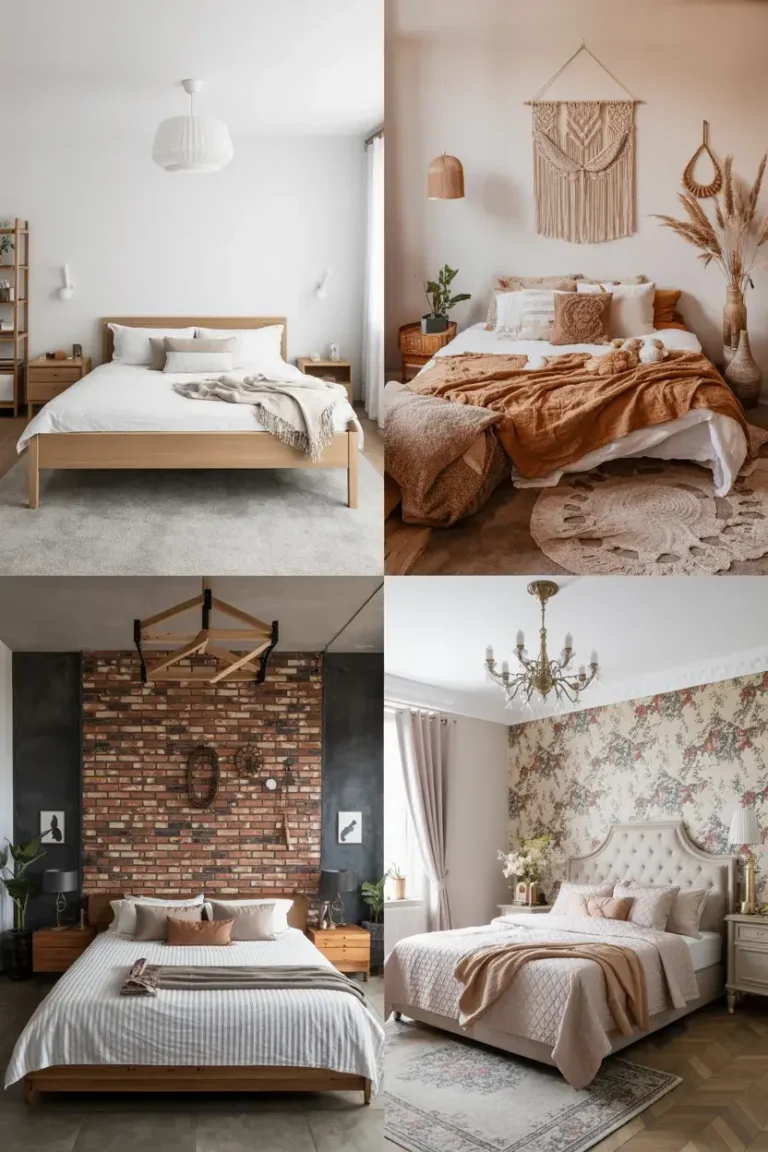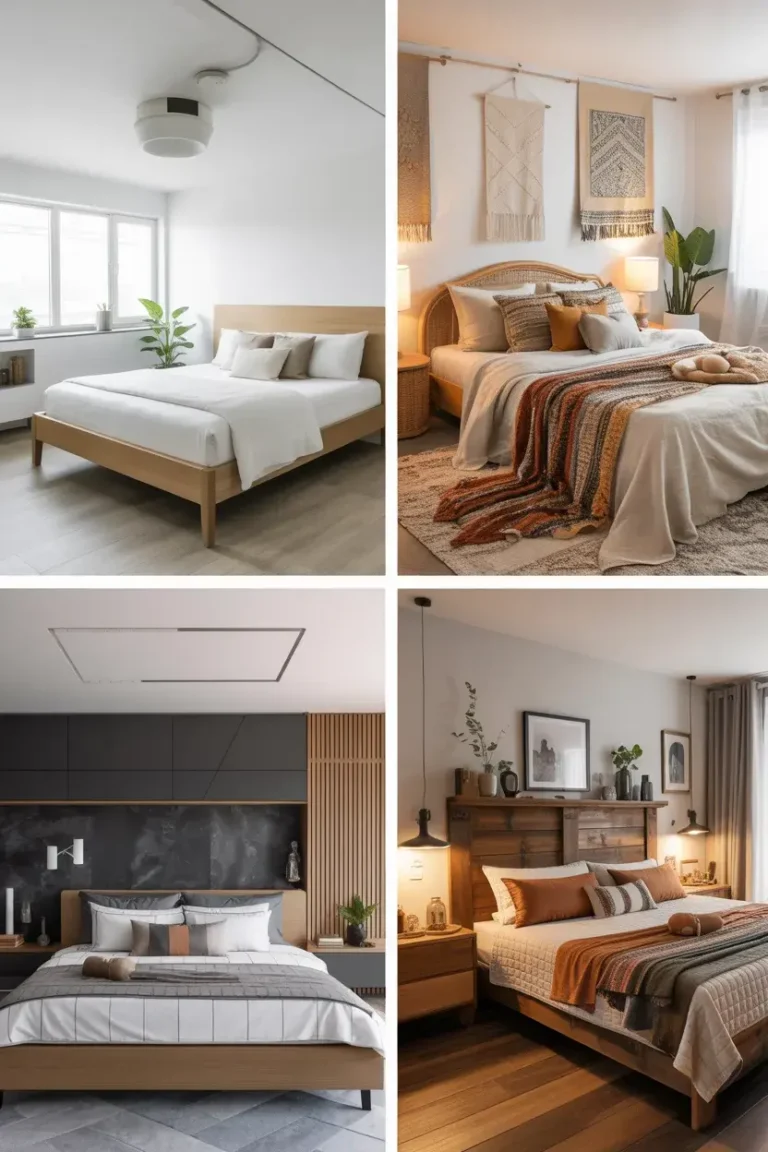
19 Kids Bedroom Ideas for an Aesthetic Room Kids Will Love
Every child deserves a bedroom that feels like it was made just for them. A space where imagination runs freely and sleep comes easily. But designing a kids bedroom that looks beautiful, stays functional, and actually holds up to real life is harder than it sounds. Between outgrown themes, messy reality, and the pressure to make something Pinterest-worthy, most parents end up somewhere between overwhelmed and underwhelmed.
This post changes that. These 19 kids bedroom ideas are specific, visual, and built to work in real homes for real children. Each idea brings something genuinely distinct to the table, from space-saving layouts to sensory-rich designs and everything in between. Whether your child is a toddler or a tween, you will find a direction here that makes their room the place they never want to leave.
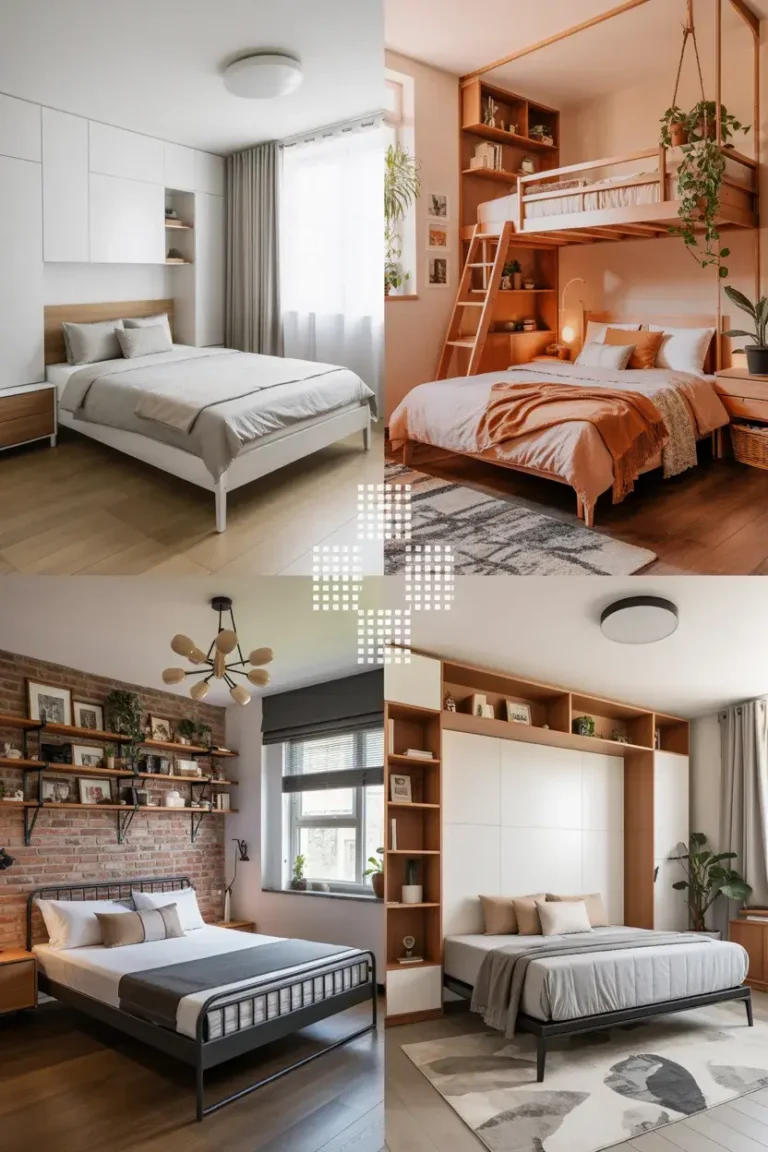
1. A Loft Bed With a Play Zone Underneath
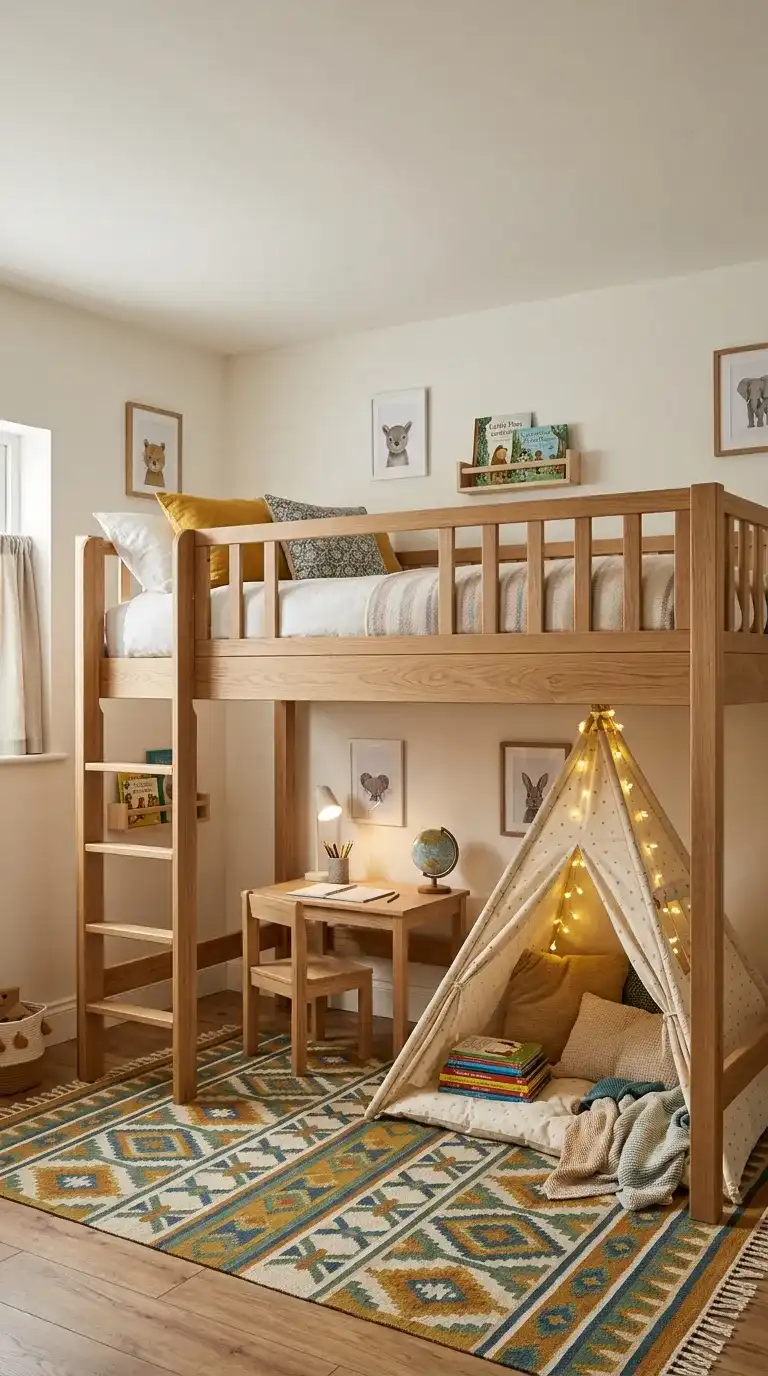
Vertical space is one of the most underused assets in a kids bedroom. A loft bed elevated on a sturdy wooden frame frees up the entire floor area beneath for a dedicated play zone. Underneath you can fit a small desk, a play kitchen, a reading tent, or a simple seating area with cushions. The bed above feels like a private hideaway which children love. Choose a solid oak or pine frame for longevity and style versatility. This one piece of furniture does the work of an entire room redesign.
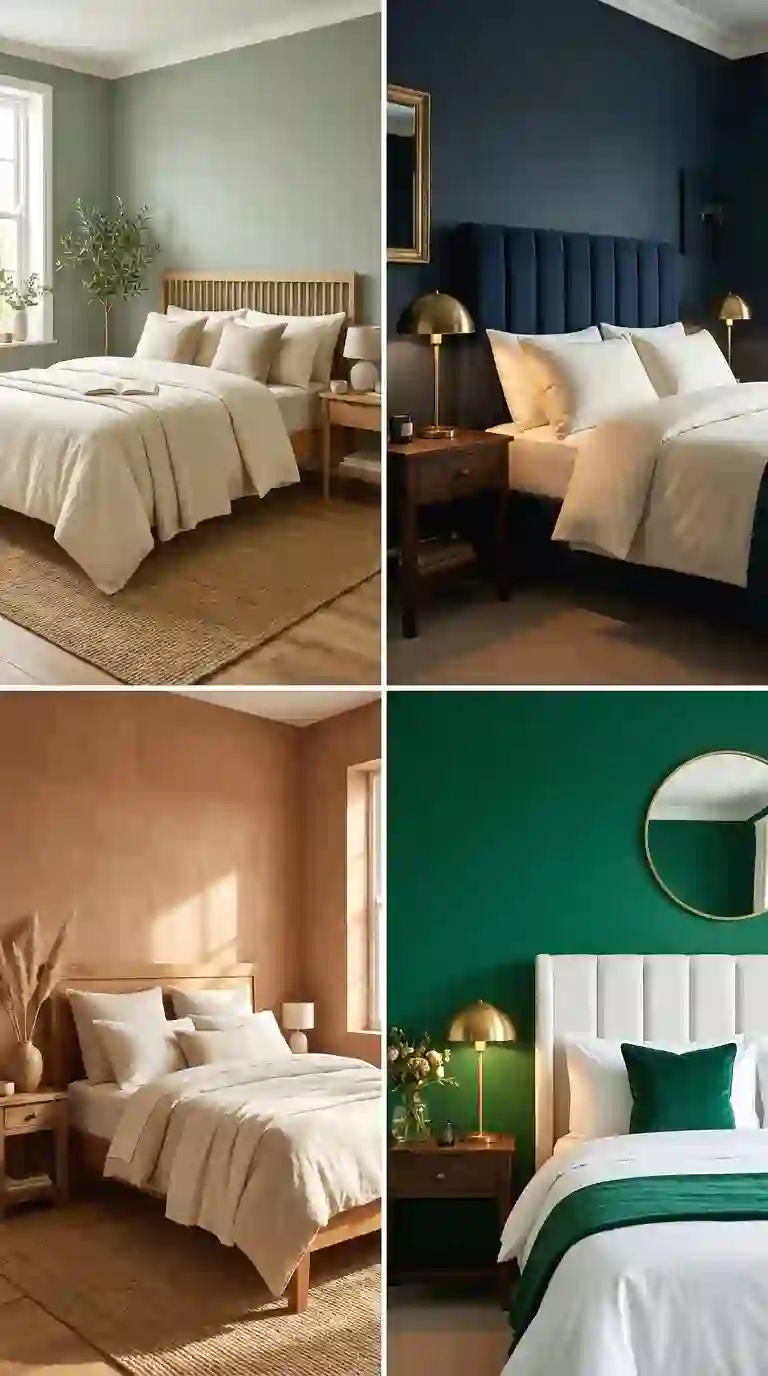
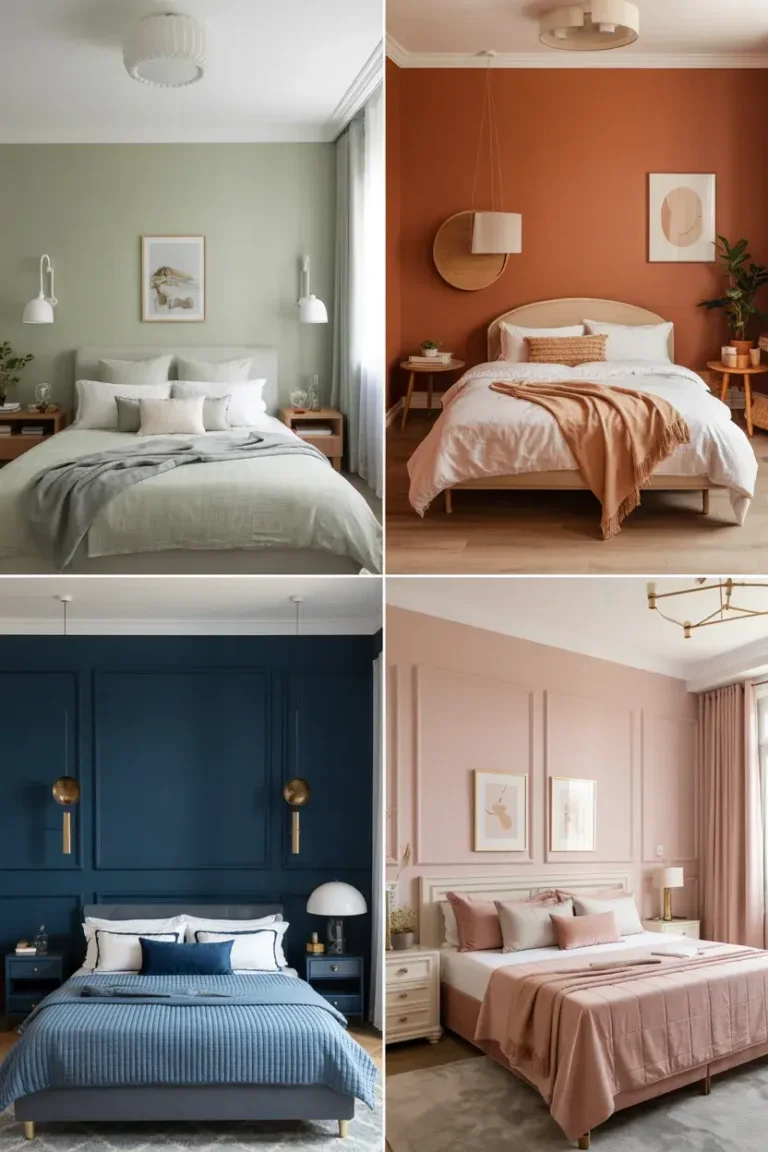
2. Soft Sage Green Walls That Grow With Your Child
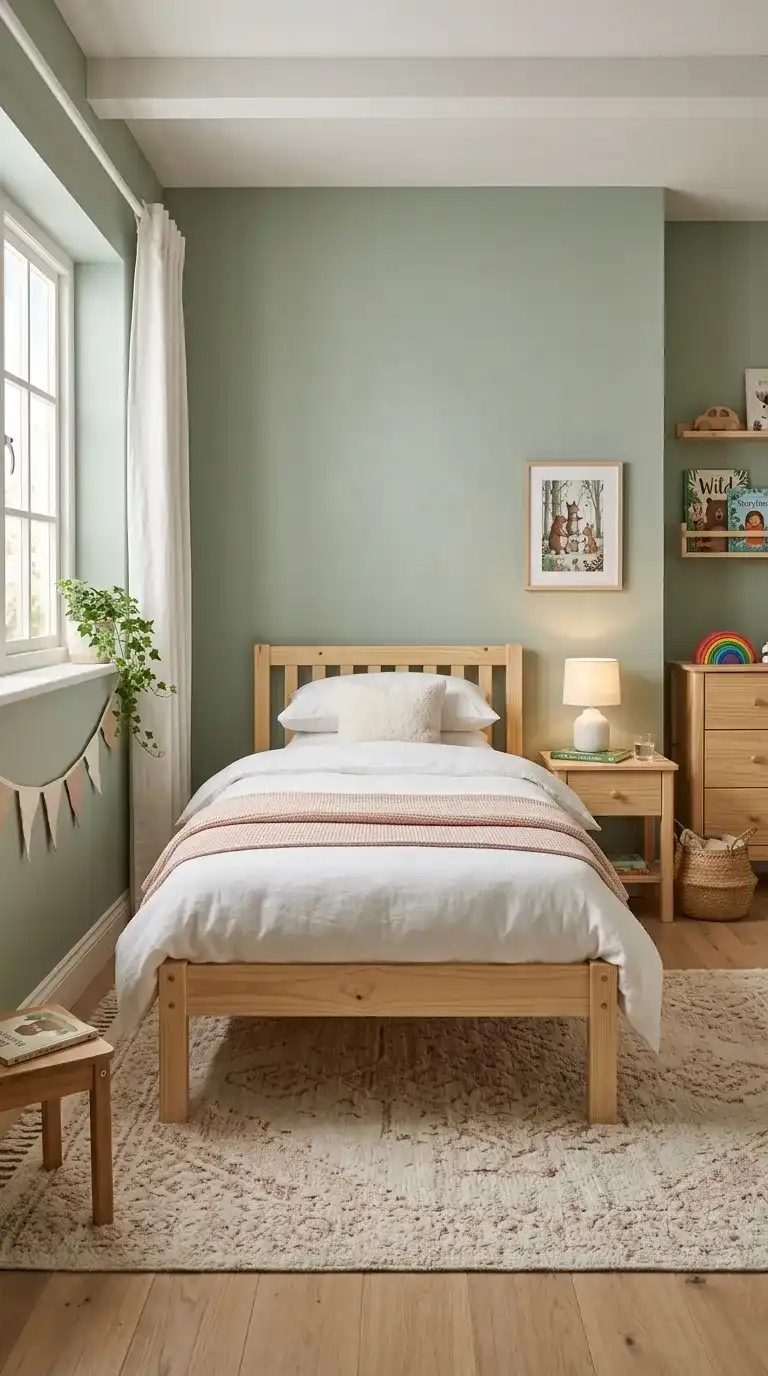
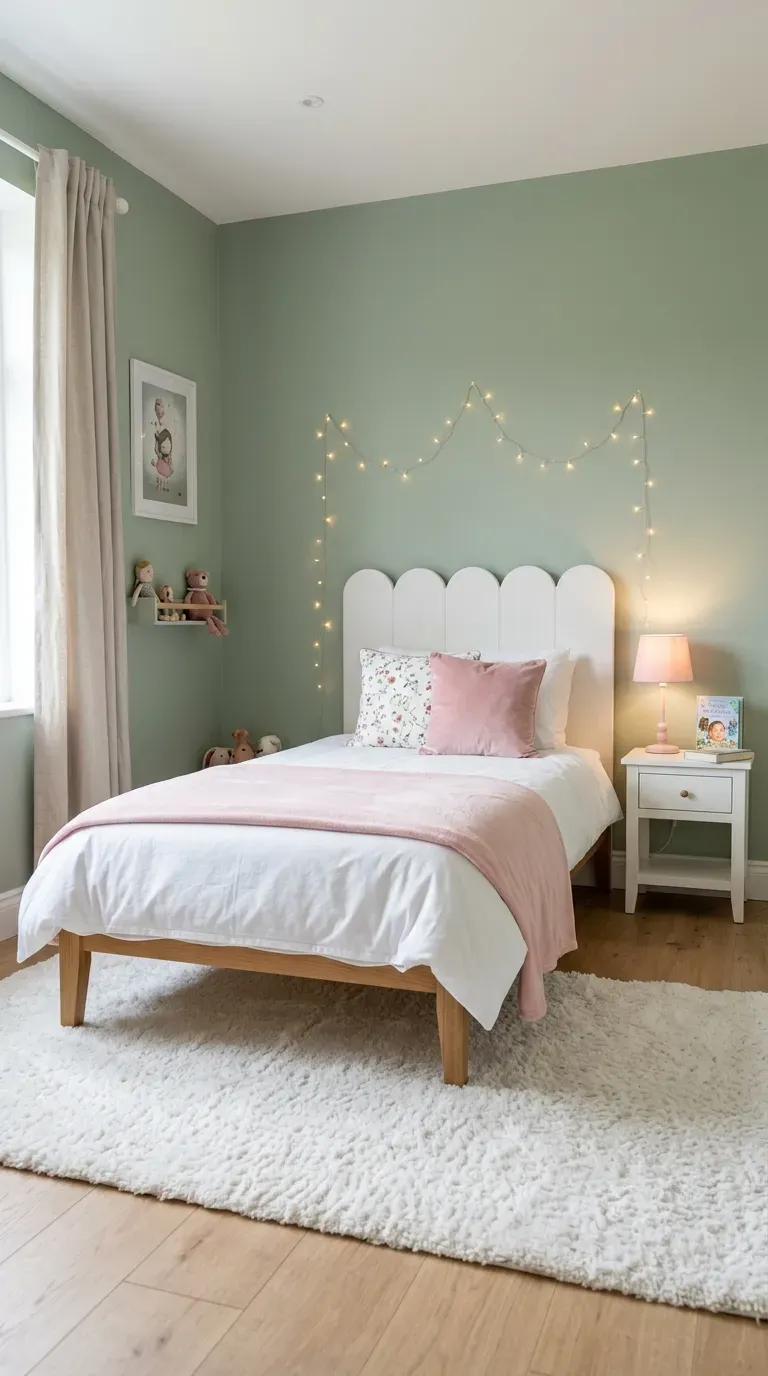
Sage green is the smartest wall color choice for a kids bedroom that needs to evolve as the child does. It is calm enough for a nursery, fresh enough for a toddler room, and sophisticated enough for a tween. It pairs beautifully with natural wood furniture, white bedding, and almost every accent color from blush to rust to navy. Paint all four walls or just the one behind the bed for a softer effect. Sage green also photographs beautifully which is a bonus for memory-making over the years.
3. A Reading Nook Built Into a Wardrobe Alcove
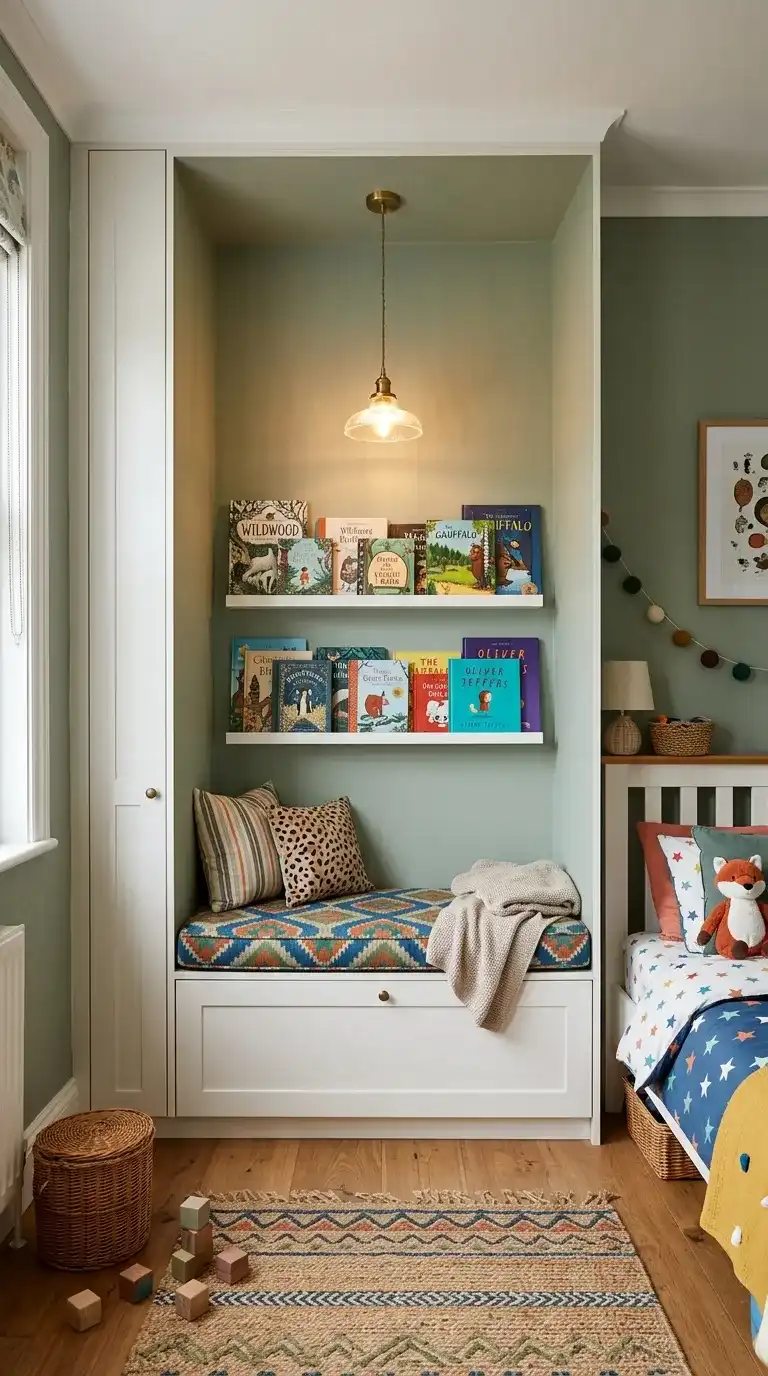
A reading nook transforms a wasted corner or alcove into the most beloved spot in the room. Build a simple bench seat into a wardrobe alcove, add a cushion in a playful fabric, line the back wall with a few floating shelves for books, and hang a small pendant light above. Children who have their own reading nook use it constantly. It gives them ownership of a small private space which is enormously important for development. Keep the entrance low and cozy so it feels like an invitation.
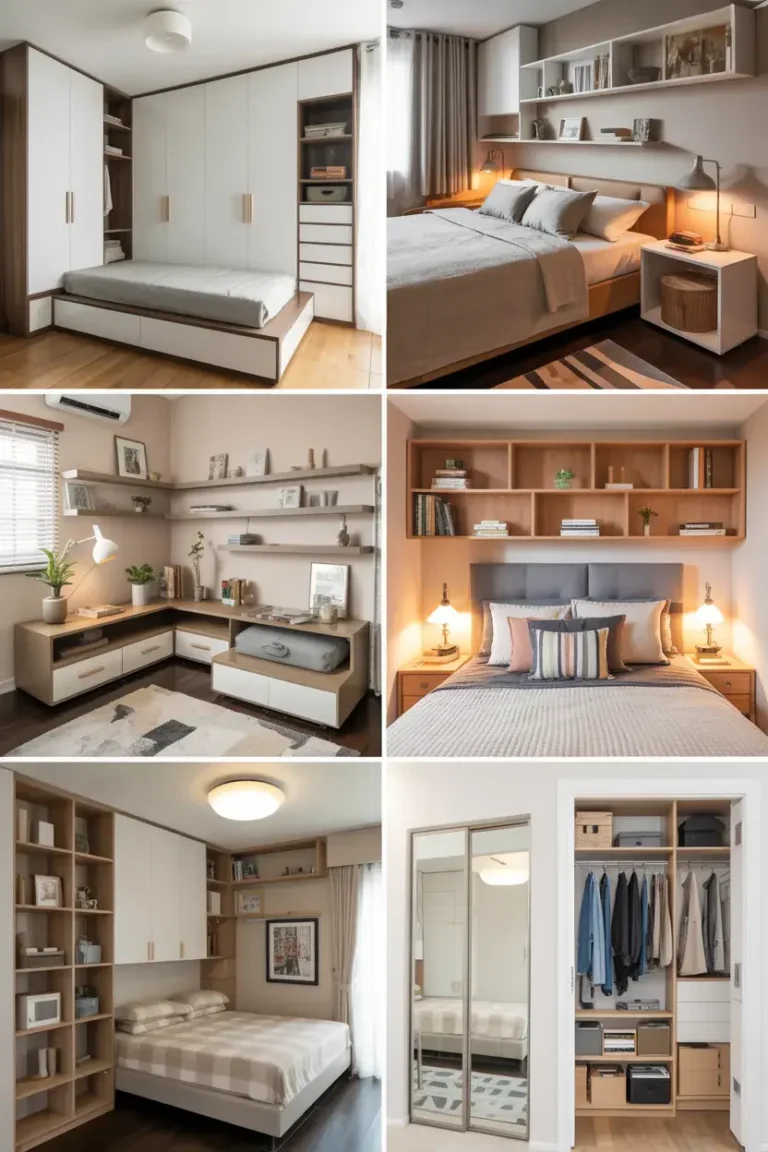
4. A Monochrome Palette That Feels Cool Not Cold
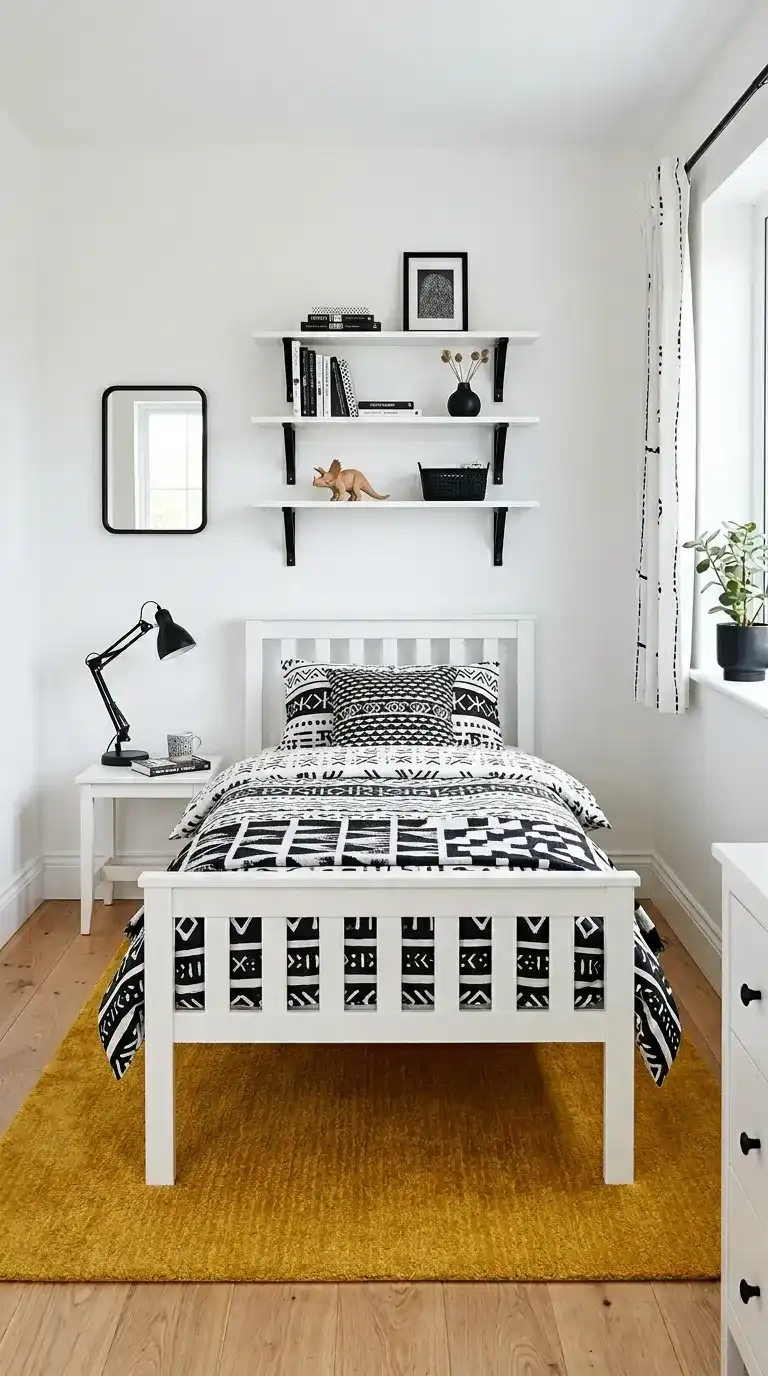
A black and white kids bedroom sounds stark on paper but in practice it looks incredibly cool and age-appropriate. White walls, a white bed frame, black shelf brackets, black and white bedding in a graphic pattern, and a black desk lamp create a room that looks designed rather than decorated. Add one warm accent through a rug in blush, mustard, or terracotta to stop the room from feeling clinical. This kind of room works from age four through teenage years without ever feeling out of place. These bedroom ideas show how a strong palette approach always outlasts trend-led choices.
5. A Canopy Bed That Feels Like a Fairytale
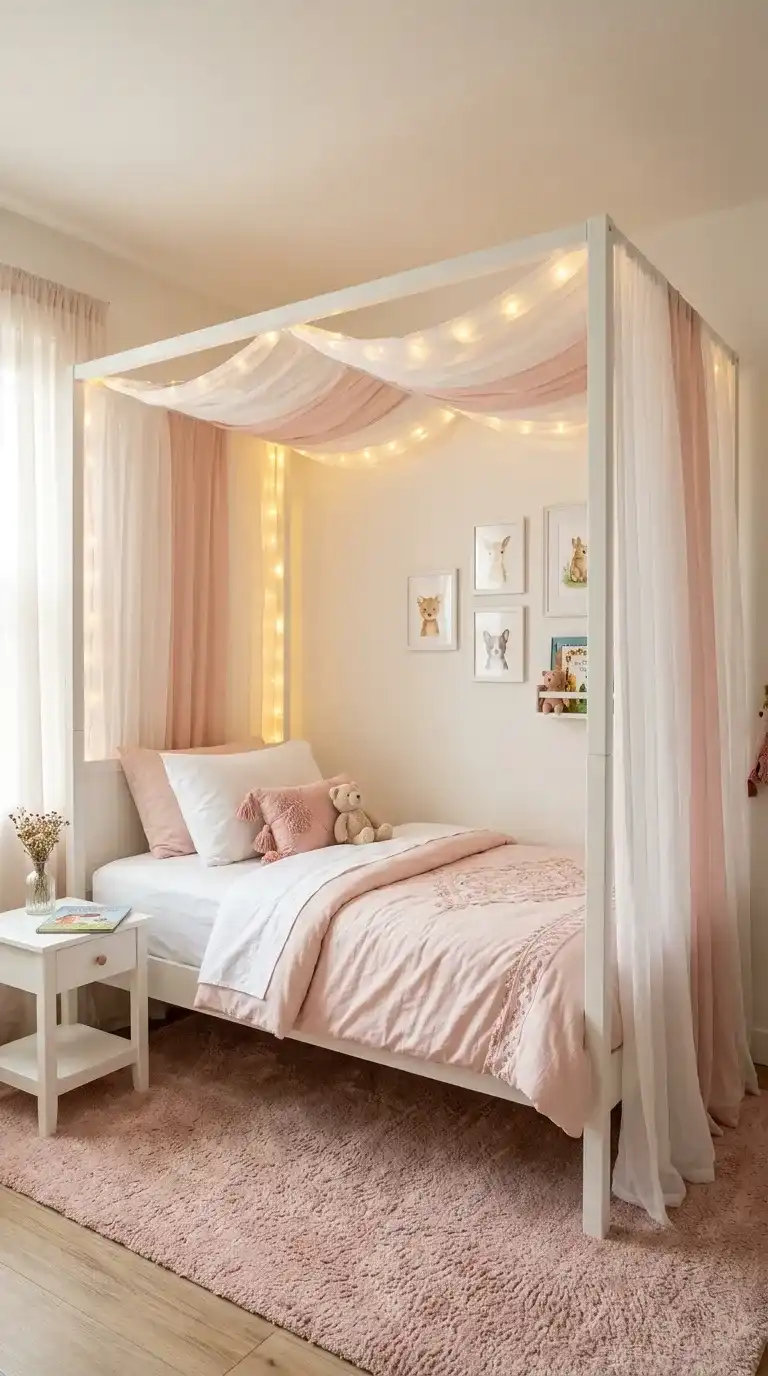
A canopy bed is the single most transformative piece of furniture in a child’s bedroom. The sense of enclosure it creates feels magical to a child and genuinely beautiful to every adult who walks in. Choose a slim white or natural wood four-poster frame and drape sheer white or blush fabric over the top. Add fairy lights along the canopy rail for a glowing effect at night. Keep the bedding simple in white or a soft neutral so the canopy itself remains the visual star. This works beautifully in girls’ rooms and gender-neutral spaces alike.
6. A Gallery Wall of Their Own Artwork
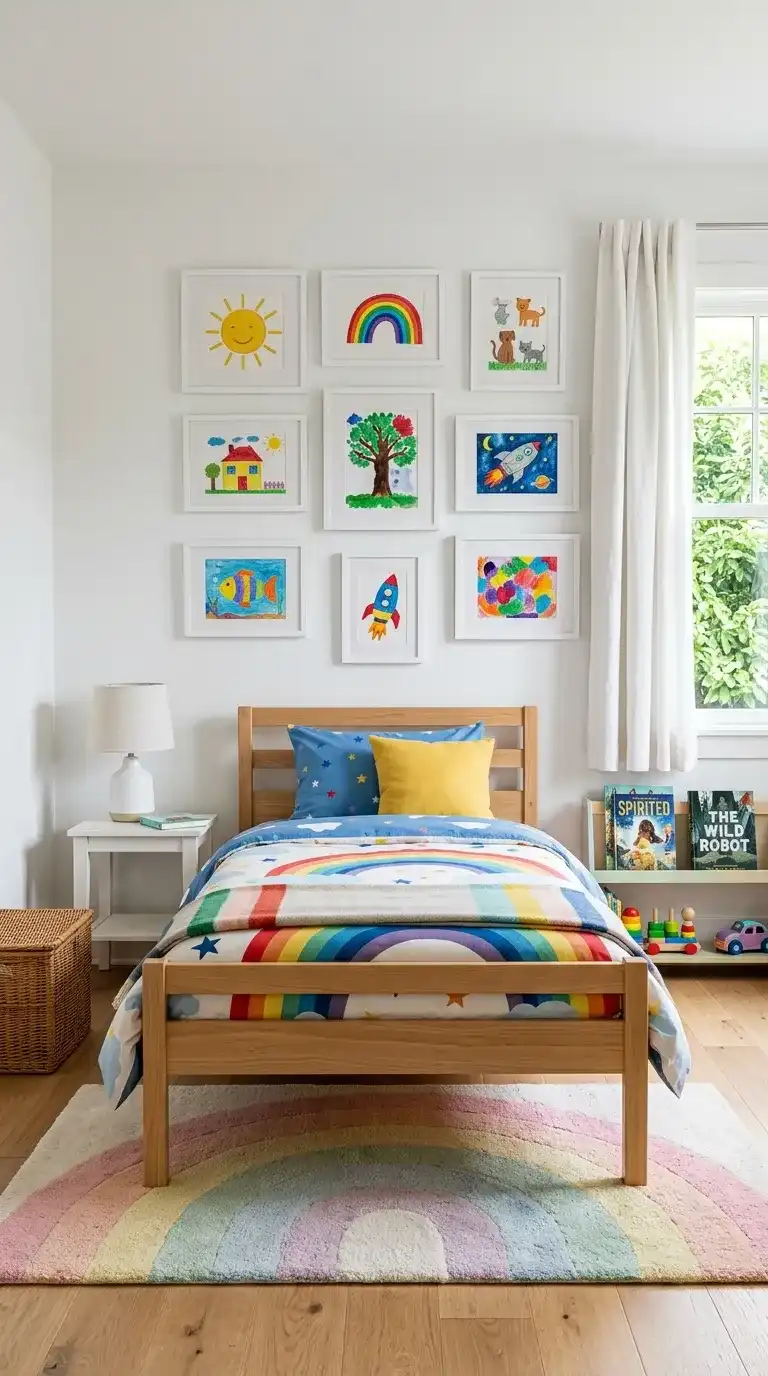
Children create an enormous amount of art that usually ends up in a drawer or recycled. A dedicated gallery wall changes that completely. Frame a rotating selection of your child’s artwork in simple matching frames and hang them on one wall of the bedroom. The frames create cohesion. The art changes as the child grows. The result is a room that is completely personal and always current. Use a mix of sizes for visual interest but keep all frames in the same color, white, black, or natural wood for a curated rather than cluttered look.
7. A Nature-Inspired Room With Earthy Tones and Wood
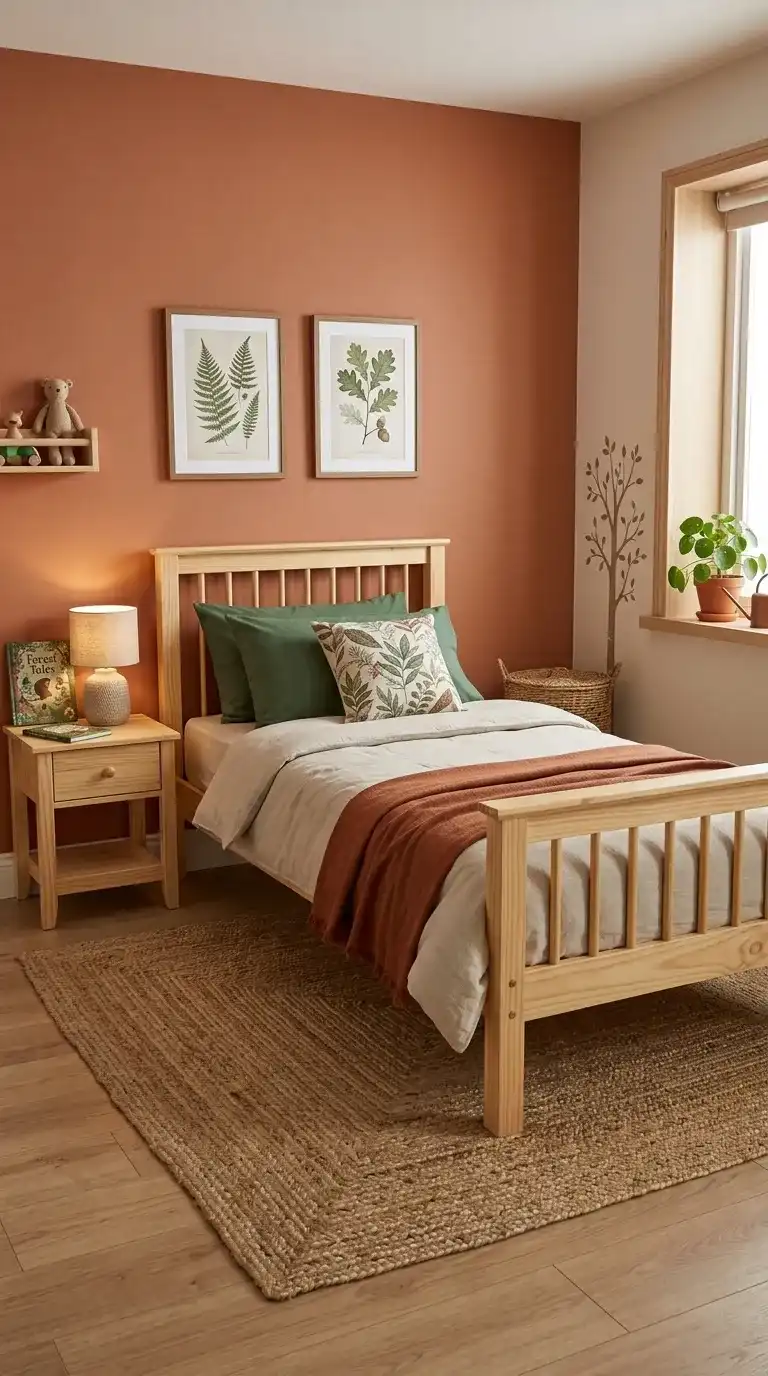
Not every kids bedroom needs to shout. A nature-inspired room built on earthy tones is calm, beautiful, and deeply soothing for children who need a restful sleep environment. Warm terracotta walls, natural pine furniture, a jute rug, and bedding in forest green and oatmeal create a bedroom that feels like a peaceful outdoor retreat. Add a few botanical prints on the wall and a plant on the windowsill. This kind of room never feels babyish and never feels too grown-up. It simply feels like a warm, lovely place to be.
8. A Space Theme Done With Sophistication
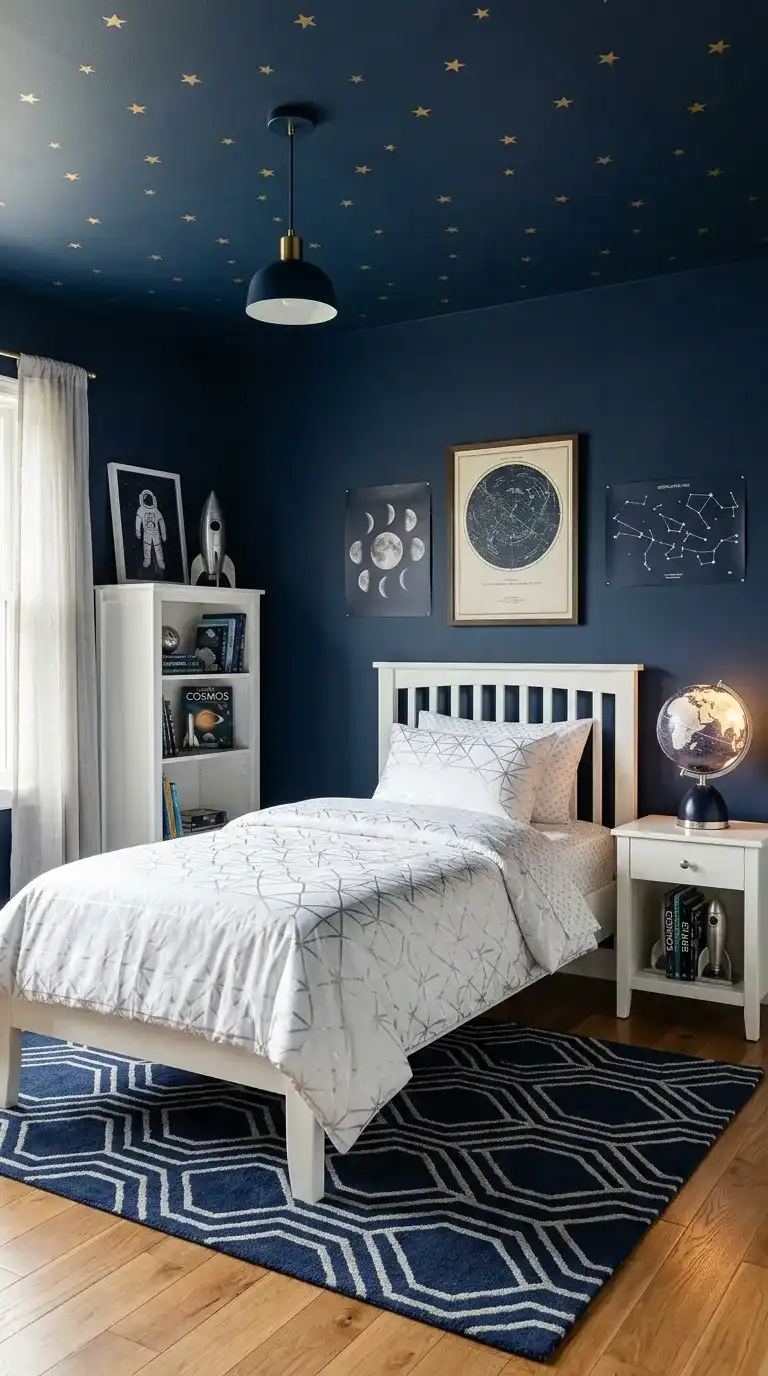
Space-themed kids bedrooms usually age poorly because they rely on character prints that children outgrow quickly. A sophisticated space theme uses deep navy walls, a ceiling painted in dark blue with small metallic stars applied, simple white and silver bedding, and a few carefully chosen space-inspired objects like a globe lamp or a brushed metal bookend in the shape of a rocket. No cartoon characters. No plasticized decals. The result is a room a child will love at six and still appreciate at thirteen. Timeless is always the goal.
9. Built-In Storage Beds That Eliminate Floor Clutter
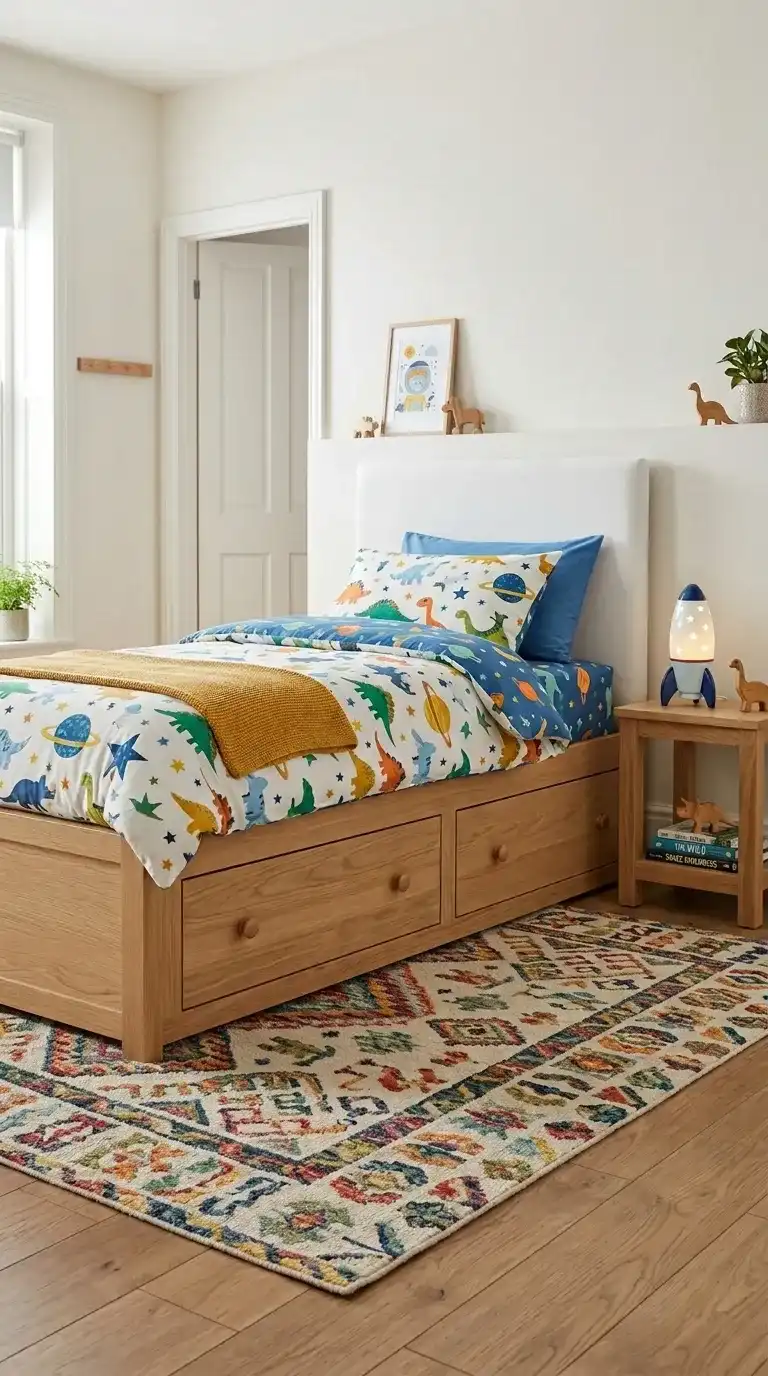
Storage is the single biggest challenge in any kids bedroom and a storage bed solves it completely. A bed with deep drawers built into the base keeps toys, books, spare bedding, and seasonal clothes completely out of sight. The floor stays clear. The room looks calm. Children can actually find things because everything has a home. Choose a frame in natural oak or white painted wood depending on your overall palette. Add a simple headboard in a complementary upholstered fabric to give the bed a finished, intentional look.
10. A Pastel Rainbow Room That Feels Fresh Not Chaotic
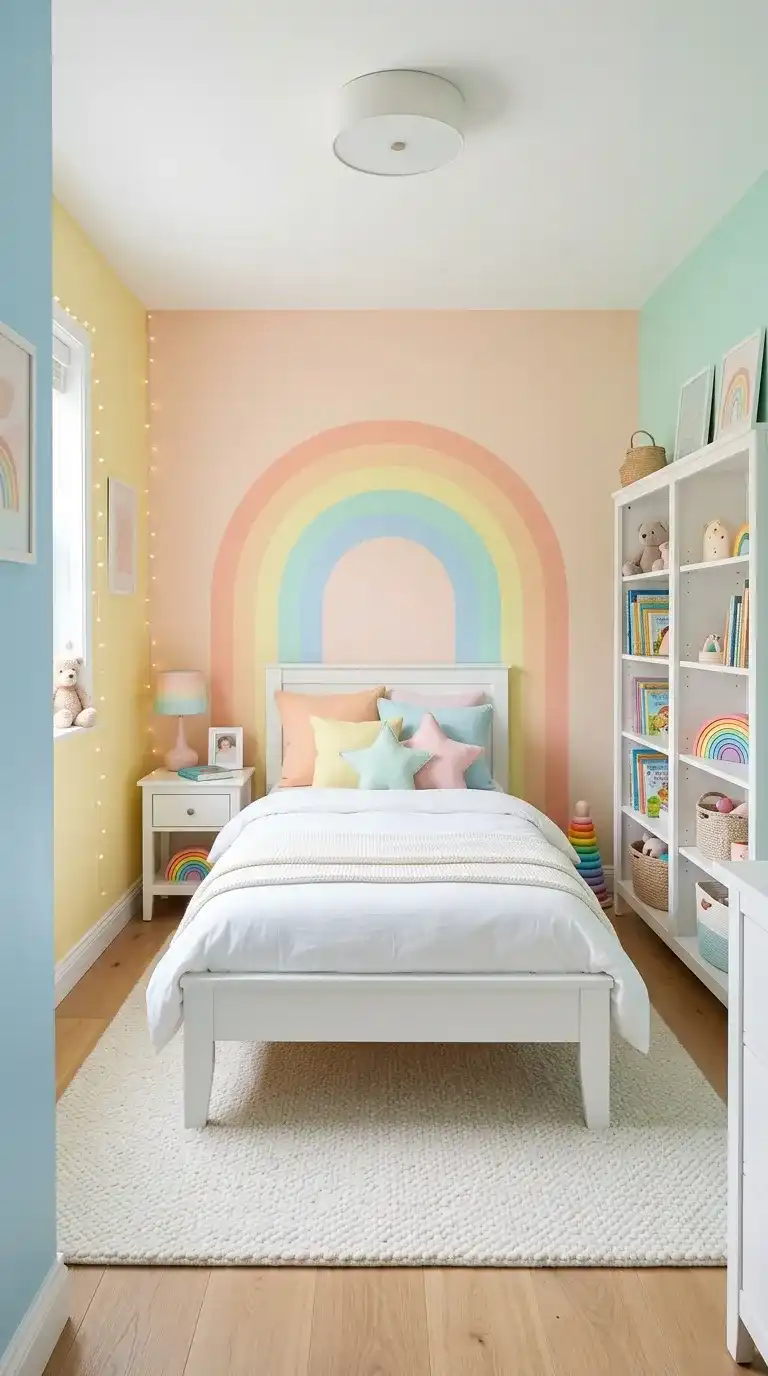
Rainbow rooms done poorly look like a toy store exploded. Rainbow rooms done well look joyful, intentional, and genuinely beautiful. The key is to use pastel versions of each rainbow color rather than saturated primaries. Pale peach, soft yellow, mint, sky blue, and lavender on separate walls or as a painted arch create a room that feels playful and considered at the same time. Use white furniture and white bedding throughout so the room has a clear visual anchor. The pastels can do all the personality work without the furniture competing.
11. A Montessori-Inspired Floor Bed Setup
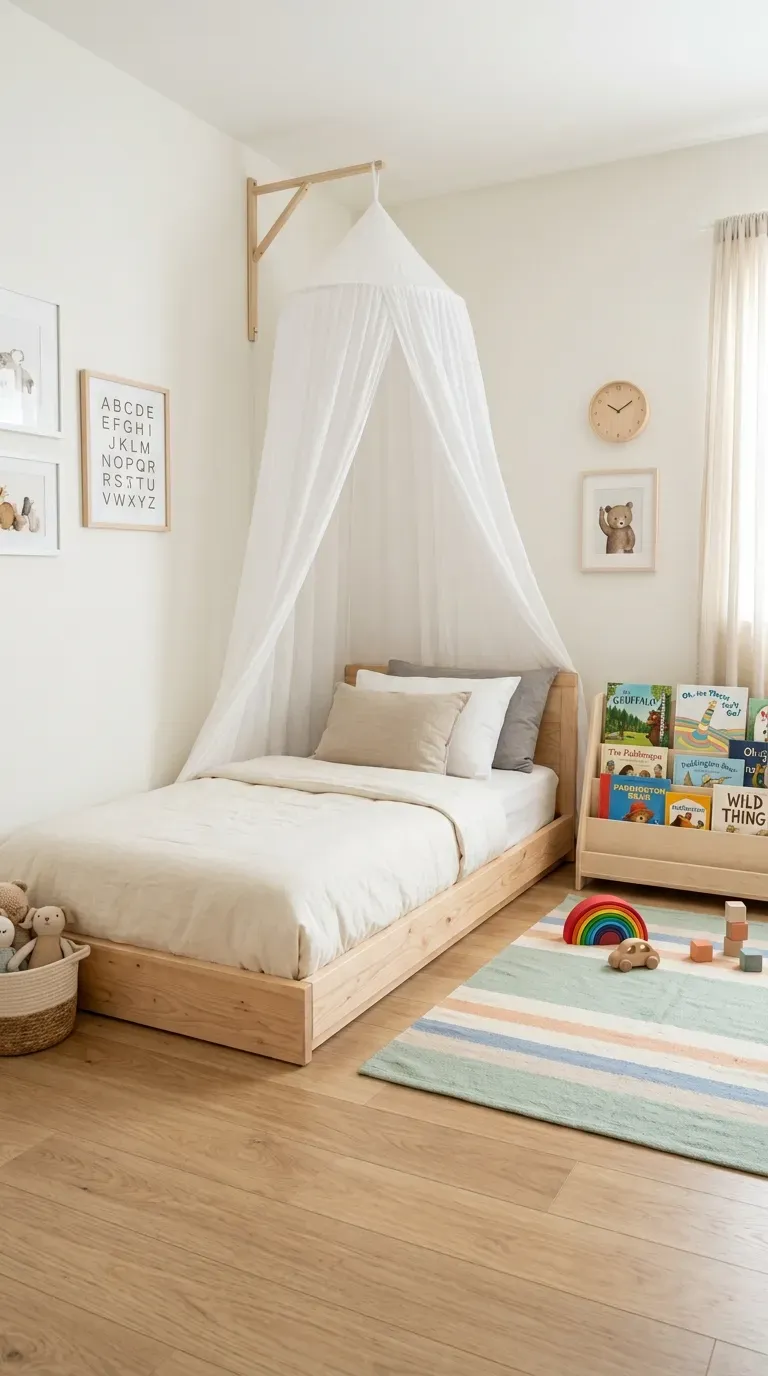
A floor bed placed directly on a low platform or a simple mattress on the floor is a central feature of Montessori-designed rooms. It gives children the independence to get in and out of bed safely and makes the whole room feel more accessible and child-centered. Style the area with a low bookshelf within arm’s reach, a soft play mat on the floor, and a simple canopy overhead. For more inspiration on how to plan a room around the needs of a specific child, these bedroom layout ideas offer genuinely useful spatial thinking.
12. Neon Signs as a Personalizing Statement Piece
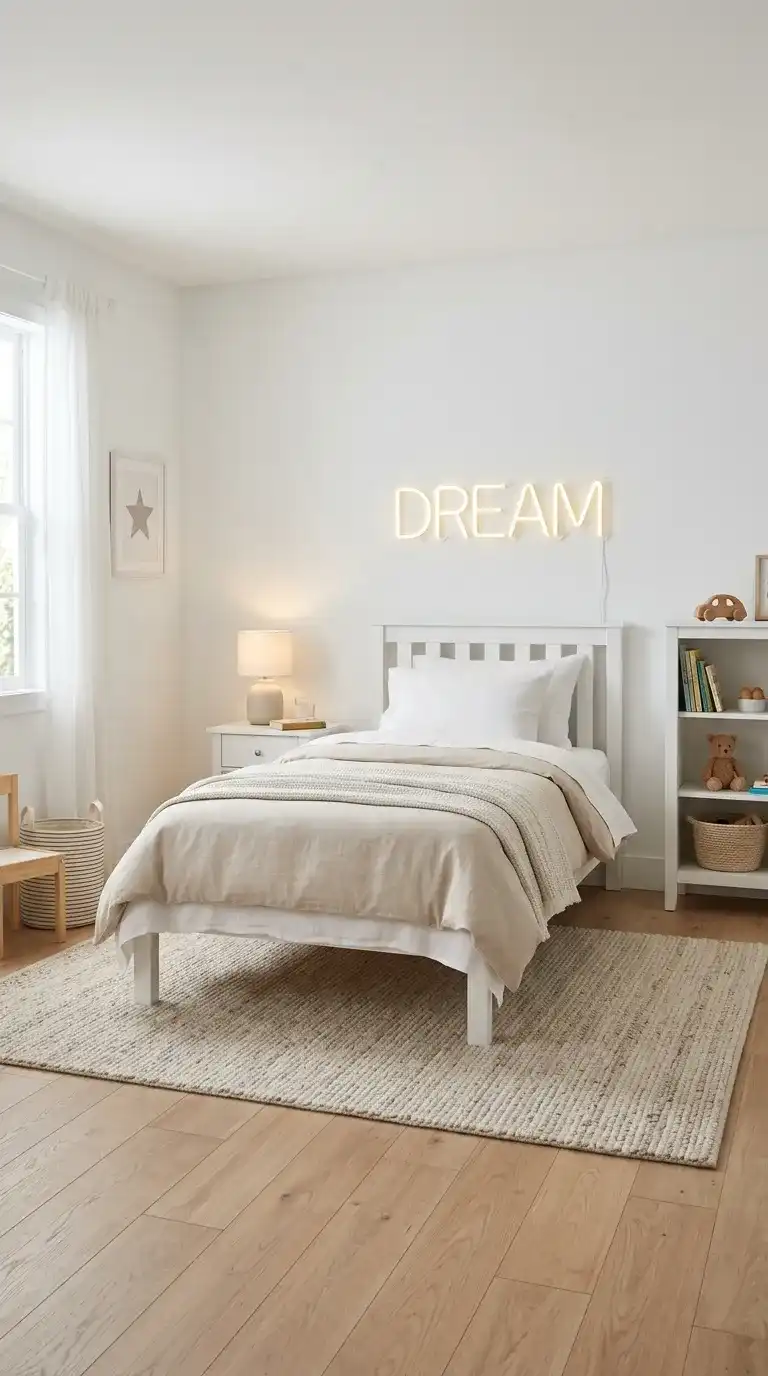
A neon sign above the bed or desk is one of the most instantly personal things you can add to a kids bedroom. Choose a word, a symbol, or their initial in a warm white or soft pink LED neon. It adds ambient lighting at low intensity and creates a focal point that photographs beautifully. Unlike most novelty bedroom accessories, a well-chosen neon sign works from primary school through the teenage years. Keep everything else in the room simple so the sign stands out rather than gets lost in a busy backdrop.
13. A Teepee Play Corner for Imaginative Play
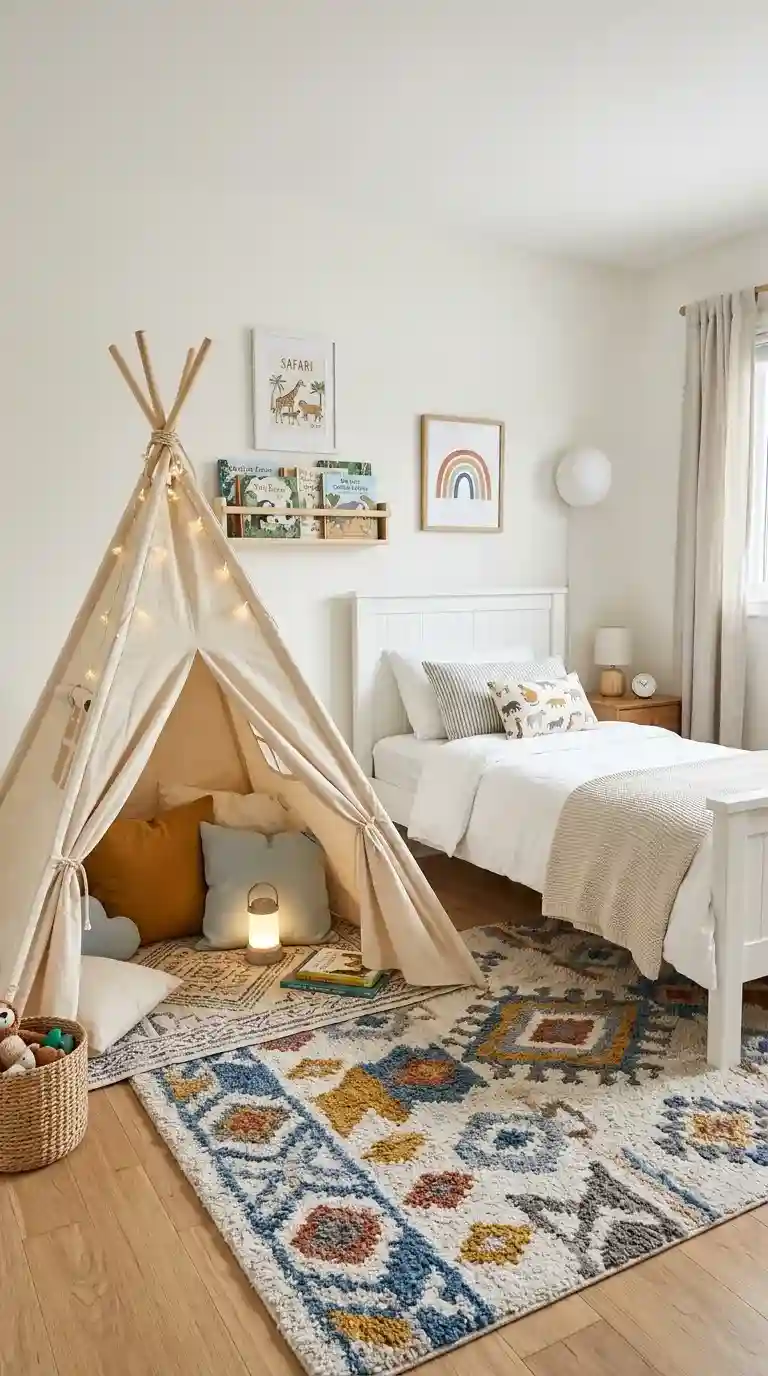
A teepee in the corner of a kids bedroom gives children exactly what they crave most: a space of their own within a space that already belongs to them. Choose a natural canvas teepee on wooden poles and fill the inside with a few floor cushions, a small blanket, and a battery-powered lantern. The teepee becomes a reading hideaway, a storytelling stage, and a quiet retreat all at once. It requires no installation, moves easily, and can be styled differently as the child grows. Simple, effective, and genuinely loved.
14. A Chalkboard Wall That Makes the Room Interactive
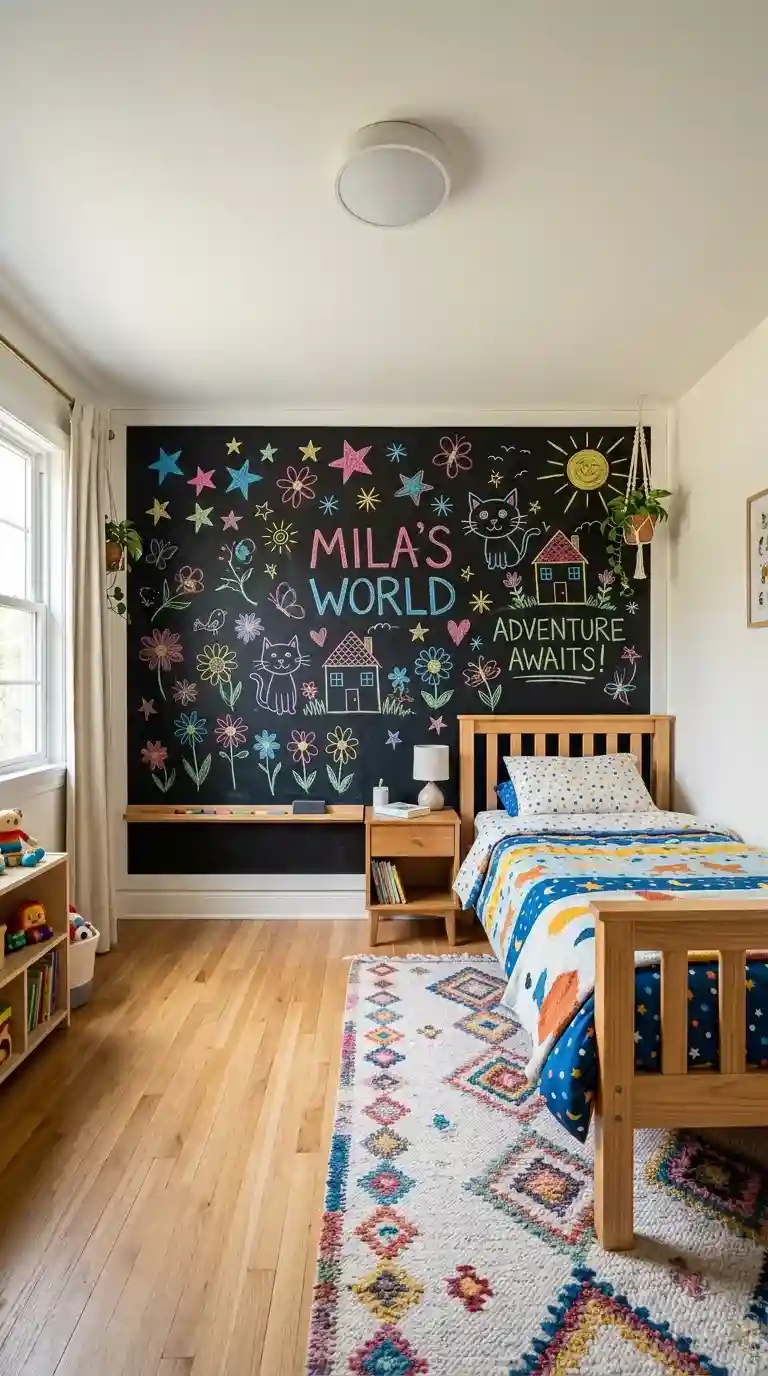
One wall painted in chalkboard paint turns the bedroom into a creative playground without taking up any floor space. Children draw, write, plan, and express themselves on the wall and the surface wipes clean repeatedly. Position the chalkboard wall at the child’s height so they can reach the full surface comfortably. Frame it with a simple painted border to give it a deliberate, finished look rather than just a painted wall. Pair with chalk holders mounted below and a small ledge for chalk storage. This one feature gets more daily use than almost any toy in the room.
15. A Bunk Bed for Siblings That Feels Like a Hotel Suite
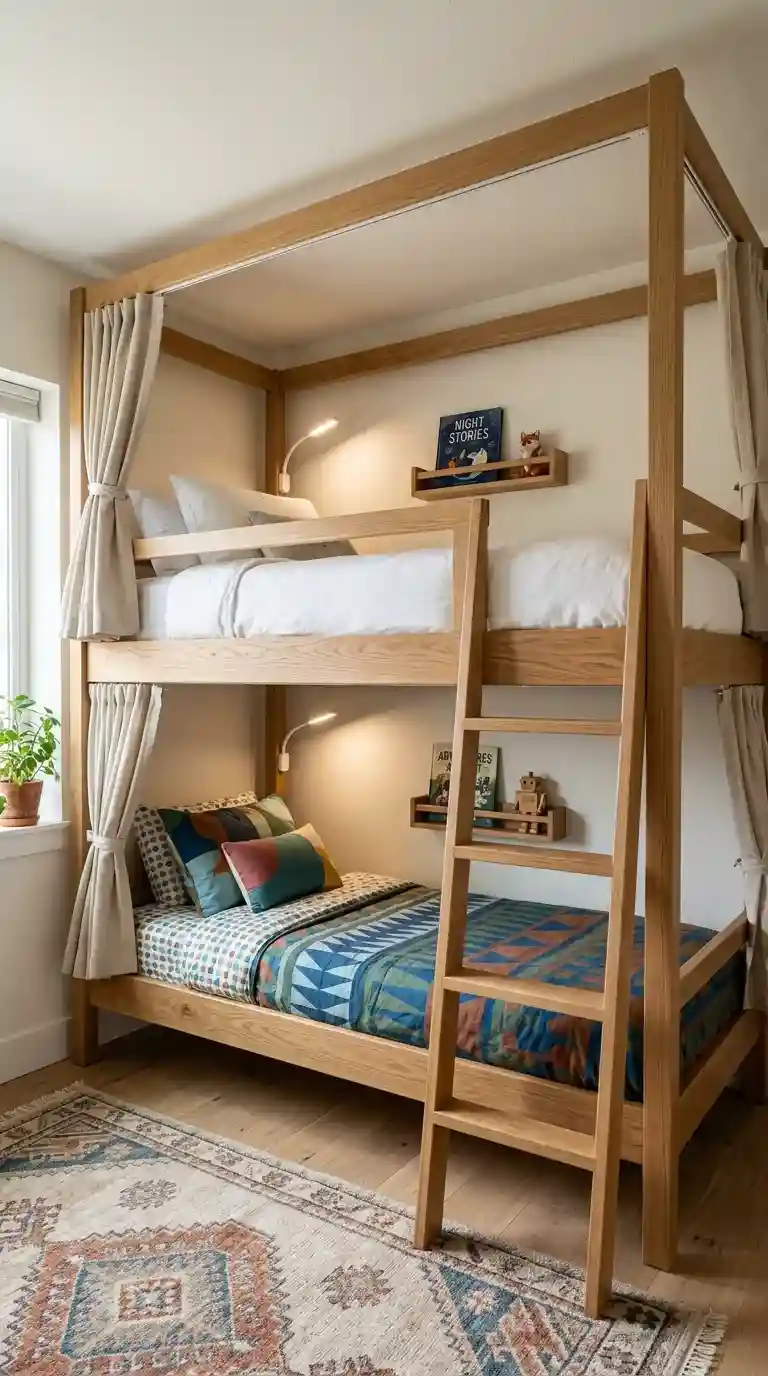
Bunk beds for siblings do not need to feel utilitarian or uncomfortable. A well-designed bunk bed in solid oak or painted white with individual reading lights mounted inside each bunk, a small shelf built into the wall beside each bed, and curtains on a track that can be pulled for privacy transforms the bunk experience completely. Each child gets their own world within a shared space. This approach to kids bedroom ideas for siblings acknowledges both children’s need for individuality while making the most of the shared room.
16. A Scallop or Wave Headboard for a Playful Aesthetic
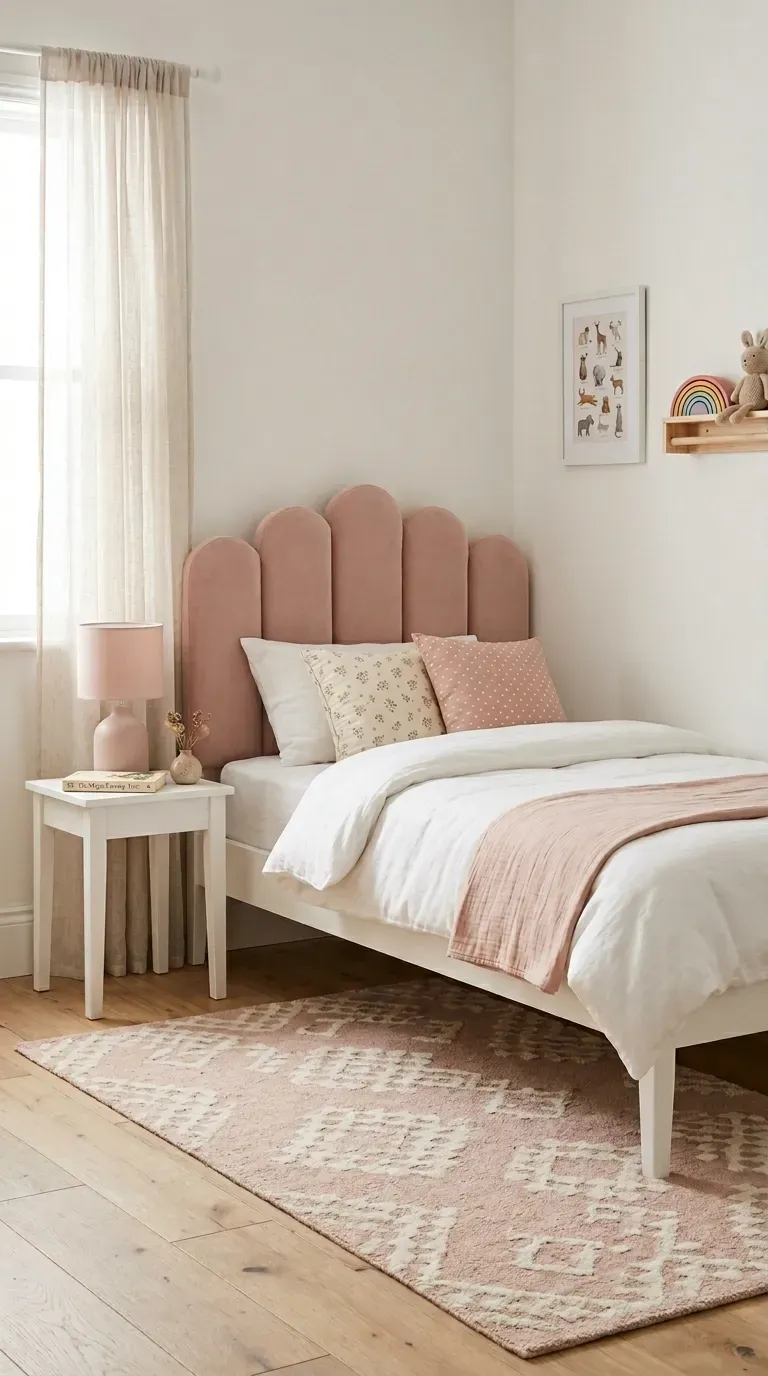
Decorative headboards in playful shapes have become one of the most delightful trends in children’s bedroom design. A scallop-edged headboard in white or a soft blush, a cloud-shaped headboard, or a simple arched headboard with a pastel upholstered finish adds instant character to the bed without committing to a theme that the child will outgrow. The bed becomes a piece of functional art. Style with simple white bedding and two or three printed cushions in coordinating tones. This single change makes a child’s bedroom look genuinely designed.
17. A Dedicated Homework and Creativity Desk Zone
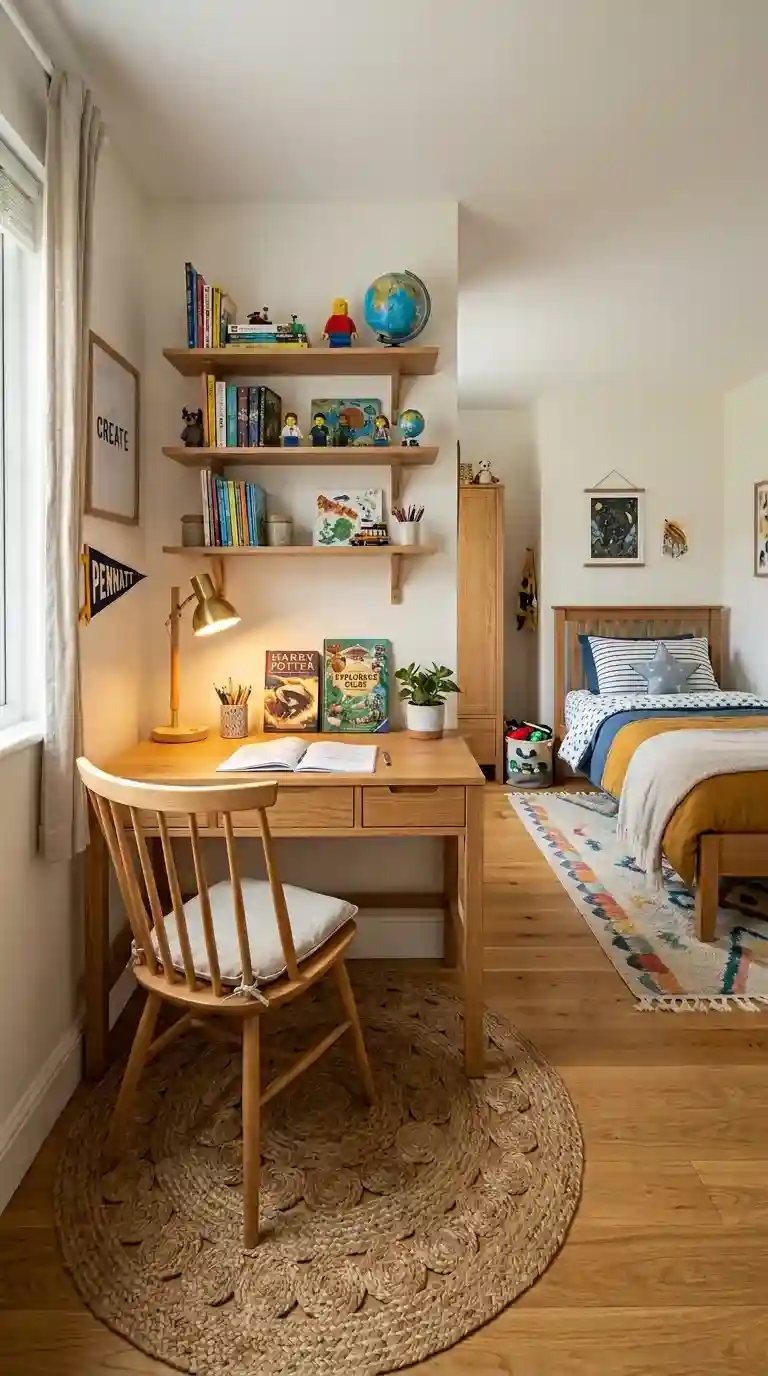
Every school-age child benefits enormously from a dedicated desk zone that is theirs alone. A simple solid wood desk at the right height, a comfortable chair, good task lighting from a desk lamp, and open shelving above for books and supplies creates a space that makes homework feel less like a chore. Keep the desk zone visually separate from the sleep zone by using a different rug or a slightly different wall color in that area. For more ideas on how to divide a room into functional zones, these bedroom bed designs show how placement decisions shape the whole room.
18. A Jungle or Botanical Theme With Real Plants
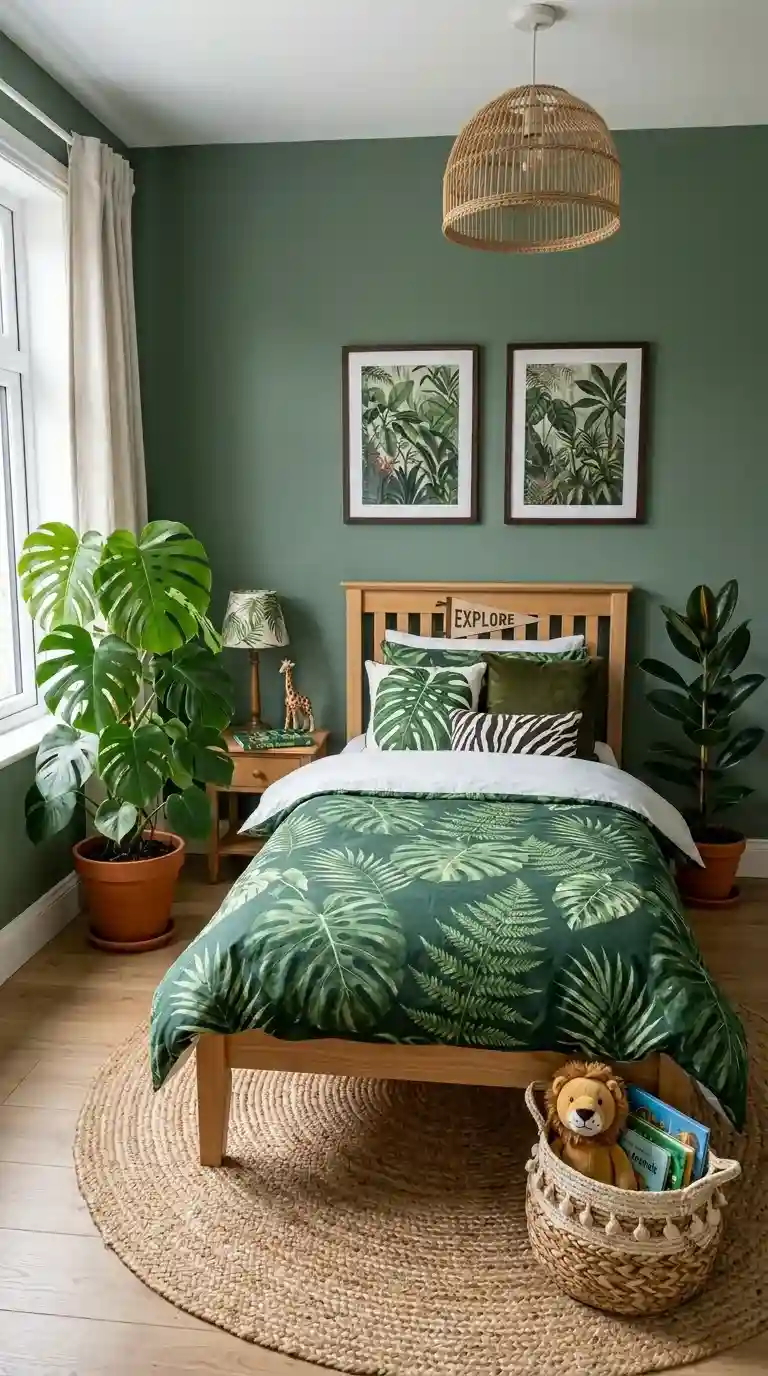
A jungle-themed bedroom built around real plants rather than printed wallpaper is one of the most beautiful and sensory-rich environments you can create for a child. Large leafy plants like monstera or rubber trees in simple terracotta pots, botanical framed prints on the wall, green bedding in various tones, a rattan light shade, and a natural wood bed frame create a room that feels genuinely alive. Real plants also teach children to care for living things which is a lasting benefit beyond the aesthetic. Choose low-maintenance plants for obvious reasons.
19. A Star Projector and Soft Lighting for a Sensory Night Routine
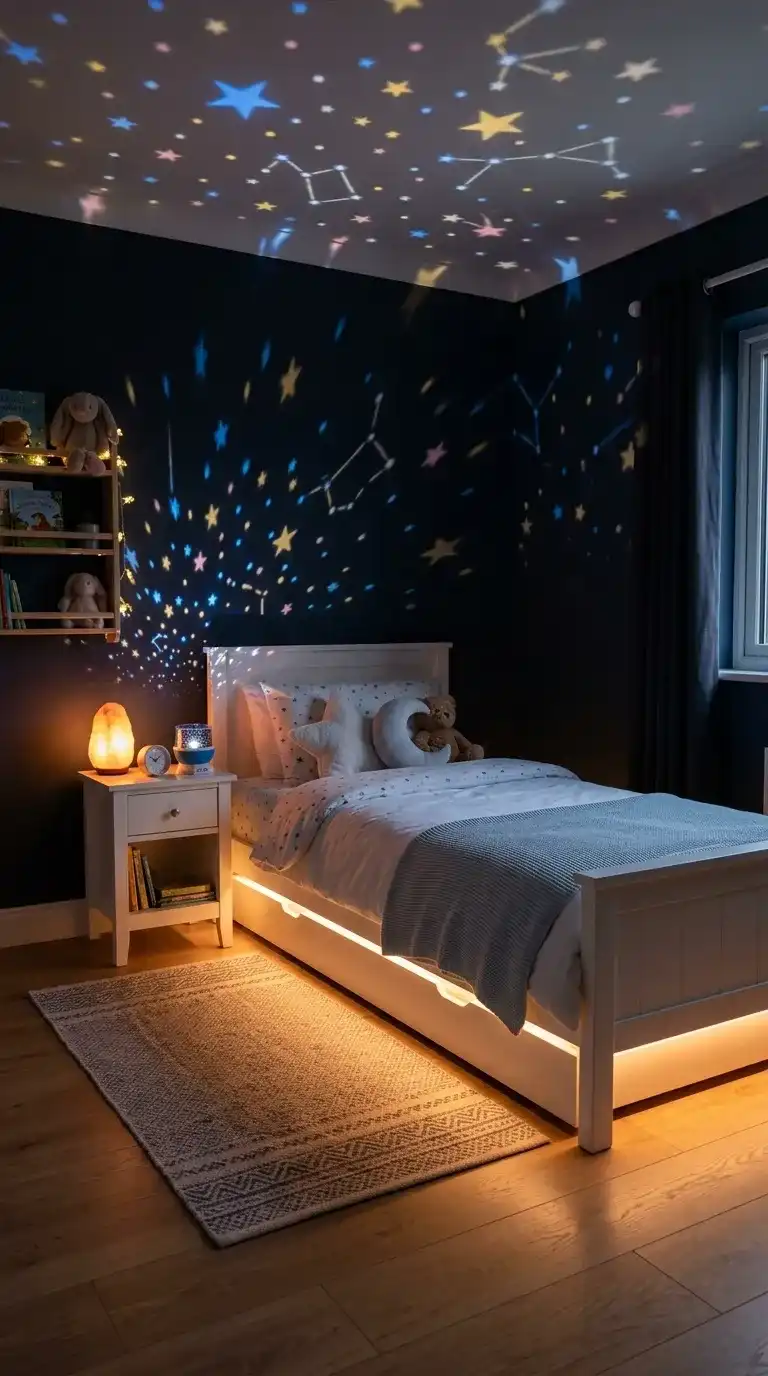
Sleep quality in children is closely connected to the pre-sleep environment. A star projector that casts moving constellations across the ceiling and walls, combined with a warm-toned salt lamp or a soft LED strip along the bed base, creates a sensory night routine that signals to the child’s brain that rest is coming. These kids bedroom ideas around light and sensory calm are particularly powerful for children who struggle with bedtime. The room transforms from the same space they played in during the day into something that feels genuinely different at night.
Key Takeaways
- Timeless beats trendy. Character-themed rooms age poorly. Rooms built on color, texture, and quality furniture evolve with the child and stay beautiful for years.
- Vertical space is underused. Loft beds, wall-mounted shelves, and tall bookcases free up floor space for play and make smaller rooms feel much larger.
- Storage is the foundation. A room with adequate hidden storage always looks calm. A room without it always looks chaotic regardless of how beautifully it is styled.
- Children need ownership. Reading nooks, teepees, gallery walls of their own art, and personalized neon signs give children a sense that the room truly belongs to them.
- Light shapes the room’s personality. Star projectors, fairy lights, warm lamps, and neon signs all contribute to a room that feels different and special compared to the rest of the house.
- Walls do more than you think. Sage green paint, chalkboard walls, cloud ceilings, and gallery walls all transform the room atmosphere for very little cost compared to new furniture.
- Design for the child in front of you. The best kids bedroom is the one that reflects the specific child sleeping in it, their interests, their sensory needs, and their personality.
Wrapping It All Up
A truly great kids bedroom is not about spending the most money or following the latest trends. It is about creating a space where a specific child feels completely at home. Safe enough to sleep, interesting enough to play, and personal enough to call their own. The twenty ideas in this post offer a genuine range of approaches, from the purely aesthetic to the deeply functional, because the best children’s rooms balance both.
Start with what your child loves most and let that guide your first decision. Then layer in the practical elements around it. A room that grows with your child, holds their imagination, and keeps them happy to spend time in is the real goal. You now have everything you need to get there.
What To Do Next
- Ask your child first. Sit with them and talk about what they love. Their answers will tell you more about the right direction than any trend article ever could.
- Choose your wall color before anything else. The wall color sets the mood for every other decision. Pick it first and order a sample pot to test in the actual room before committing.
- Audit the current storage situation. Identify where things are currently being dumped or piled. Add one targeted storage solution before buying anything decorative.
- Invest in one statement piece. A canopy bed, a loft bed, a scallop headboard, or a chalkboard wall. One strong piece does more for the room than ten small accessories.
- Leave room to grow. Do not fill every wall and every corner immediately. The room should have breathing space now and room to evolve as your child does.