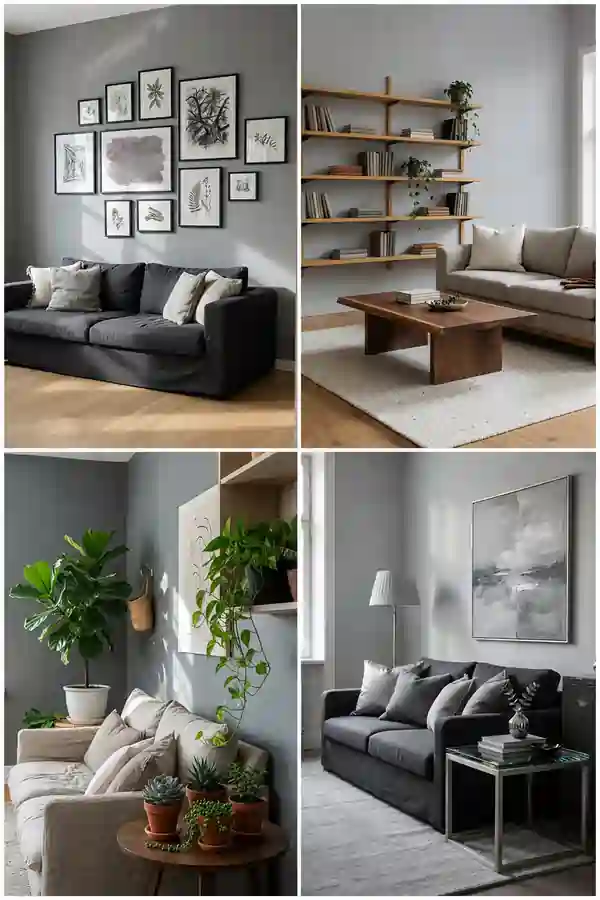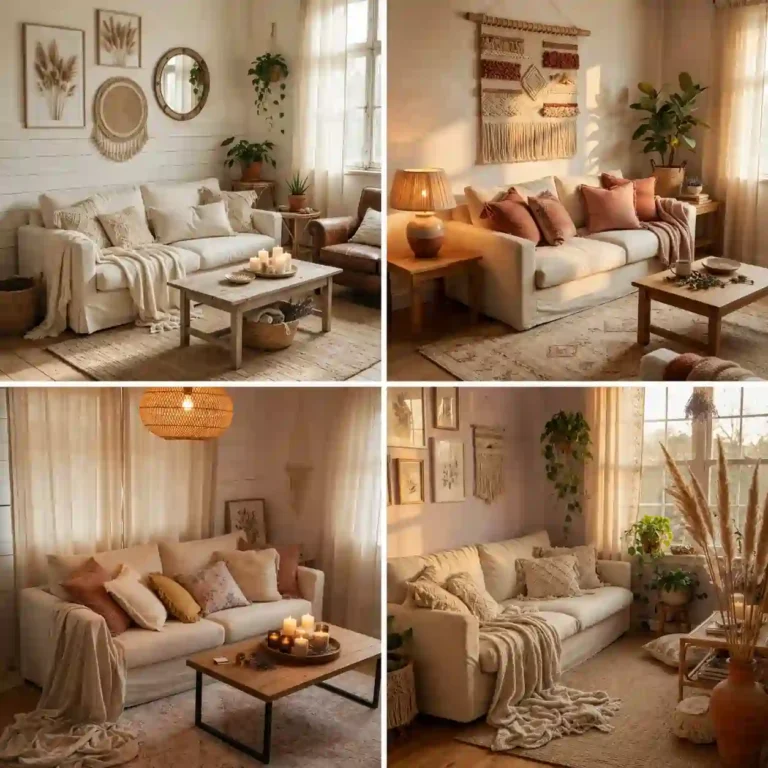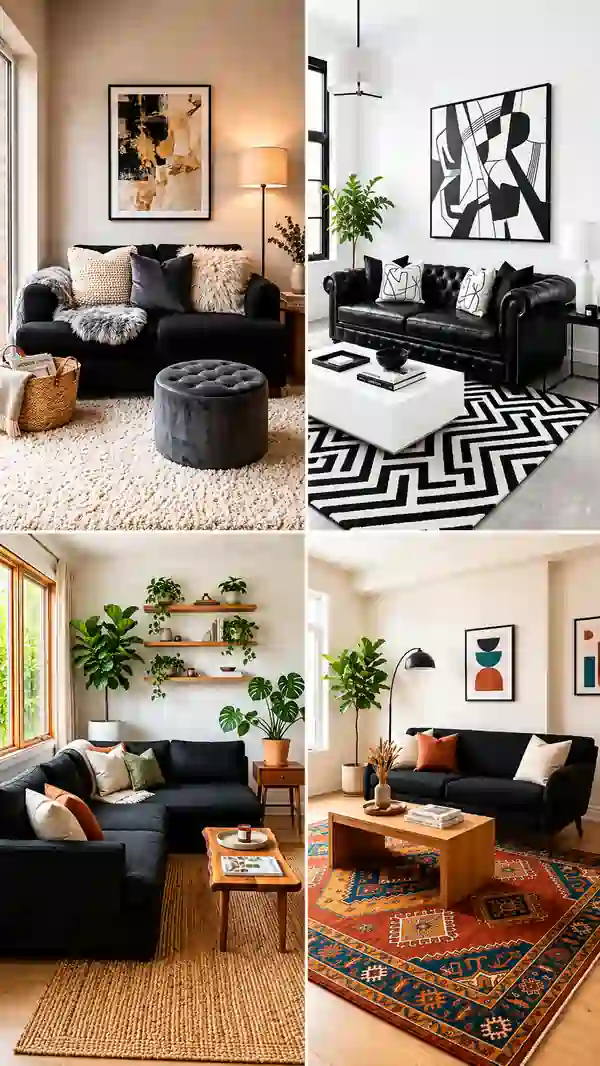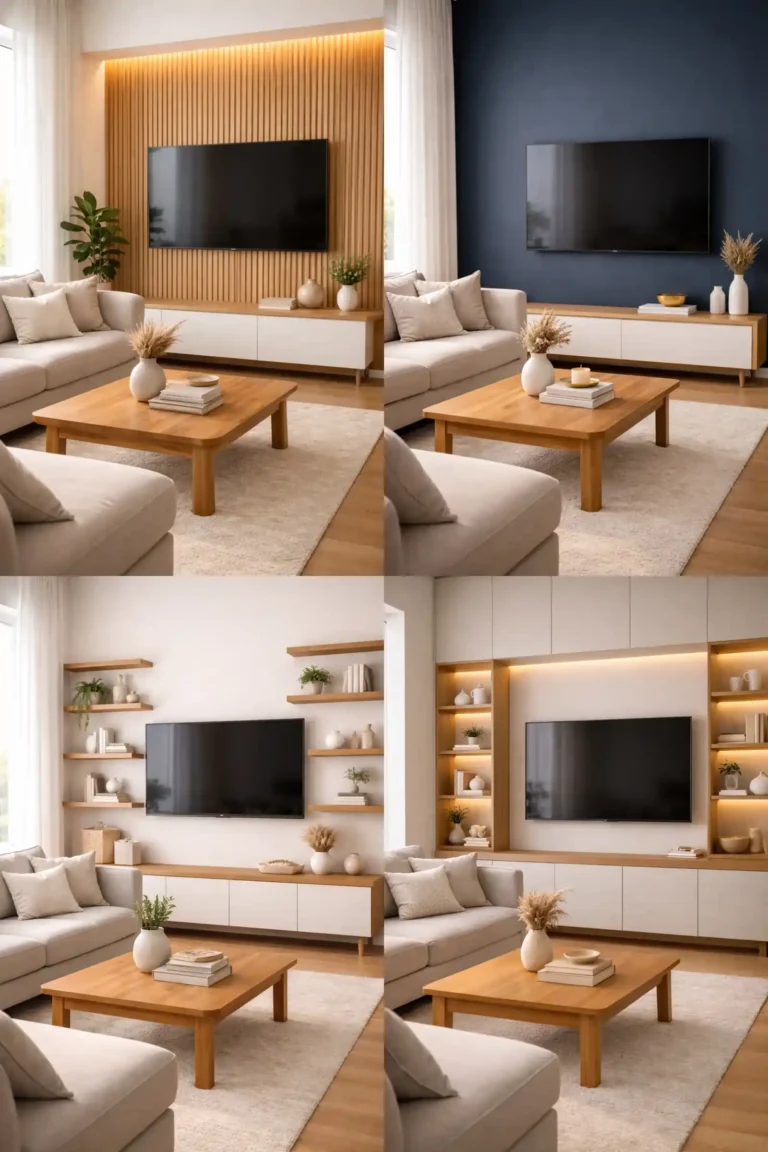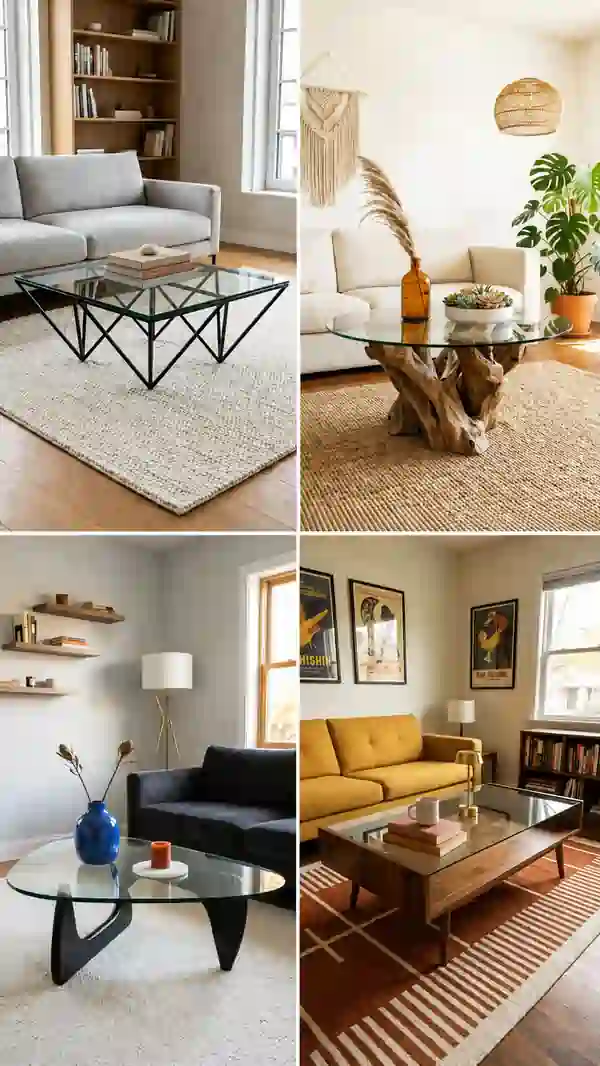
27 Living Room Inspiration Ideas for Every Home Style
You want a living room that fits how you live and shows your taste. This article helps you find ideas that match any style—modern, rustic, mid-century, or eclectic—so you can mix textures, color, lighting, and furniture in ways that feel right for your home. You will learn simple, practical ways to refresh your layout, lighting, and decor so the room feels comfortable, stylish, and truly yours.
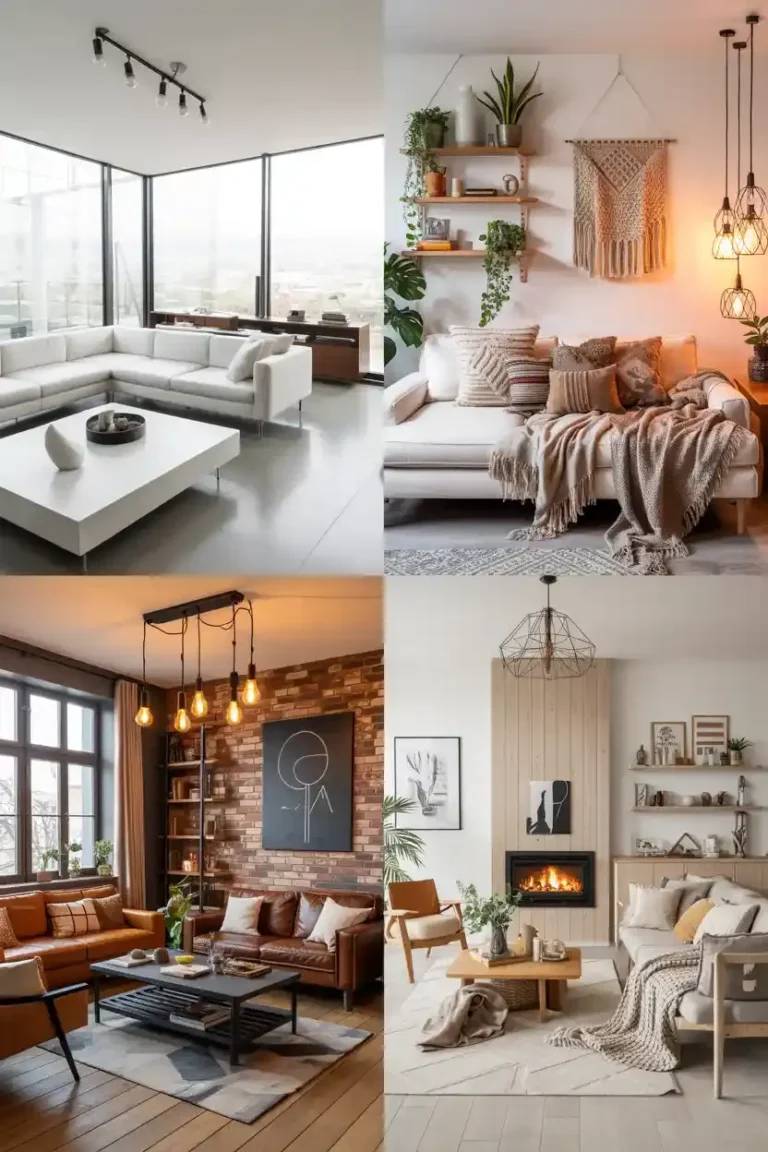
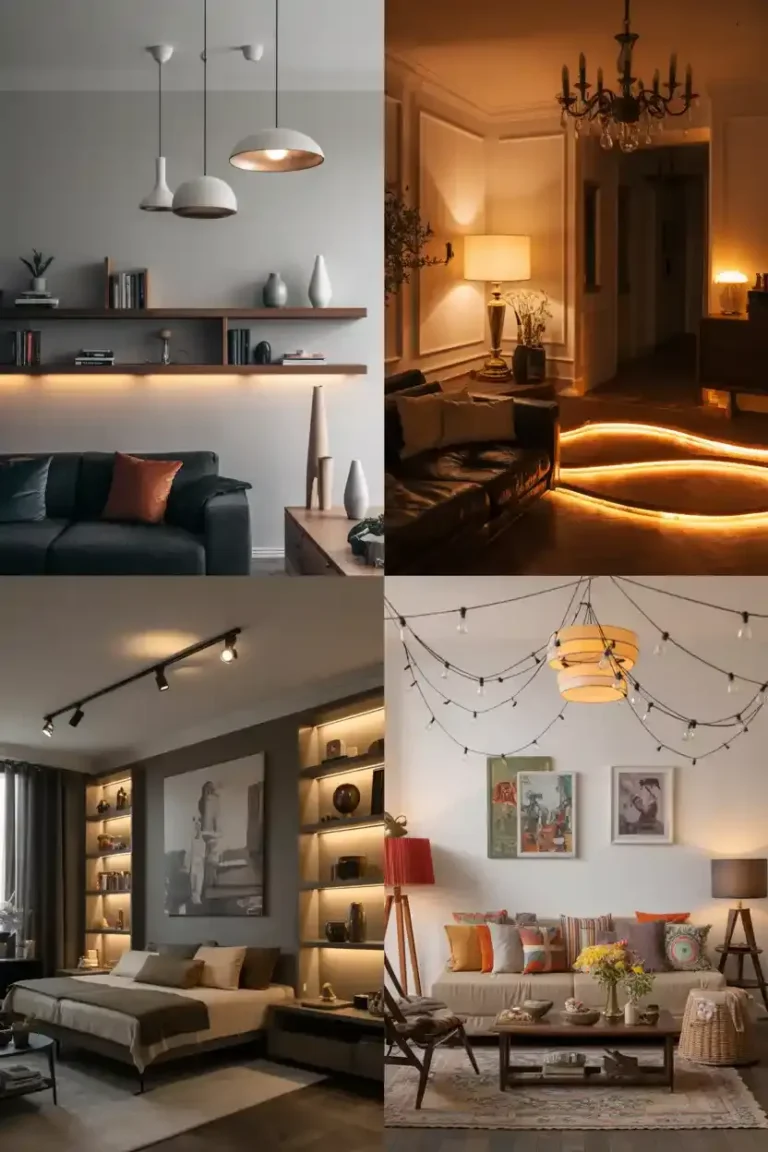
Explore inspirations that span bold accent walls, cozy reading nooks, layered rugs, smart lighting, and eco-friendly materials, all aimed at making the space both useful and beautiful. Use these ideas to guide choices about seating, storage, art, and finishes so your living room works for everyday life and special moments.
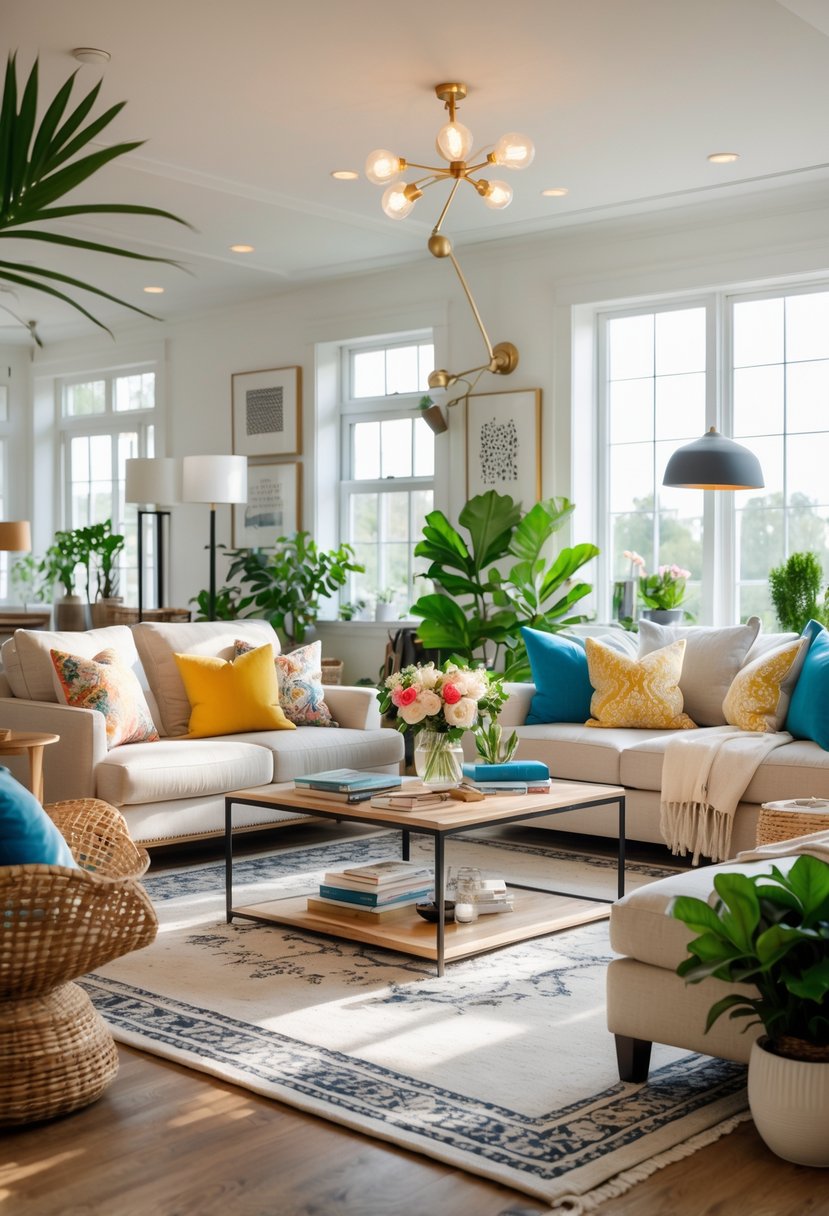
1) Mix modern minimalist furniture with natural textures
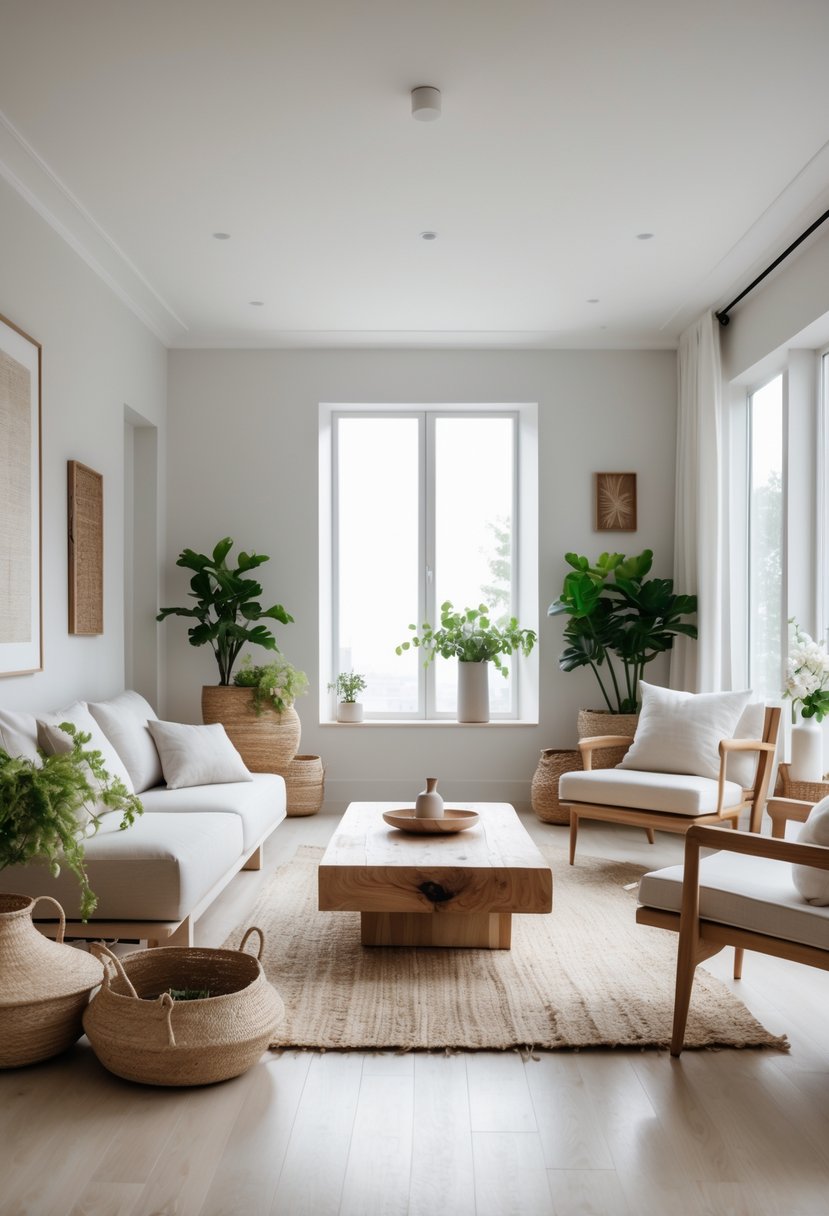
Pair clean-lined sofas and simple shelving with warm materials like wood, jute, and linen. This softens the stark look and keeps the room feeling calm.
Add a single statement rug or a woven throw to introduce texture without clutter. Keep colors neutral so the materials stand out.
Choose a few high-quality pieces rather than many small items. That lets each texture and shape breathe in your space.
2) Incorporate a statement mid-century modern sofa
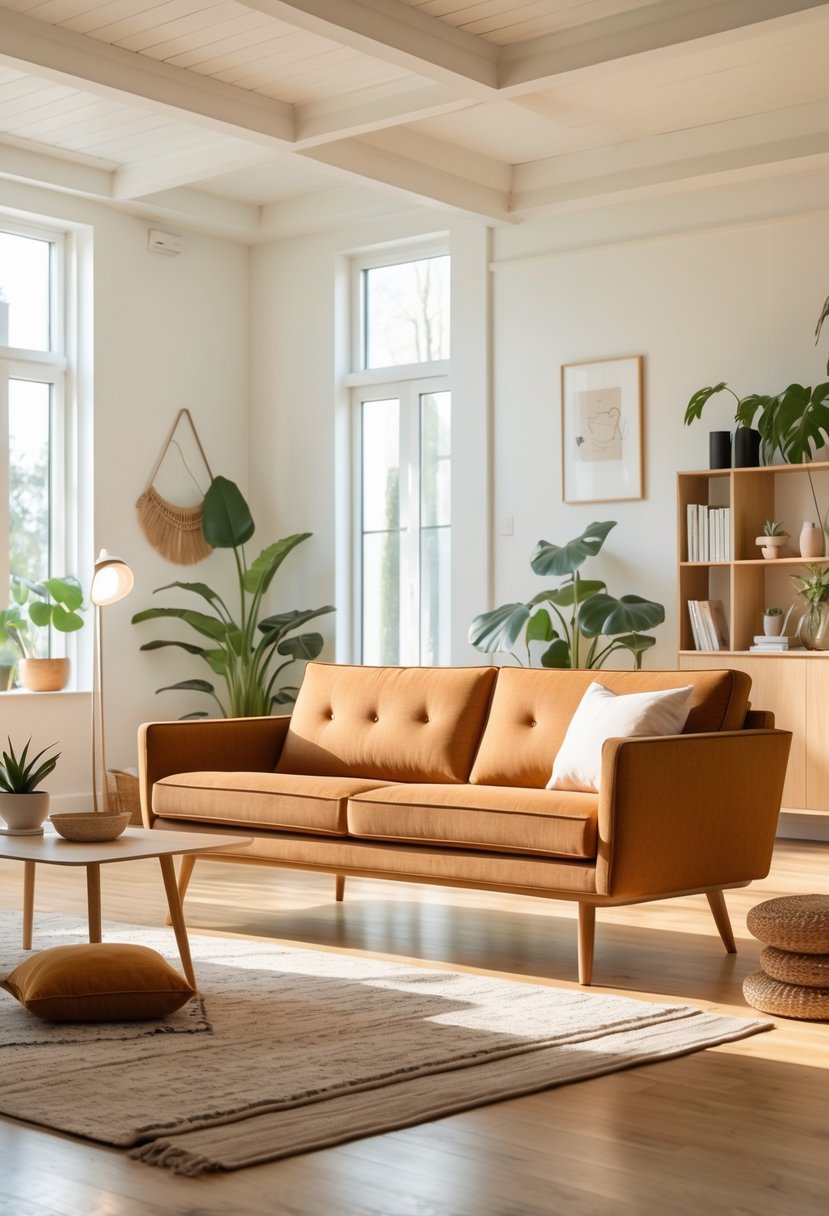
Choose a low-profile sofa with clean lines and tapered legs to anchor your living room. Its simple shape makes other decor feel intentional and balanced.
Pick a fabric or leather in a solid, muted color for versatility. You can add patterned pillows or a textured throw to bring warmth without clutter.
Place the sofa against a plain wall or centered on a rug to define the seating area. Keep surrounding furniture minimal so the sofa remains the focal point.
3) Layer patterned rugs for warmth and depth.
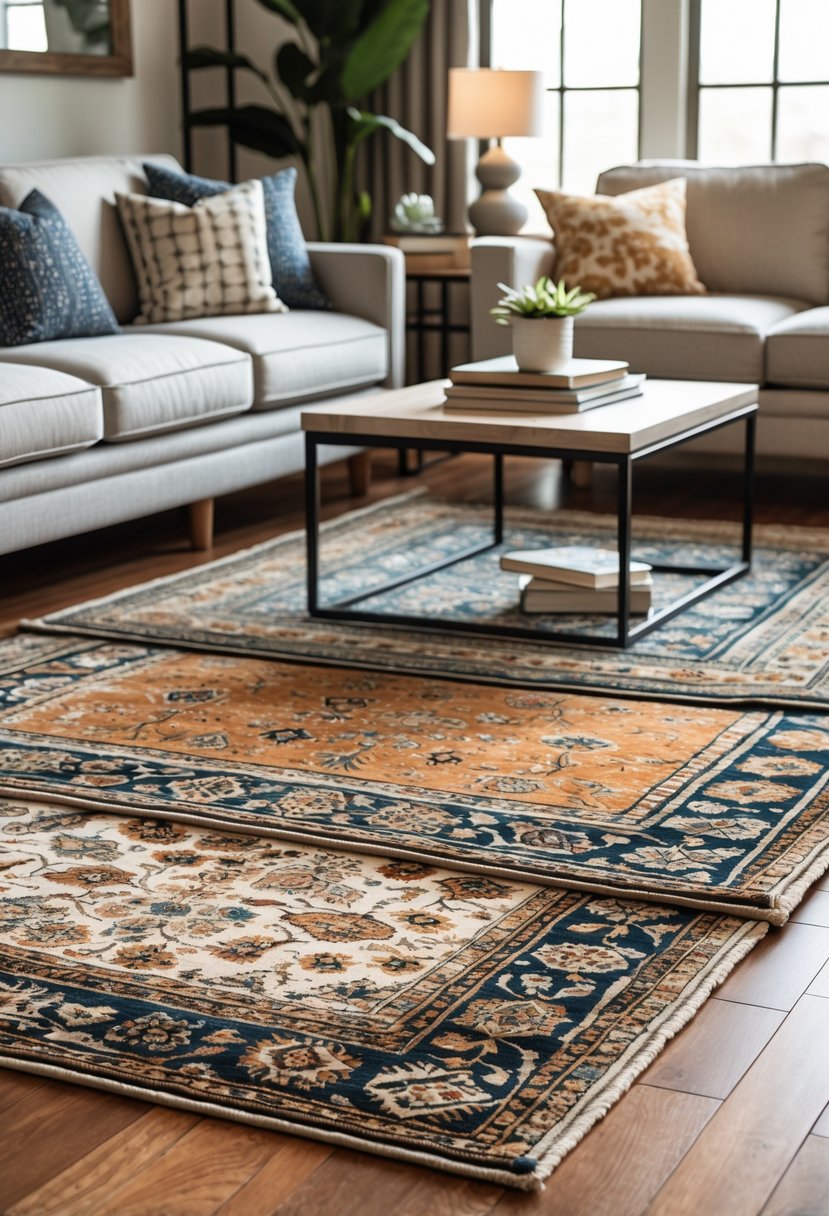
Layering rugs adds warmth and visual depth to your living room. Start with a neutral base rug and place a smaller patterned rug on top to create a clear focal point.
Mix patterns that share a color or tone to keep the look balanced. Texture matters too — pair flatweave with a plush rug for contrast and comfort underfoot.
Keep proportions in mind: the top rug should be smaller than the base so edges of the lower rug show. This helps define seating areas and makes the room feel layered, not cluttered.
4) Add sculptural lighting for artistic flair
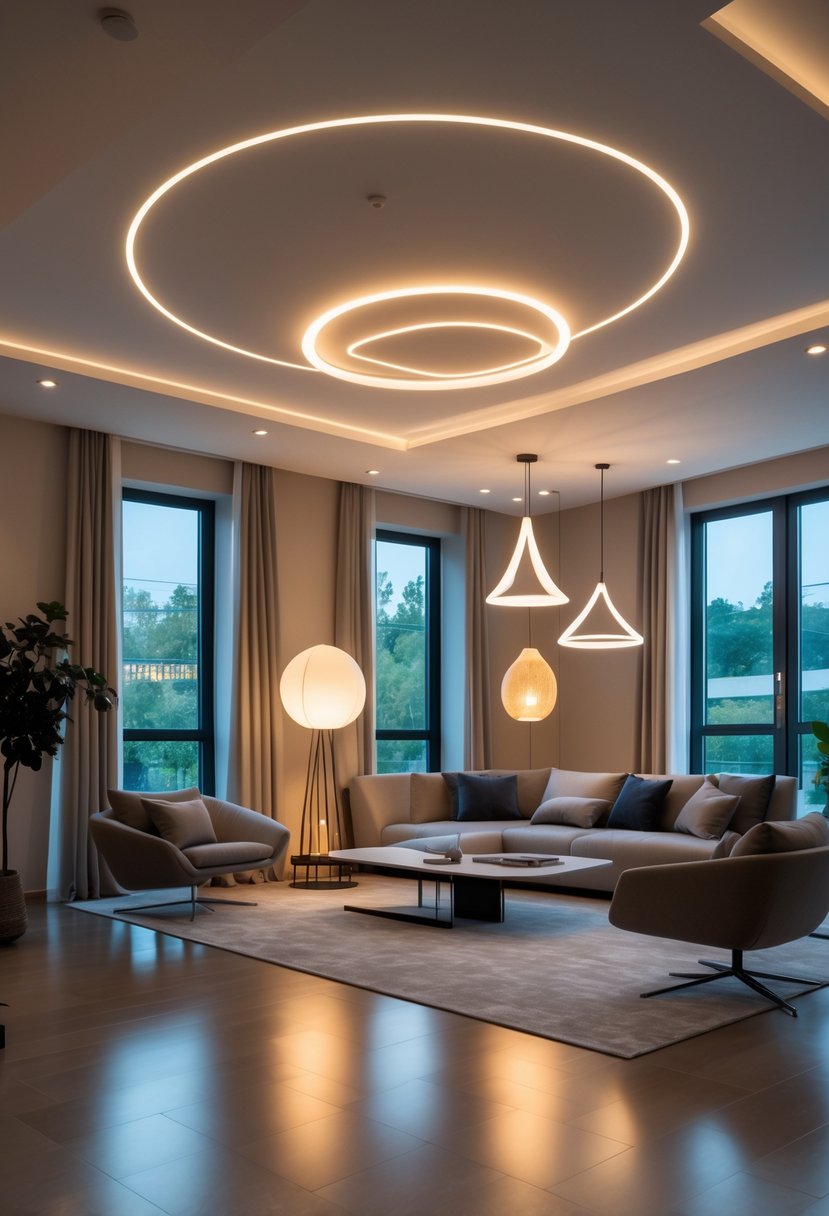
Choose a sculptural light fixture to act as a focal point. It gives your room shape and draws the eye without adding clutter.
Pick a form that matches your style—organic curves for a soft look, geometric pieces for modern rooms. You can layer sculptural fixtures with softer lamps for task lighting.
Install at the right height so the piece reads like art. Keep finishes and scale balanced with your furniture to maintain harmony.
5) Use bold accent walls in deep jewel tones.
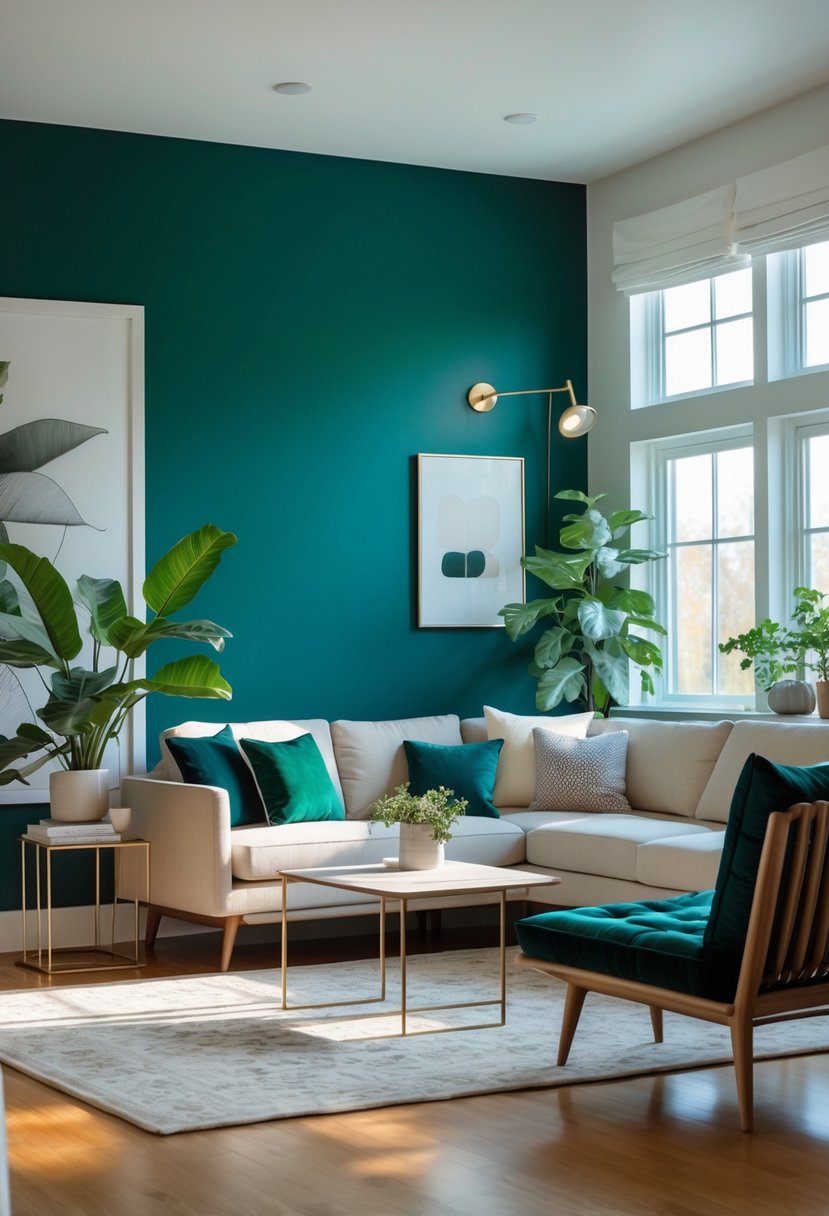
Choose a single wall and paint it a deep jewel tone like emerald, sapphire, or ruby to create instant focus.
These colors add depth without overwhelming the room when paired with neutral furnishings.
Keep the rest of the walls light to balance the space.
Add simple decor—metallic accents or textured pillows—to echo the rich hue and tie the room together.
6) Incorporate built-in shelving for storage and display.
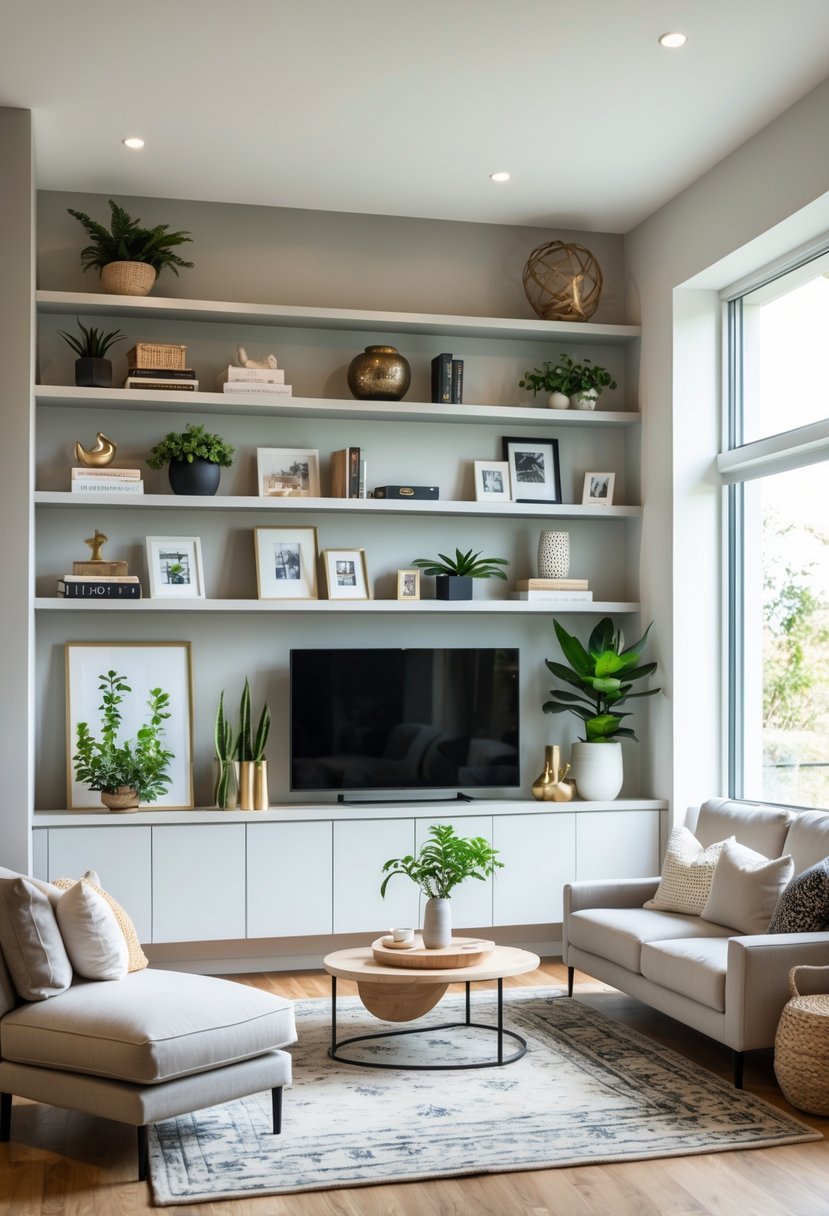
Built-in shelving gives your living room tidy, permanent storage and a place to show books and decor. You can fit shelves around a fireplace, TV, or window to use wall space well.
Choose deep shelves for baskets and media gear, or shallower ones for art and plants. Paint or stain them to match your trim for a finished, custom look.
7) Combine rustic wood elements with industrial metal
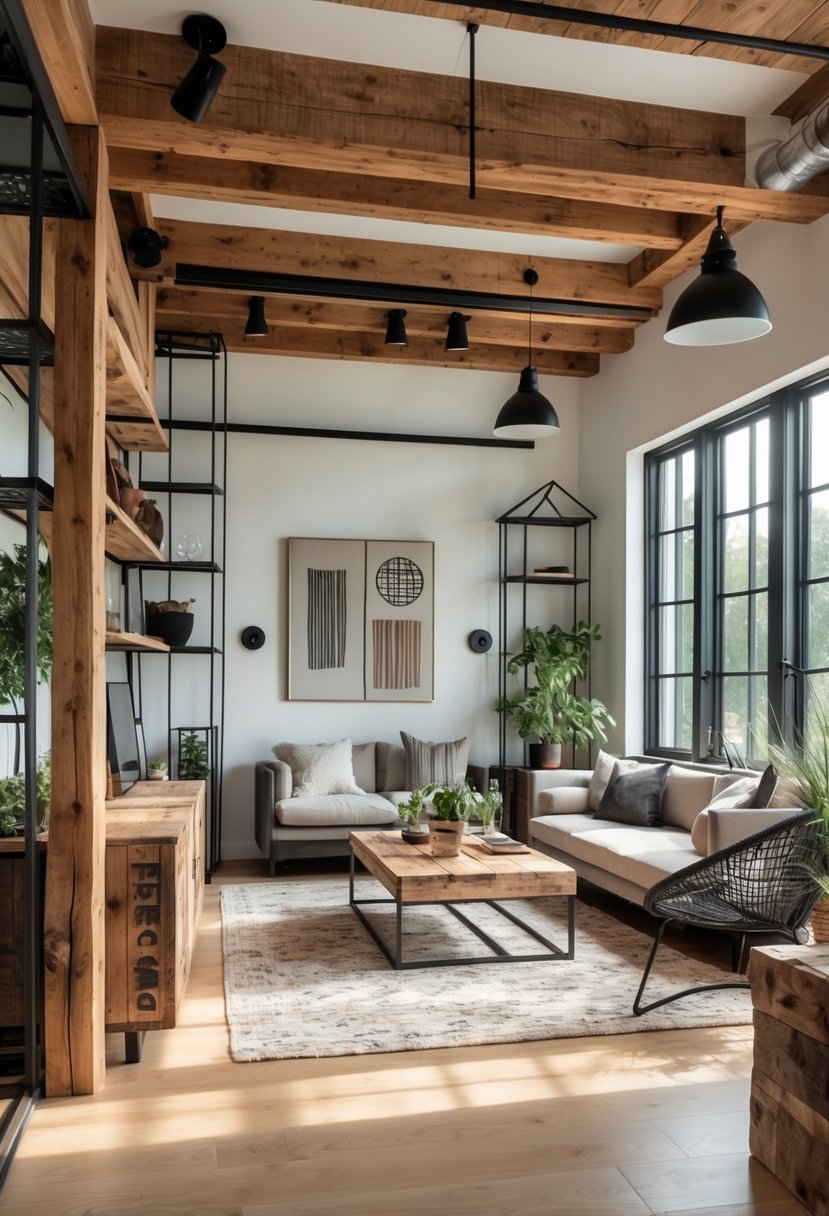
You can pair reclaimed wood furniture with black or matte metal frames to add warmth without losing edge.
A wooden coffee table and metal legs create contrast that feels intentional and lived-in.
Keep finishes simple: raw wood grain and brushed metal work best together.
Add a few soft textiles so the room stays cozy and not stark.
8) Use oversized art pieces to create focal points
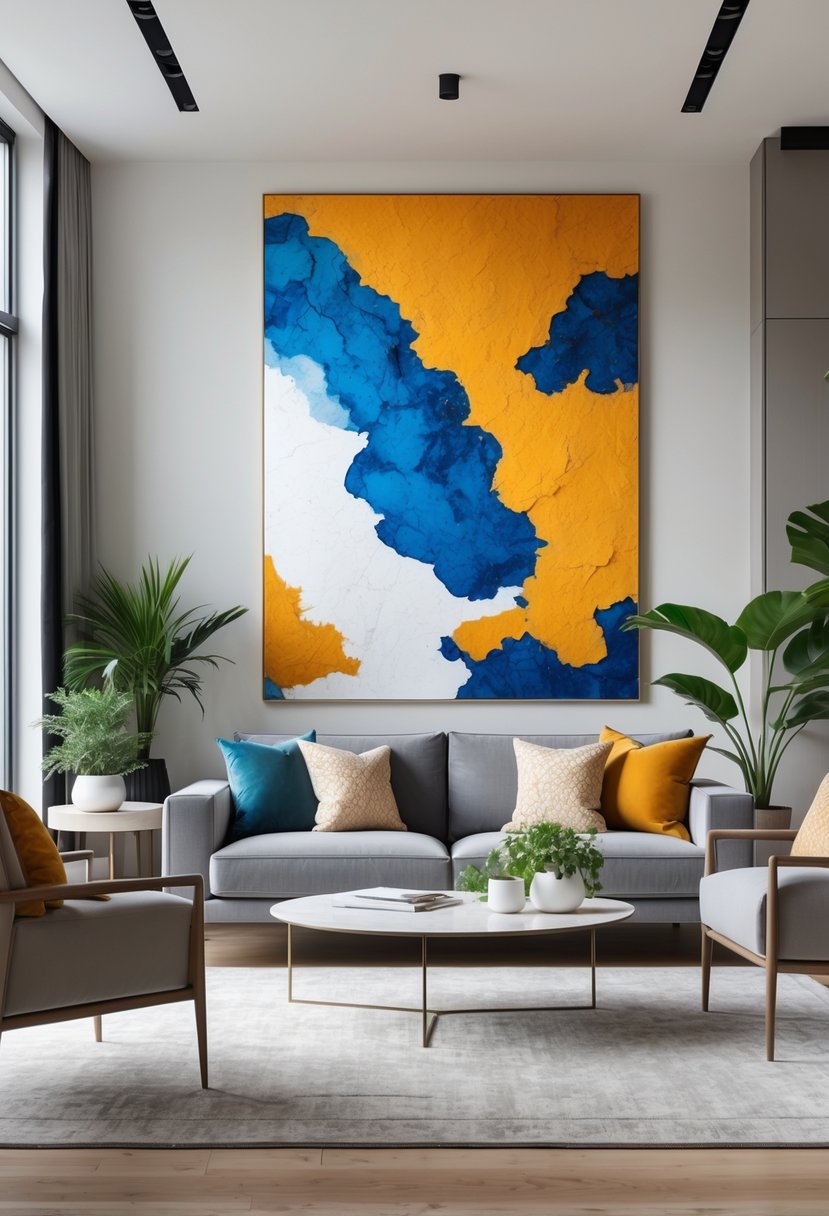
Choose one large painting or print to anchor your living room. It draws the eye and gives the space a clear center.
Place the piece above the sofa or mantel at eye level. Leave enough wall space around it so the art breathes.
Match the art’s colors to a few room accents like pillows or a rug. That keeps the look balanced and intentional.
9) Bring in botanical prints and houseplants for freshness.
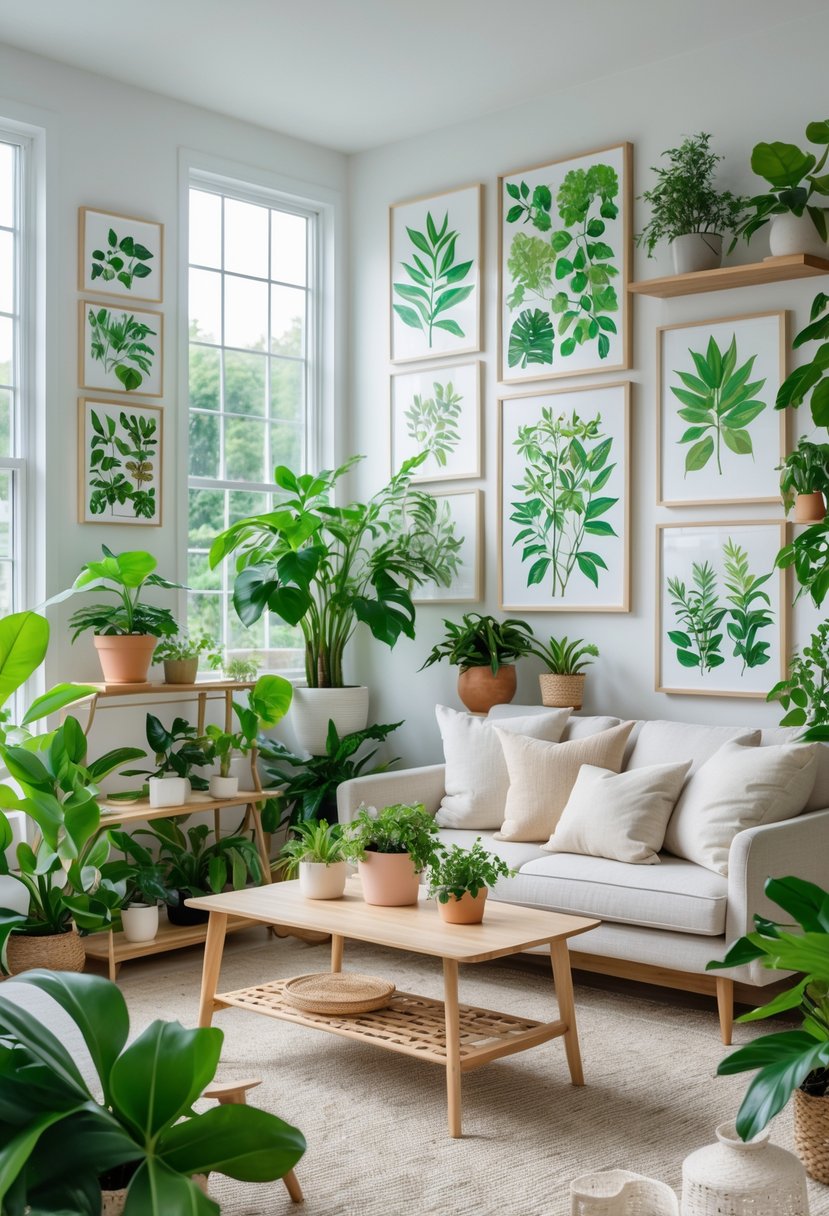
Add botanical prints to walls or cushions to give your room a calm, natural feel. Choose simple leaf or floral patterns that match your colors.
Place a few houseplants where they get light — a tall plant in a corner and smaller pots on shelves work well. If you lack sunlight, pick low-light plants or quality faux options.
Mix real plants with botanical art for depth and texture. Rotate plants and dust leaves so they stay healthy and look fresh.
10) Create a cozy reading nook with a classic wingback chair
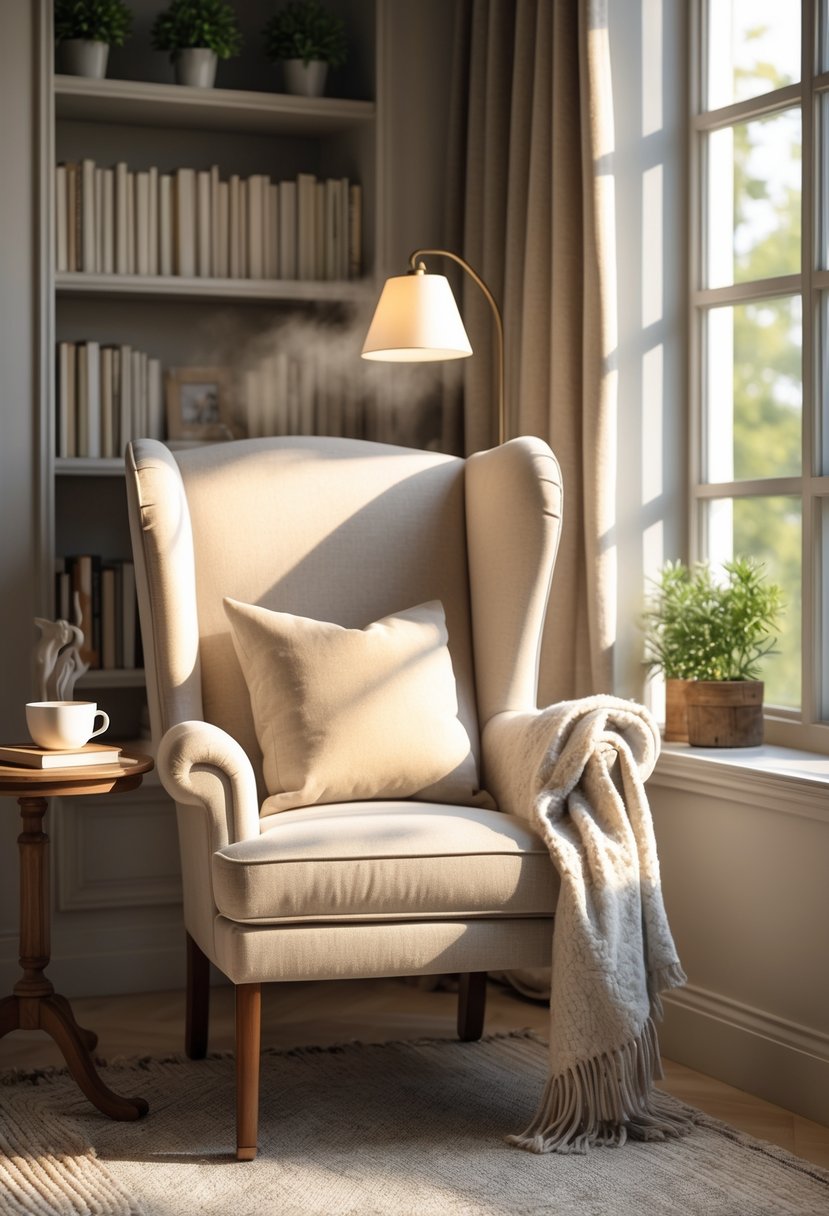
Place a wingback chair near a window or in a quiet corner to make a clear reading spot. The high back blocks drafts and gives you a sense of privacy.
Add a small side table and a focused lamp for books and a cup of tea. A soft throw and one or two cushions keep the seat comfortable without clutter.
Choose a chair finish that matches your room’s style—leather for traditional rooms or a patterned fabric for a modern twist.
11) Go for monochromatic color schemes with varying shades

Choose one color and use its tints, tones, and shades to build a calm, cohesive room. This keeps your space simple while still letting you add depth with light and dark pieces.
Layer textiles, paint, and accessories in different values to create contrast without clutter. You can make a small room feel larger with lighter variations or cozy with deeper tones.
12) Incorporate vintage decor pieces for character.
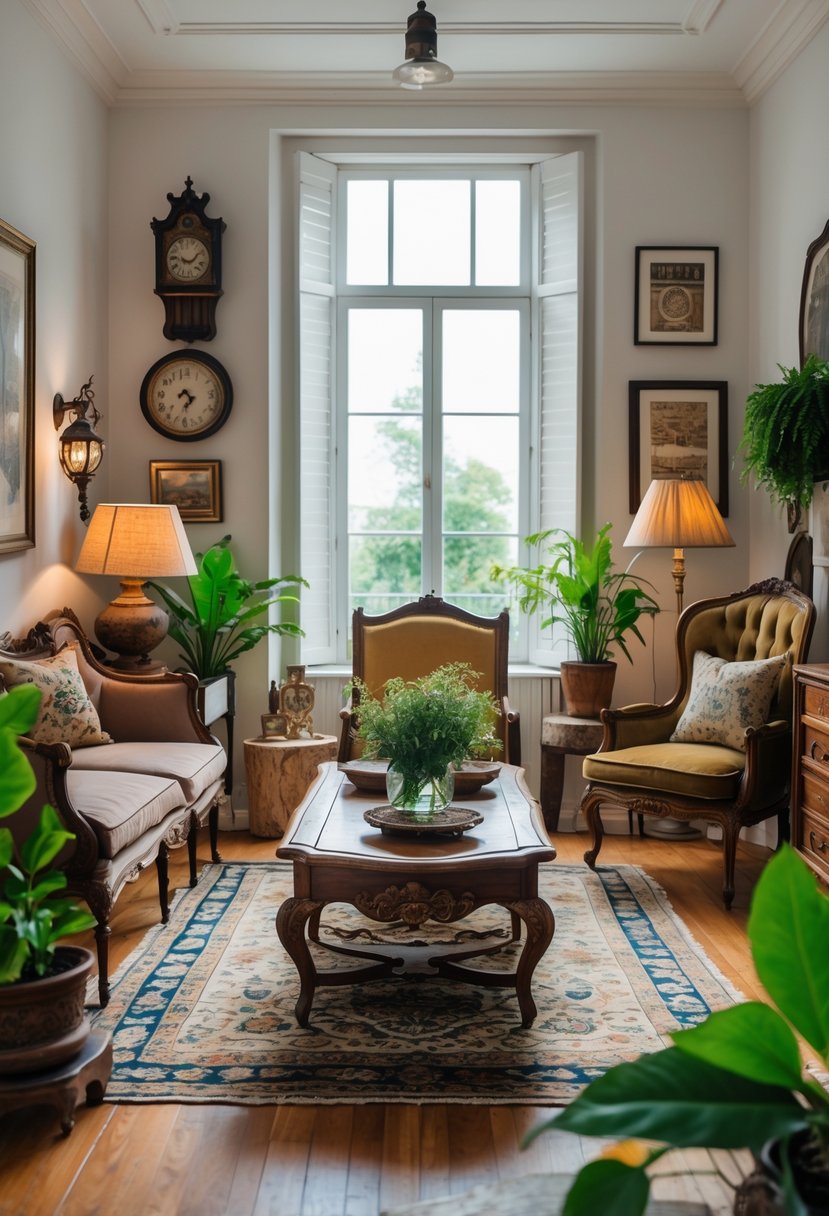
Add one or two vintage pieces to give your living room a sense of history without cluttering it. A worn leather chair, an ornate mirror, or a retro lamp can become a talking point and ground the room.
Mix vintage items with modern pieces to keep the space fresh. Let older items add texture and warmth while newer elements maintain comfort and function.
Shop thrift stores, flea markets, or online auctions to find unique pieces that fit your budget and style.
13) Use geometric wallpaper to add visual interest
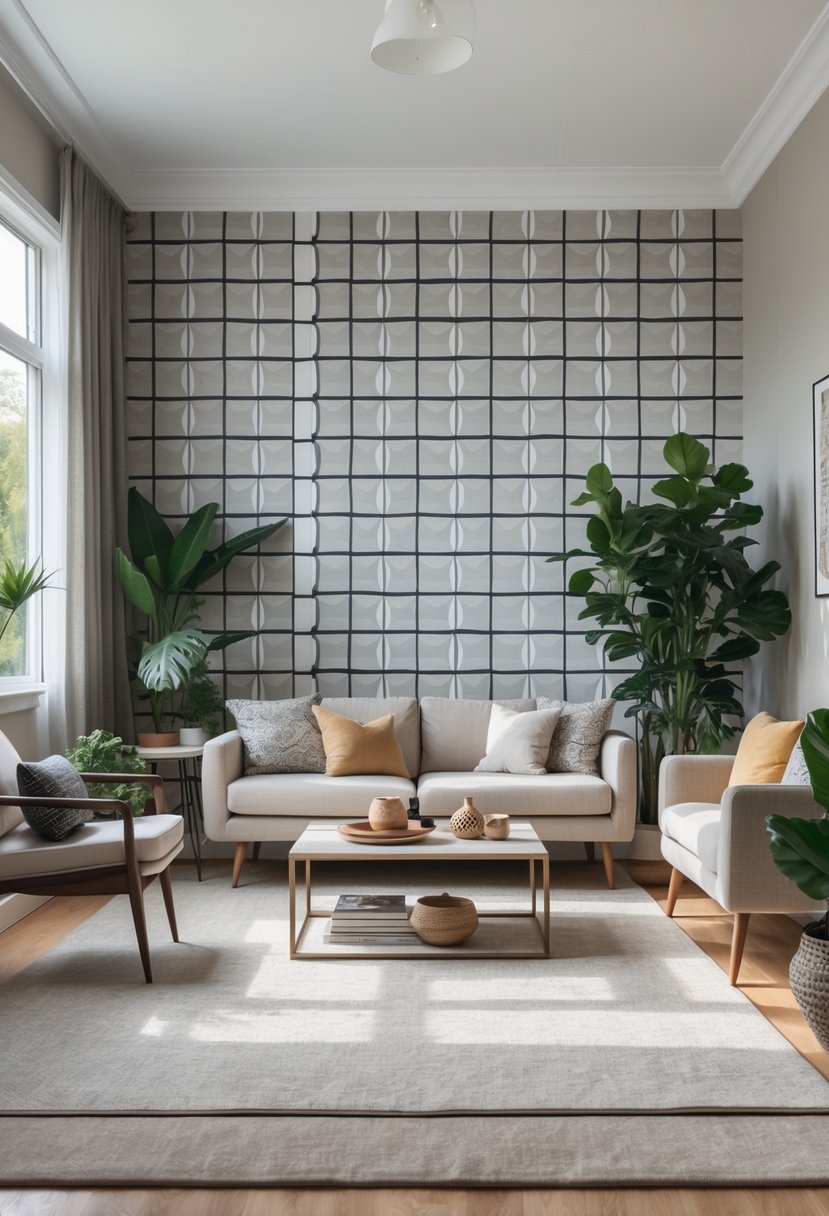
Choose geometric wallpaper to give your living room a clear focal point. Bold shapes and clean lines create rhythm without clutter.
Pick a pattern size that fits your space; small repeats suit cozy rooms, large motifs work on feature walls. Stick to a limited color palette so the design feels fresh, not busy.
Layer with simple furniture and solid textiles to balance the pattern. You’ll get a modern, structured look that lifts your whole room.
14) Pair leather furniture with soft textiles for balance
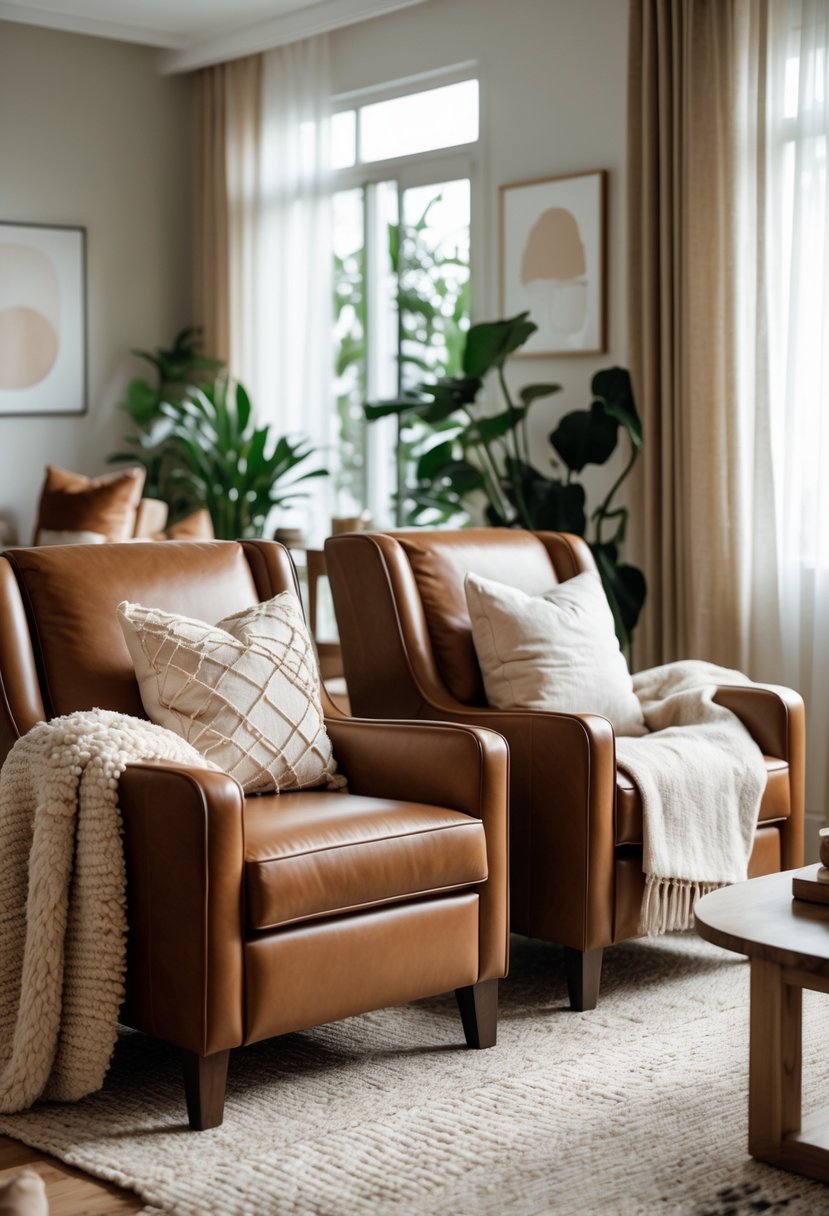
You can soften leather’s firm look by adding plush throws and mixed-fabric pillows.
Choose fabrics like linen, velvet, or knit to add warmth and touchable texture.
Layer a neutral rug under leather seating to ground the space.
Match one accent color across textiles to keep the room cohesive without feeling matched.
15) Integrate smart lighting for customizable ambiance
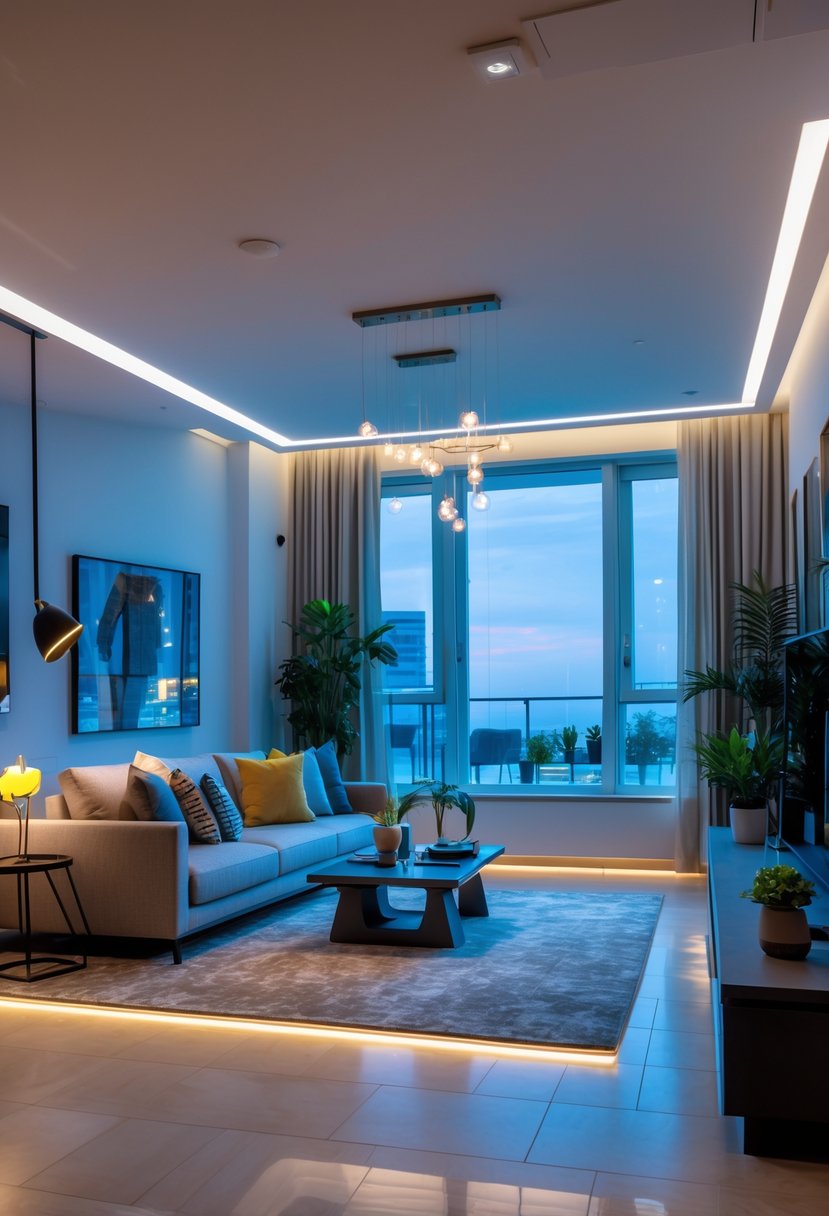
Smart lighting lets you change mood and function with a tap or voice command. You can set warm tones for relaxing evenings and brighter, cooler light for reading or tasks.
Use dimmable fixtures, color-changing bulbs, and timers to match routines and save energy. Integrate with speakers or scenes so lights shift with music or movie time.
16) Mix Scandinavian clean lines with warm textiles
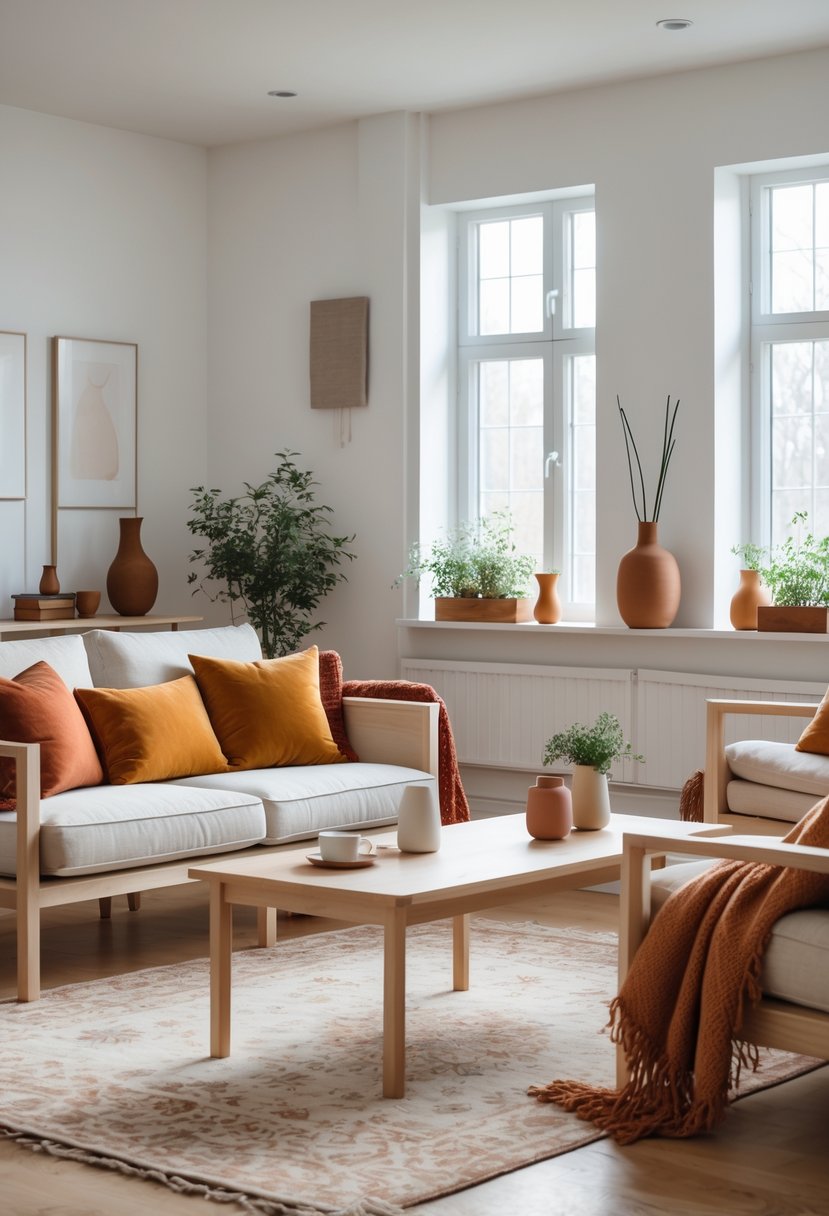
Pair simple, pared-back furniture with soft throws and rugs to balance form and comfort. You keep the room feeling light while adding tactile warmth that invites you to linger.
Choose pale woods, white walls, and slim silhouettes for structure. Layer wool, sheepskin, or chunky knits in neutral or muted tones to add depth without clutter.
17) Use curtain layering to soften window treatments
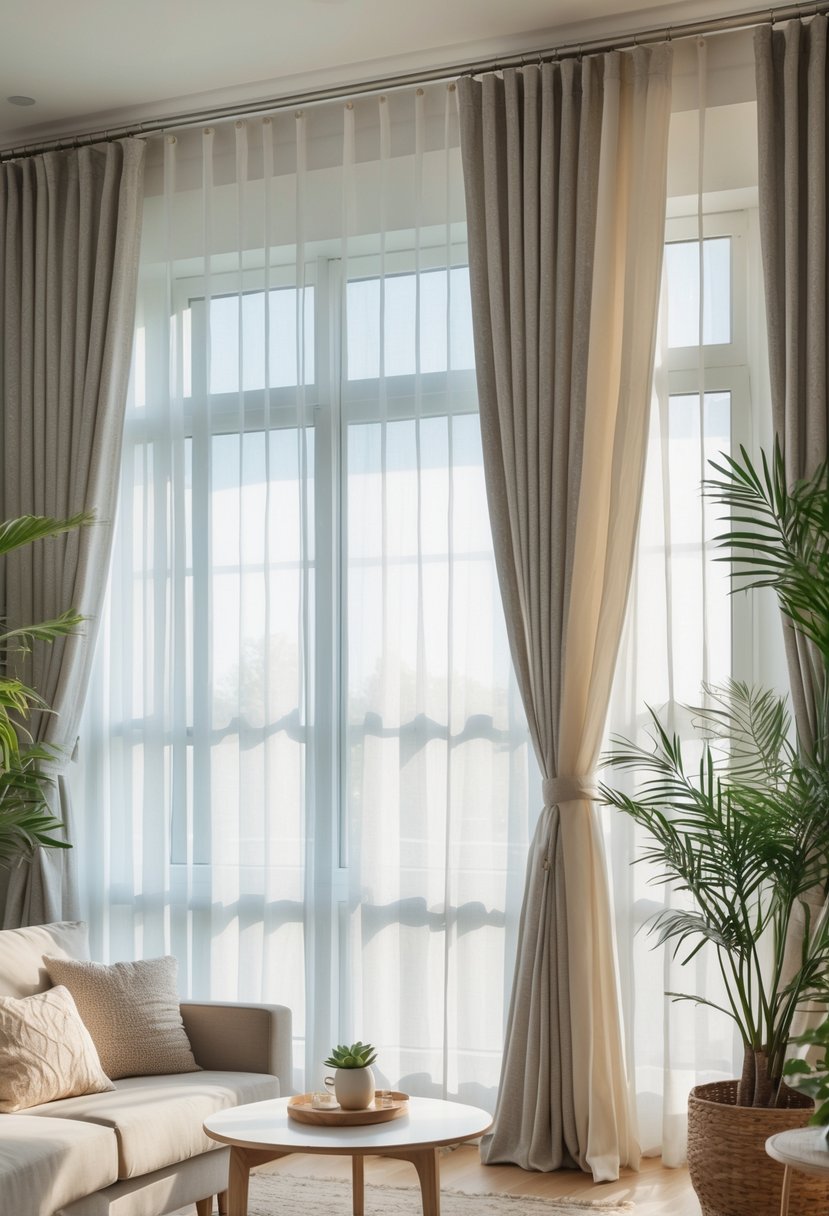
Layer sheer panels behind heavier drapes so you can keep light while adding privacy. You get soft daylight and a cleaner view without harsh glare.
Add a textured or patterned outer curtain to bring warmth and tie the room together. Match colors to existing accents for a cohesive look.
Use a separate blackout layer if you need full darkness at night. That gives you flexible control over light, privacy, and mood.
18) Incorporate brass or gold hardware for luxury touches
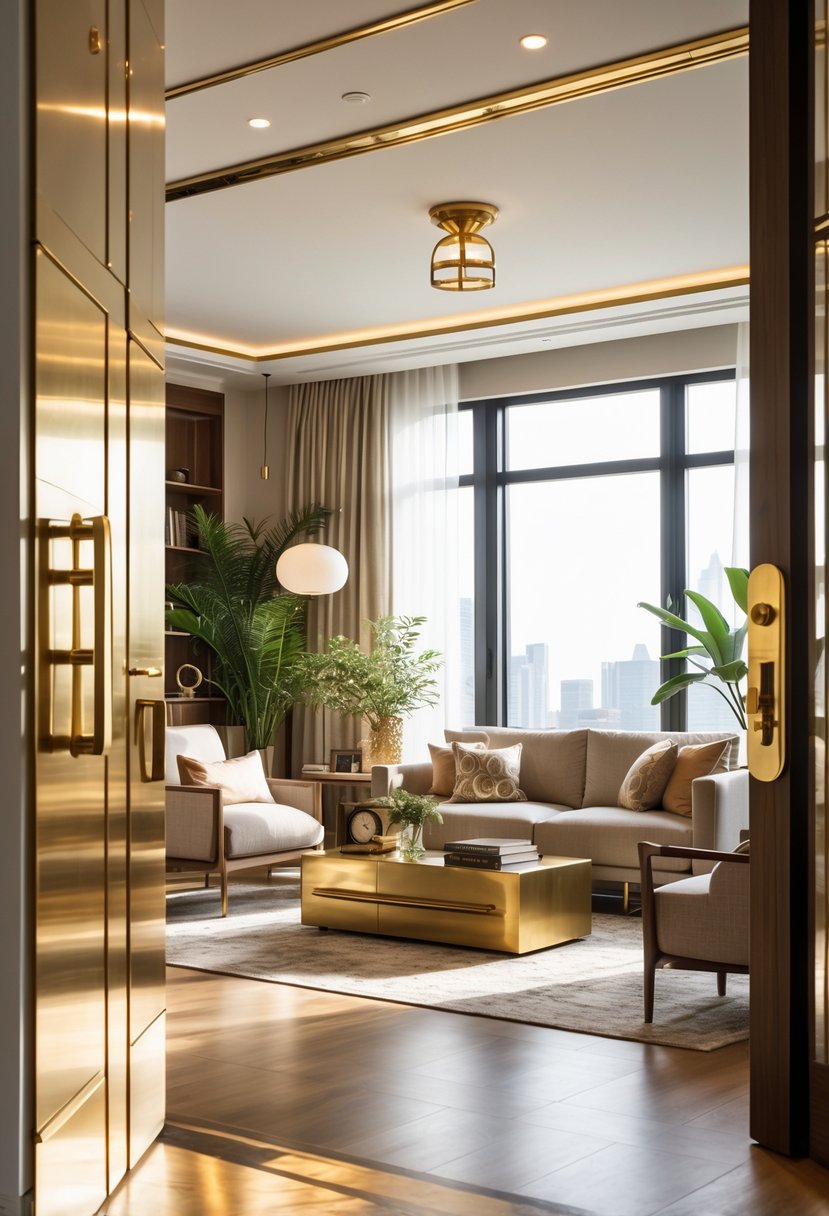
Swap out plain knobs, pulls, and light fixtures for brass or gold pieces to lift your room without major work. These finishes add warmth and feel more refined when used on cabinets, doors, and lamps.
Mix polished and brushed metals for depth, but keep one finish dominant to avoid clutter. Small gold accents—like a mirror frame or switch plates—can make your space look more intentional and luxe.
19) Use sectional sofas to maximize seating
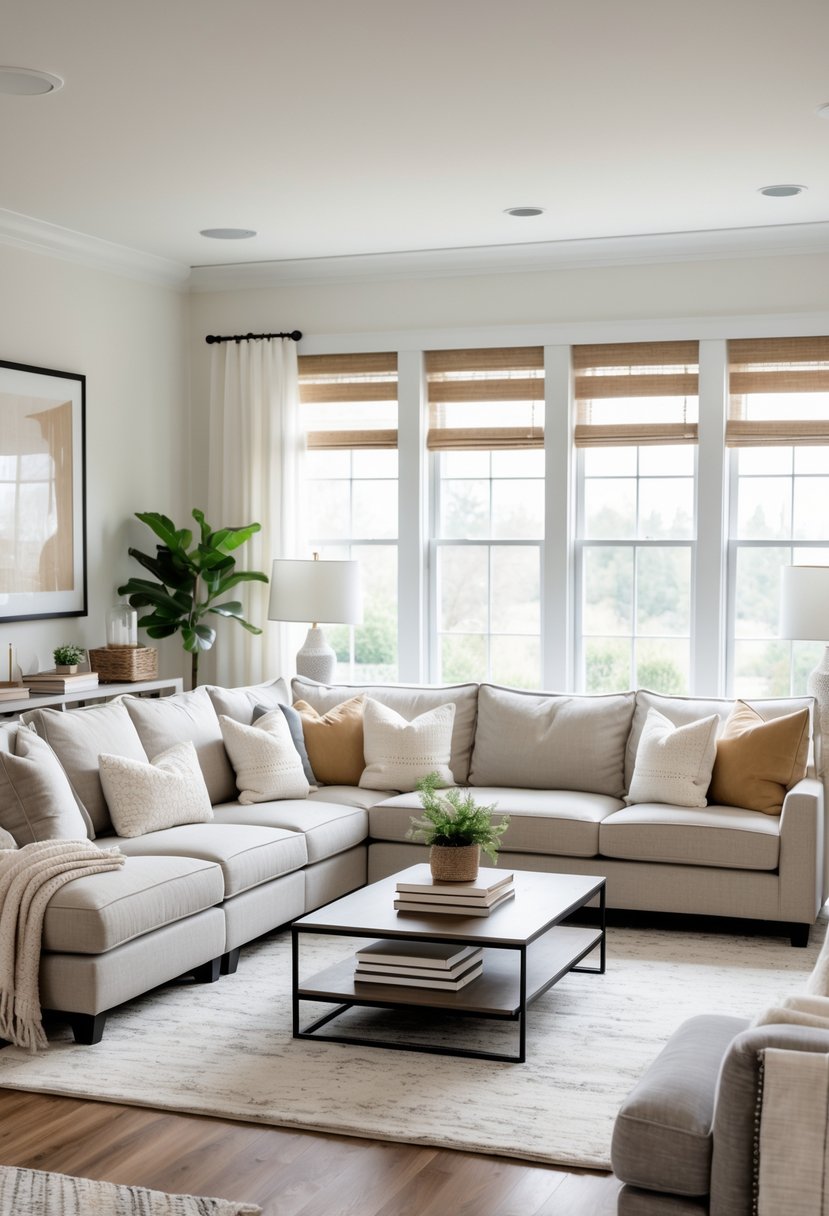
Choose a sectional to fit your room shape and traffic flow. It gives more seats than a standard sofa and defines the seating area.
Pick an L-shape for corners or a U-shape for large, open plans. Modular sectionals let you rearrange pieces for guests or daily use.
Balance size with scale; leave at least 30 inches for walkways. Add a rug and a coffee table to anchor the layout and make the space feel intentional.
20) Place decorative mirrors to enhance light and space.
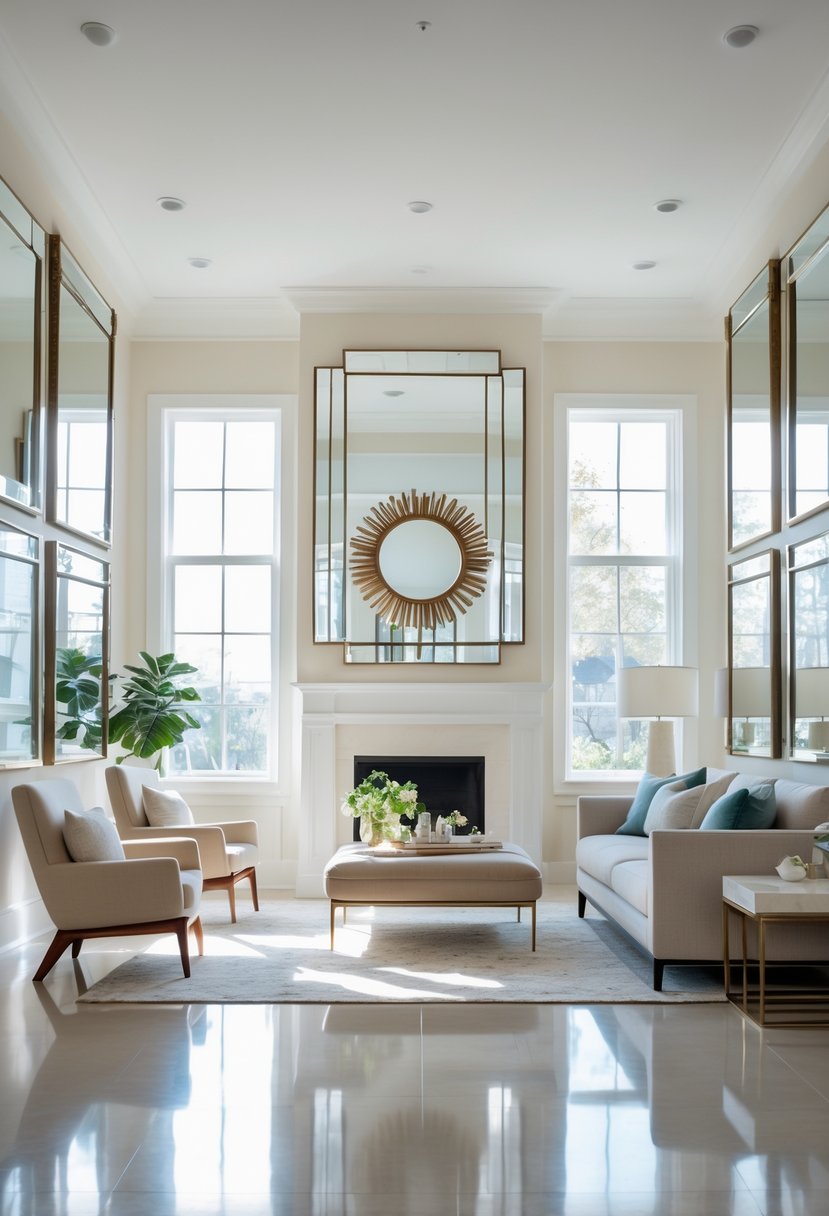
Place a mirror opposite a window to bounce natural light and make your room feel brighter. You don’t need a giant mirror; a medium one placed thoughtfully can open the view.
Group smaller mirrors on a wall to create depth and visual interest. Choose frames that match your style to keep the look cohesive.
Lean a large mirror against a wall for an easy, modern upgrade. It reflects light and adds a strong focal point without permanent installation.
21) Add a gallery wall with curated personal artwork
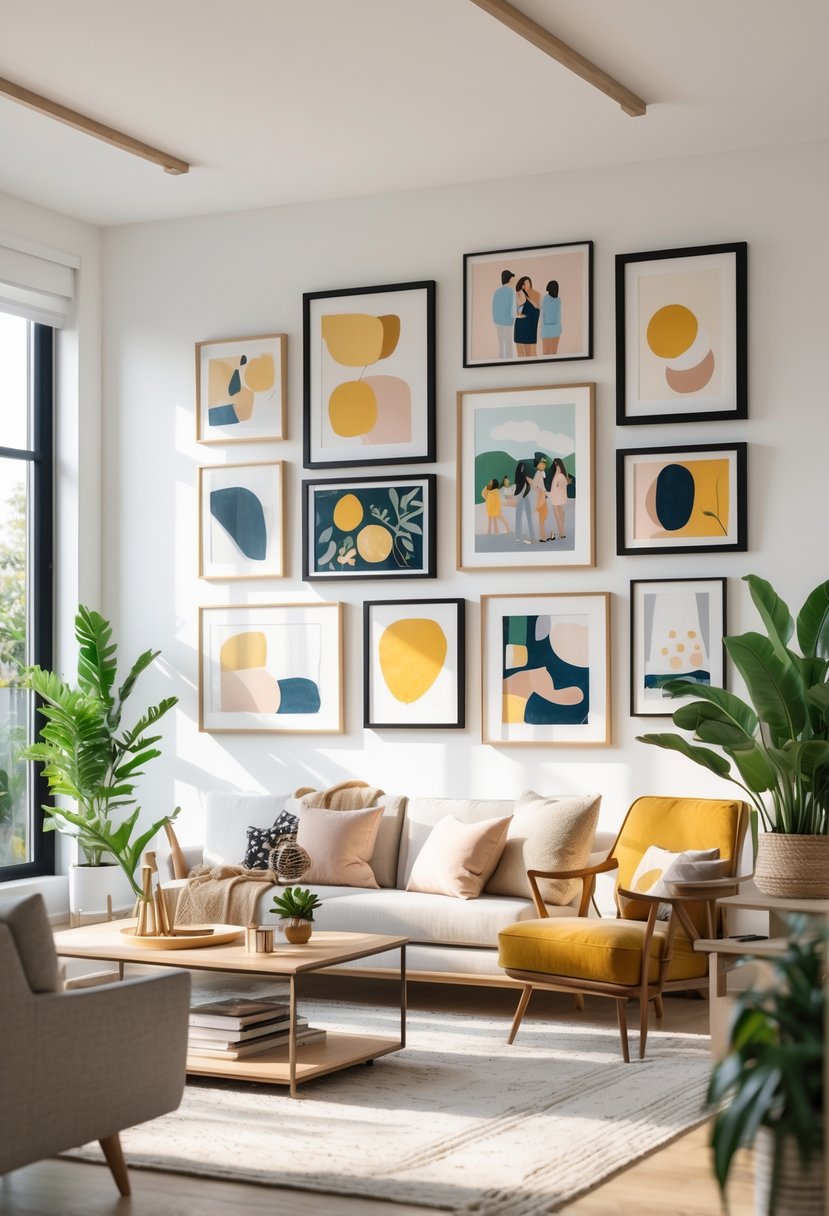
Create a gallery wall that shows your story with photos, prints, and small objects you love. Mix sizes and frame styles, but keep a simple color palette to avoid a cluttered look.
Lay out pieces on the floor first to find a balanced arrangement. Hang the largest piece at eye level, then fill around it so the wall feels planned, not crowded.
22) Use textured throws and cushions for comfort
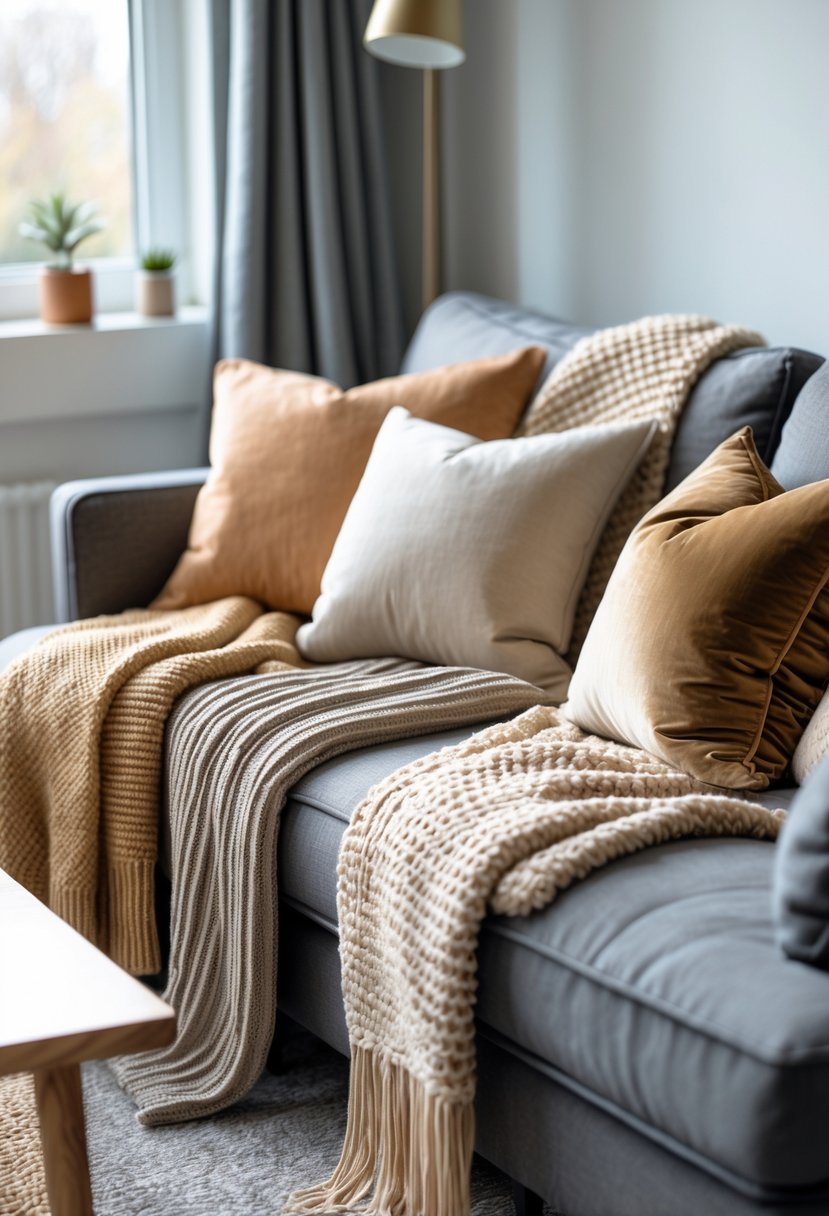
Add textured throws and cushions to make your sofa feel warmer and more inviting. Mix chunky knits, linen, and velvets to create touchable layers that still look balanced.
Choose colors that match your room’s palette, then vary patterns and scale for visual interest. Rotate cushions seasonally to keep your space fresh without big changes.
23) Incorporate a modern fireplace as a room center.
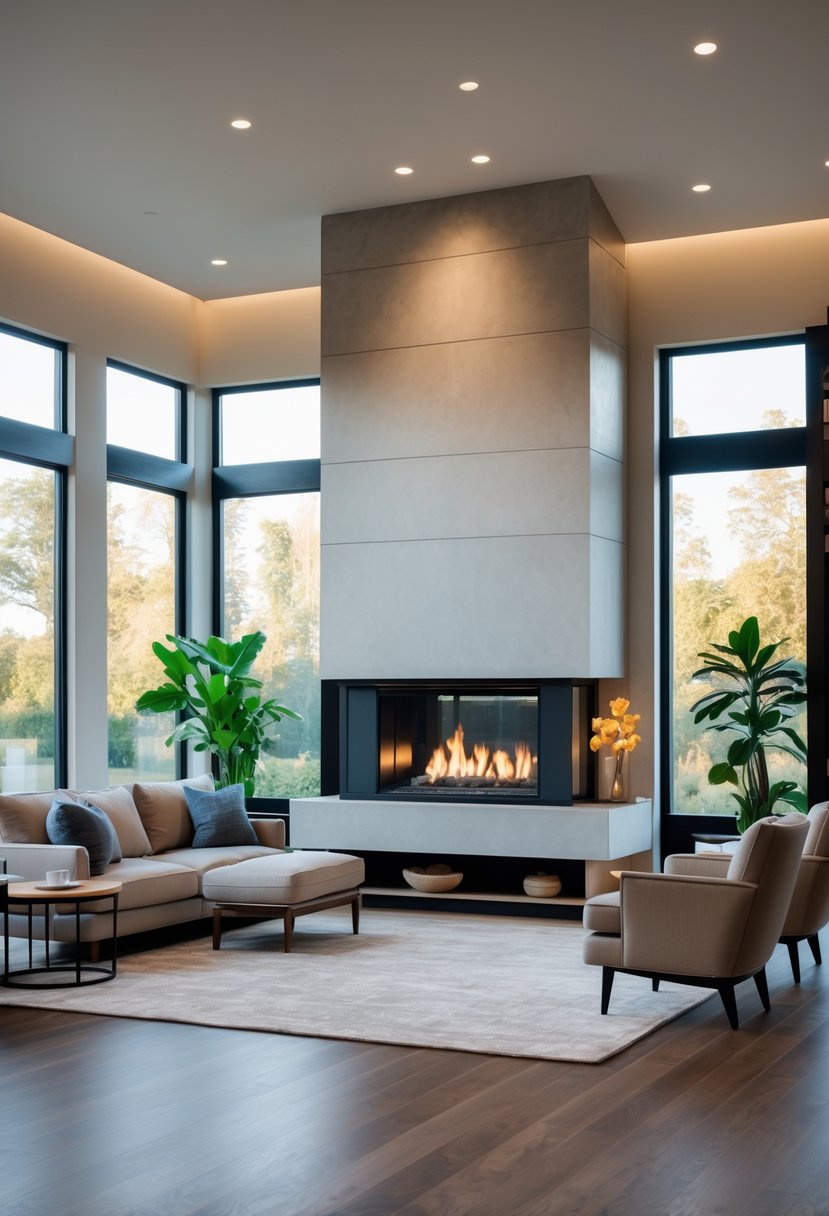
A modern fireplace gives your living room a clear focal point. Place seating to face it so conversations and views naturally gather there.
Choose a simple surround and clean lines to match many styles. Use materials like stone, metal, or matte tile for a sleek look.
Add layered lighting and a slim mantel for function without clutter. Keep decorations minimal so the fireplace stays the main feature.
24) Use open concept layouts to enhance flow.
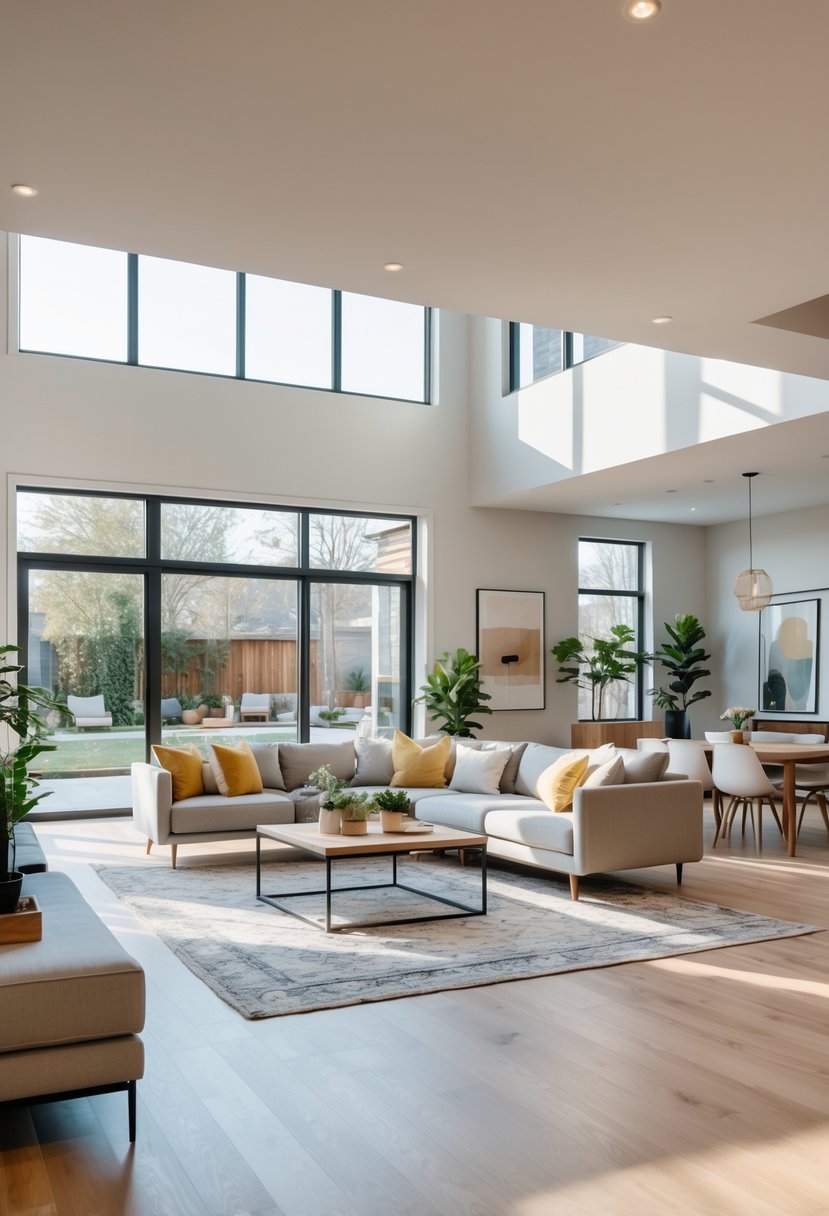
An open concept removes barriers between living areas so you can move and see across the space. You get more natural light and a sense of roominess without major renovation.
Define zones with rugs, furniture placement, or lighting rather than walls. This keeps the flow while giving each area its own function.
25) Incorporate eco-friendly materials like bamboo and recycled wood.
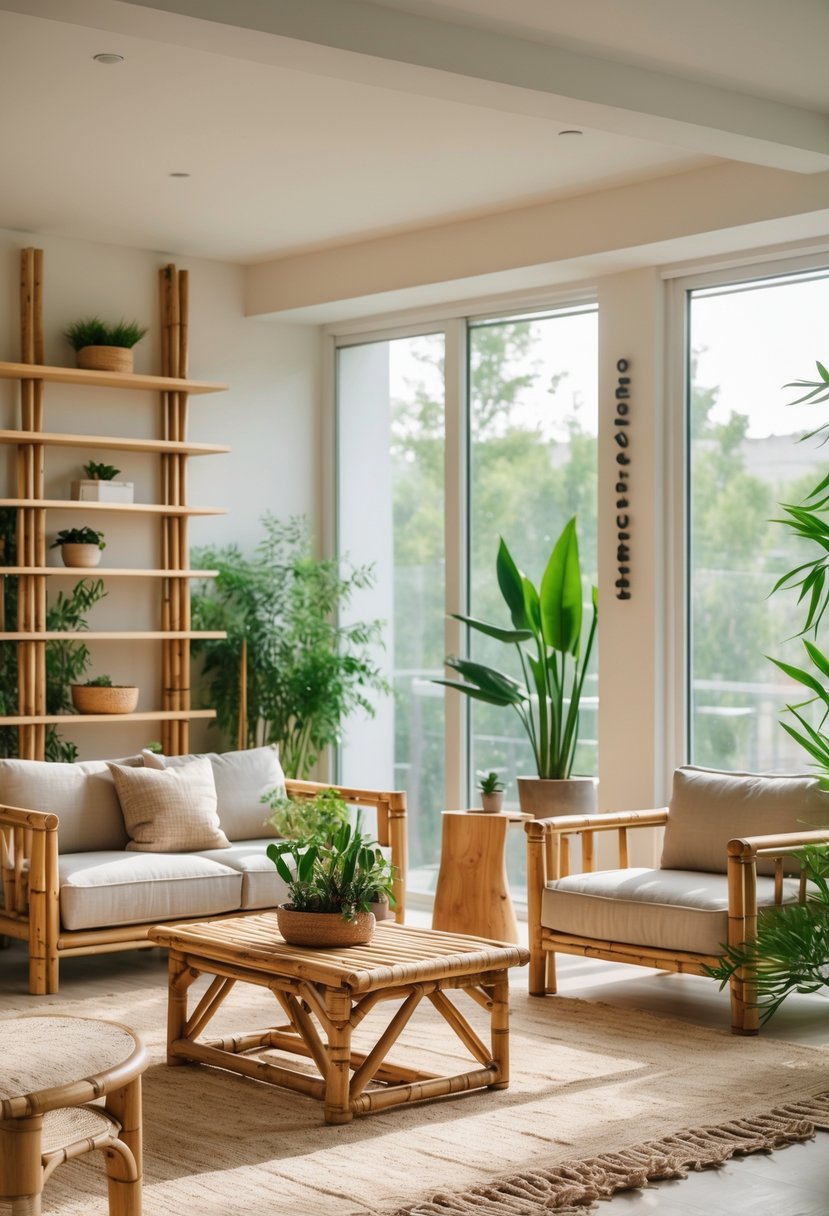
Choose bamboo or recycled wood for furniture and flooring to cut waste and add warmth to your living room. These materials last well and give a natural, calm look.
Mix reclaimed wood accents with modern pieces to keep the room fresh. You can use bamboo blinds, cork mats, or recycled-wood shelves for small, high-impact changes.
Look for low-VOC finishes and certified sources to protect indoor air quality and support sustainable harvesting.
26) Create contrast with dark flooring and light walls
Dark floors anchor the room and give your space a grounded, elegant feel. Pairing them with light walls makes the room look brighter and more open.
You can add rugs, pillows, or art to tie the two tones together. Use warm or cool accents to match your style without breaking the contrast.
27) Blend farmhouse style with modern accessories
You can keep farmhouse warmth while adding clean, modern touches. Pair reclaimed wood furniture with metal lamps or a sleek sofa for balance.
Choose neutral fabrics and simple shapes for rugs and cushions to let rustic textures stand out. Add a few modern art pieces or a geometric mirror to update the room without losing its cozy feel.
Foundational Factors for Living Room Design
Balance, scale, light, color, and function guide every choice you make. These basics control how furniture sits, how the room feels, and how well the space serves your daily needs.
Key Principles for Harmonious Décor
Start with function: list how you use the room (watching TV, reading, hosting). Choose a focal point like a sofa, fireplace, or media wall, then arrange seating to face it. Keep traffic paths clear—leave at least 30–36 inches for walkways.
Work with scale and proportion. Pick a rug that fits under the front legs of main furniture and a coffee table sized to reach within 12–18 inches of seating. Match ceiling height with tall furniture or vertical art for balance.
Control light with layered sources: overhead, task (reading lamps), and accent (wall or floor lamps). Use dimmers where possible.
Limit your palette to 3–5 colors: a dominant neutral, one or two supporting hues, and an accent color. Repeat these across textiles, art, and accessories for cohesion.
Use storage to reduce clutter. Built-ins, low cabinets, or baskets keep surfaces clean and make the room feel larger and calmer.
Personalizing Your Living Room Aesthetic
Decide which colors, textures, and focal pieces matter most to you. Pick one main tone, one accent tone, and two textures to guide furniture and decor choices.
Choosing a Cohesive Color Palette
Start with a base color for large items like walls and the sofa. Neutral bases—soft white, warm beige, or cool gray—make it easier to change accents later.
Choose one accent color for pillows, a rug, or art. Limit accents to two hues so the room stays balanced. For example, navy plus terracotta or sage plus mustard work well.
Add texture to bring depth: a wool rug, linen curtains, leather chairs, or a woven throw. Match finishes—matte metal with matte frames, warm wood with warm textiles—to keep the palette unified.
Use a simple test: place three swatches together under the room’s light. If they look harmonious across morning and evening light, they’ll work in your living room.
Conclusion
You now have a wide set of ideas to shape a living room that fits your style and needs. Pick a few tips that feel right and try them one at a time.
Start with the basics: color, furniture placement, and lighting. These changes make the biggest difference and are easiest to test.
Mix practical choices with small accents to keep costs down. Use rugs, pillows, and plants to refresh the room without a full remodel.
If you want a cohesive look, choose a simple palette and repeat key textures. That keeps the space calm while letting statement pieces stand out.
Use this list as a guide, not a rulebook. Try different layouts and swap items until the room works for how you live.
Quick checklist to help you get started:
- Define your main function (relaxing, entertaining, working).
- Pick one focal point (art, sofa, fireplace).
- Layer lighting (ambient, task, accent).
- Add one bold accent and one calming neutral.
Make changes in small steps and enjoy the process of shaping a living room that feels like yours.