
12 Easy Marble Coffee Table Living Room Cleaning Hacks That Actually Work
Marble is stunning until life happens. One wine ring, one coffee drip, one forgotten candle, and suddenly your beautiful table looks tired. Most people panic and reach for whatever cleaner is under the sink. That is usually where the real damage begins. Harsh chemicals, abrasive scrubbers, and the wrong technique can dull the surface permanently. The good news is that marble is far more forgiving than people think when you treat it the right way.

This guide covers 12 practical, tested cleaning hacks for keeping your marble coffee table living room centerpiece looking polished and pristine. No expensive products required. No complicated routines. Just simple, smart methods that actually protect your investment while keeping your living room looking its best every single day.
1. Blot Spills Immediately Instead of Wiping Them
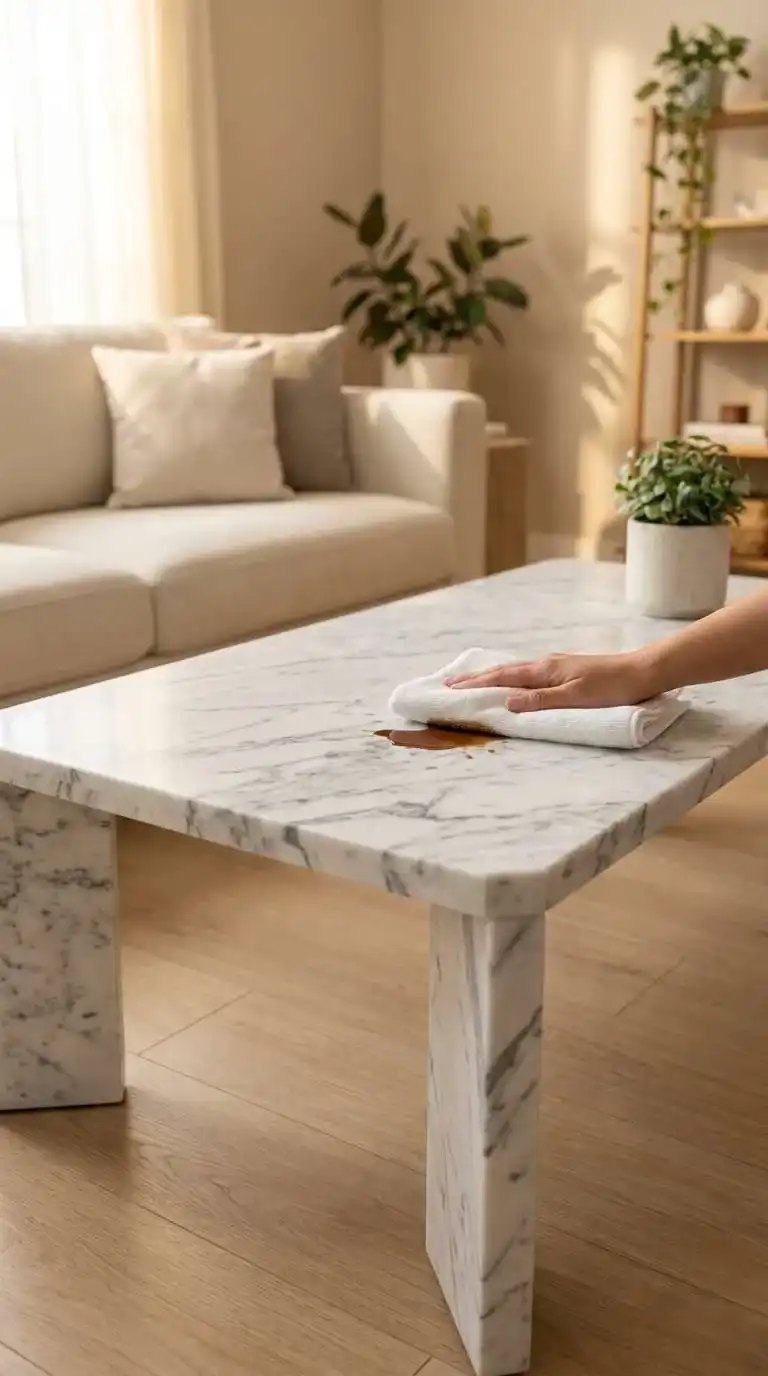
Speed is your best tool with marble. The moment something spills, reach for a clean cloth and press it gently onto the liquid. Do not wipe or drag the cloth across the surface. Wiping spreads the liquid and pushes it further into the stone’s pores. Blotting lifts it straight up. This one habit alone prevents the majority of stains that homeowners struggle with later. Keep a soft microfiber cloth tucked nearby so you are always ready to act fast.
2. Make a Gentle DIY Cleaner With Dish Soap and Warm Water
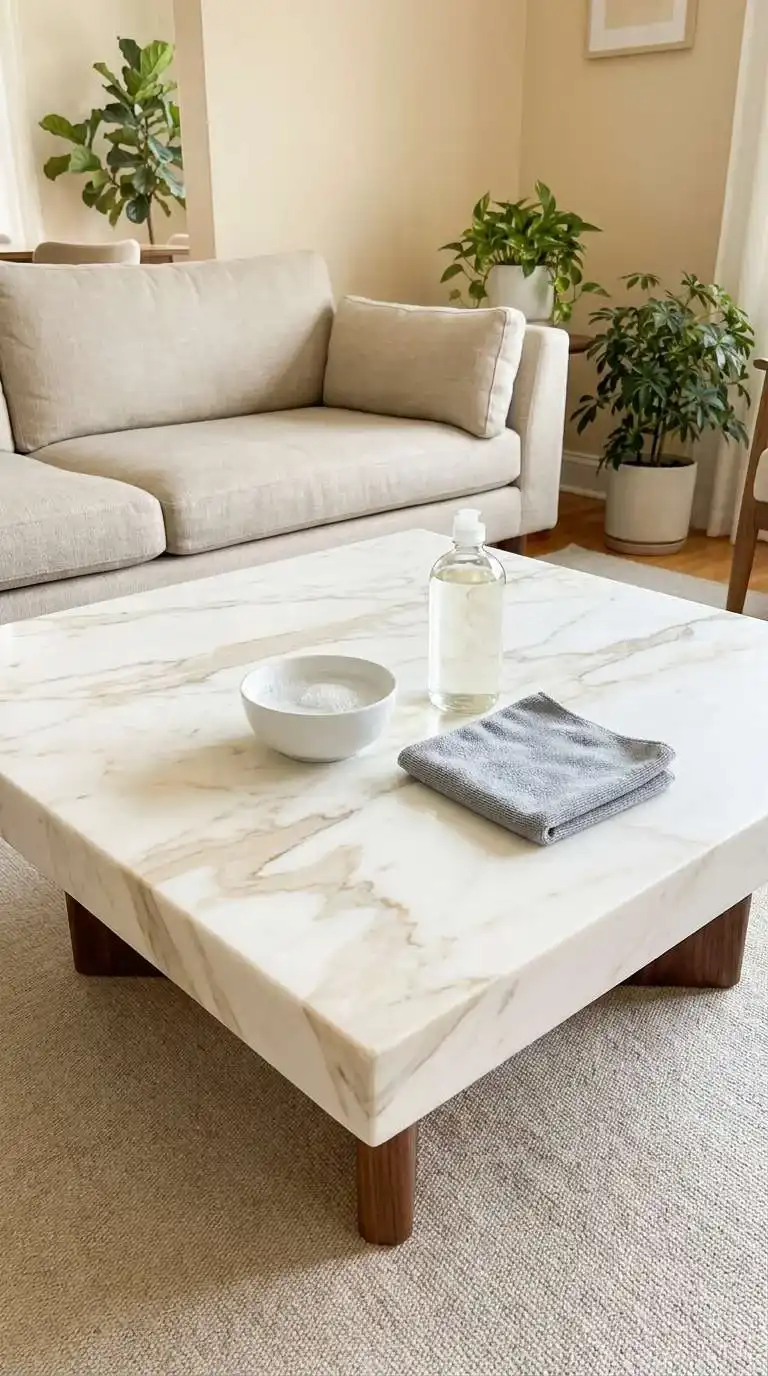
You do not need a specialty marble cleaner to keep your table spotless. A few drops of mild dish soap mixed into warm water is genuinely one of the safest and most effective cleaning solutions for natural stone. Dip a soft cloth into the mixture, wring it out well, and wipe the surface in small circular motions. Follow with a dry cloth immediately after. Never let water sit on marble. That simple two-step wipe keeps your marble coffee table living room focal point looking clean without risking any chemical damage.
3. Use Baking Soda as a Gentle Stain Lifter
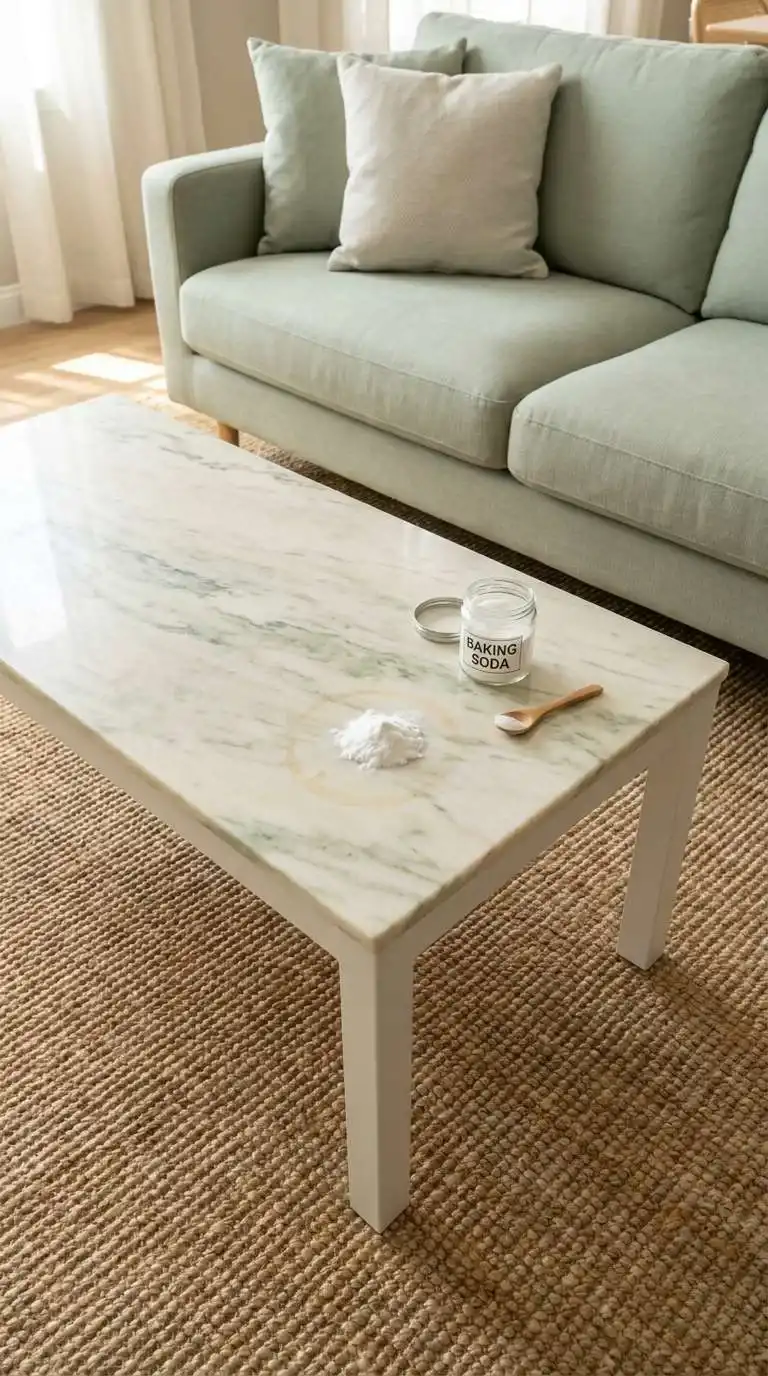
Baking soda is mildly abrasive in the best way possible. For light stains that have already dried, make a thin paste using baking soda and just enough water to form a spreadable consistency. Apply it to the stain and let it sit for no more than five minutes. Then wipe it away with a damp cloth and dry the surface thoroughly. This works especially well on food stains and light rings. Avoid scrubbing hard. Let the paste do the lifting.
4. Remove Oil Stains With Cornstarch
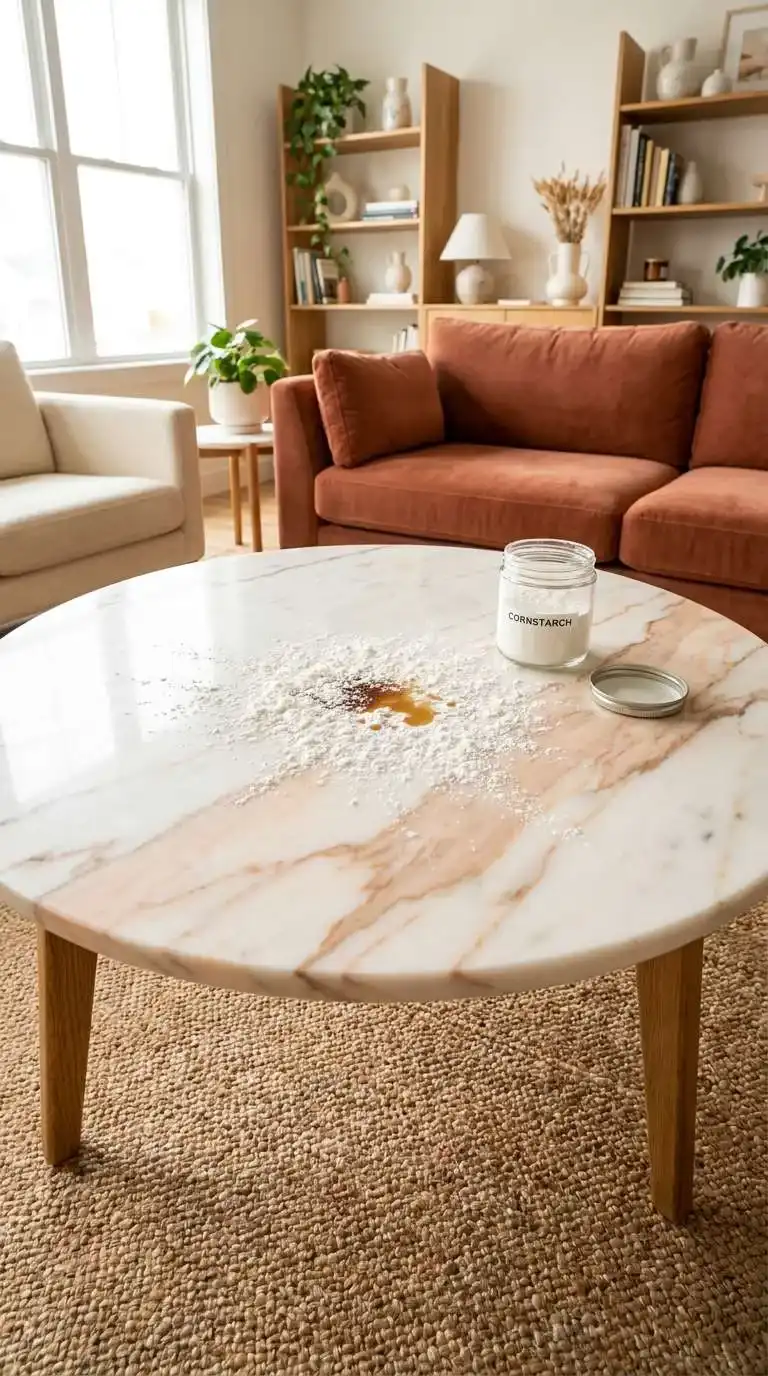
Oil-based stains from food, lotion, or candle wax behave differently than liquid spills. They need something that can absorb the grease rather than dissolve it. Sprinkle a generous amount of cornstarch directly over the oily area and leave it for at least 20 minutes. The cornstarch draws the oil up out of the stone slowly. Brush it away gently with a soft cloth and repeat if needed. This method works better than scrubbing and will not scratch or dull your marble surface.
5. Try Hydrogen Peroxide for Stubborn Light Marble Stains
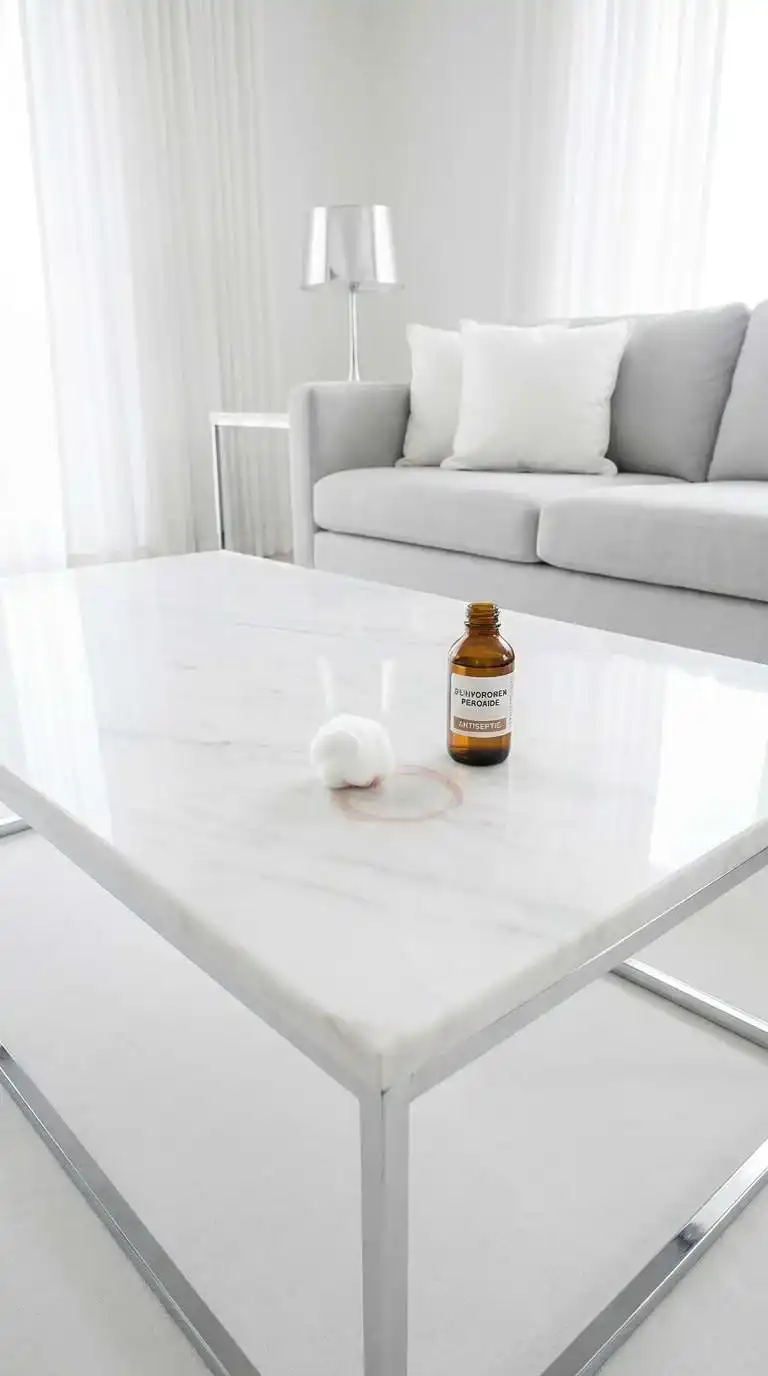
Light or white marble shows stains more visibly than darker varieties. For organic stains like wine, coffee, or juice on pale marble, a small amount of hydrogen peroxide can help. Use a three percent solution only, which is the standard drugstore variety. Apply it to a cotton ball and press it gently onto the stain for a few minutes. Wipe clean with a damp cloth and dry completely. Test a hidden spot first. This is not for dark marble, as it can lighten the tone over time.
6. Seal the Surface Every Six to Twelve Months
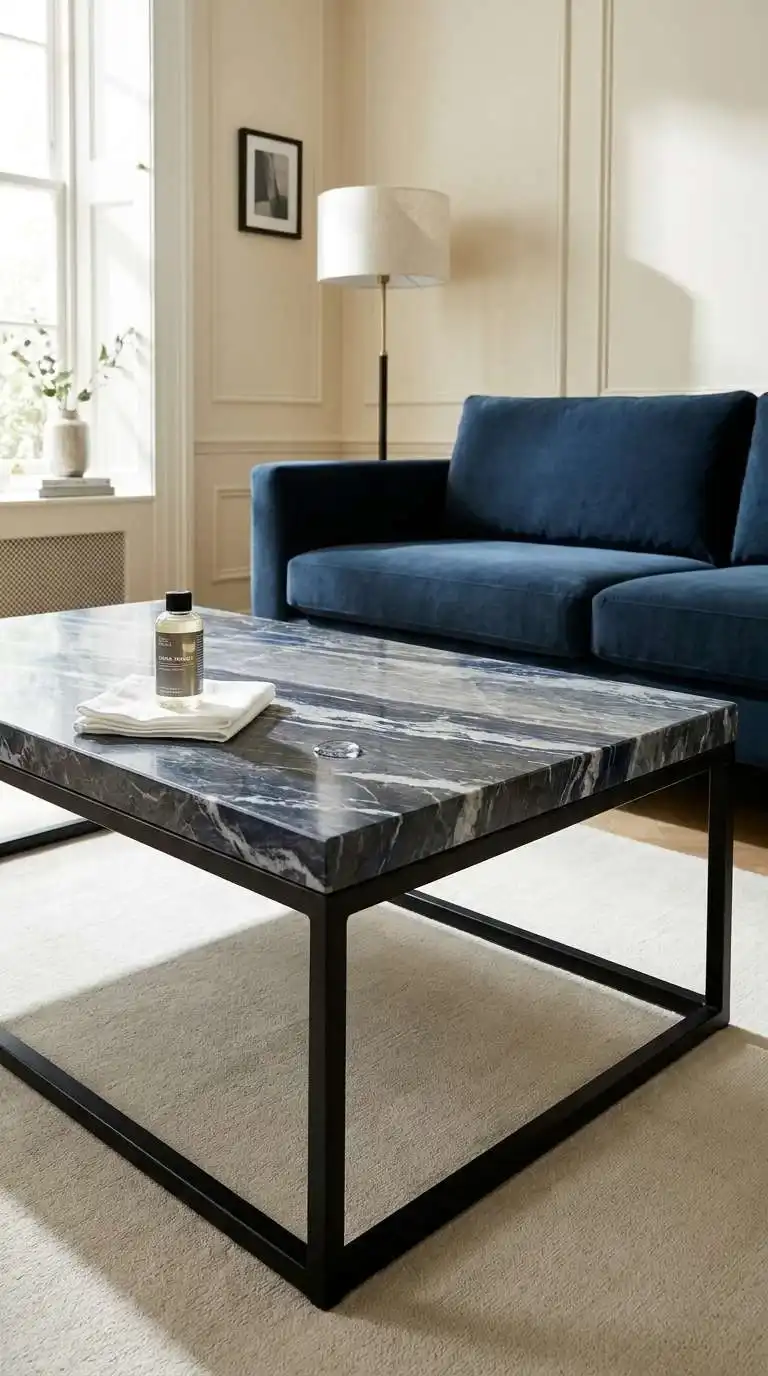
Cleaning is important but prevention is smarter. A quality marble sealer creates a protective barrier on the stone’s surface that makes future spills easier to clean. Most sealers are simple to apply. You wipe them on, let them soak in for a few minutes, and buff away the excess. Your marble coffee table living room setup will resist stains far better after sealing. Check the sealer every six months by dropping a small amount of water on the surface. If it soaks in instead of beading up, it is time to reseal. Pair this habit with good side table decor living room routines for a fully protected and styled space.
7. Always Use a pH-Neutral Cleaner
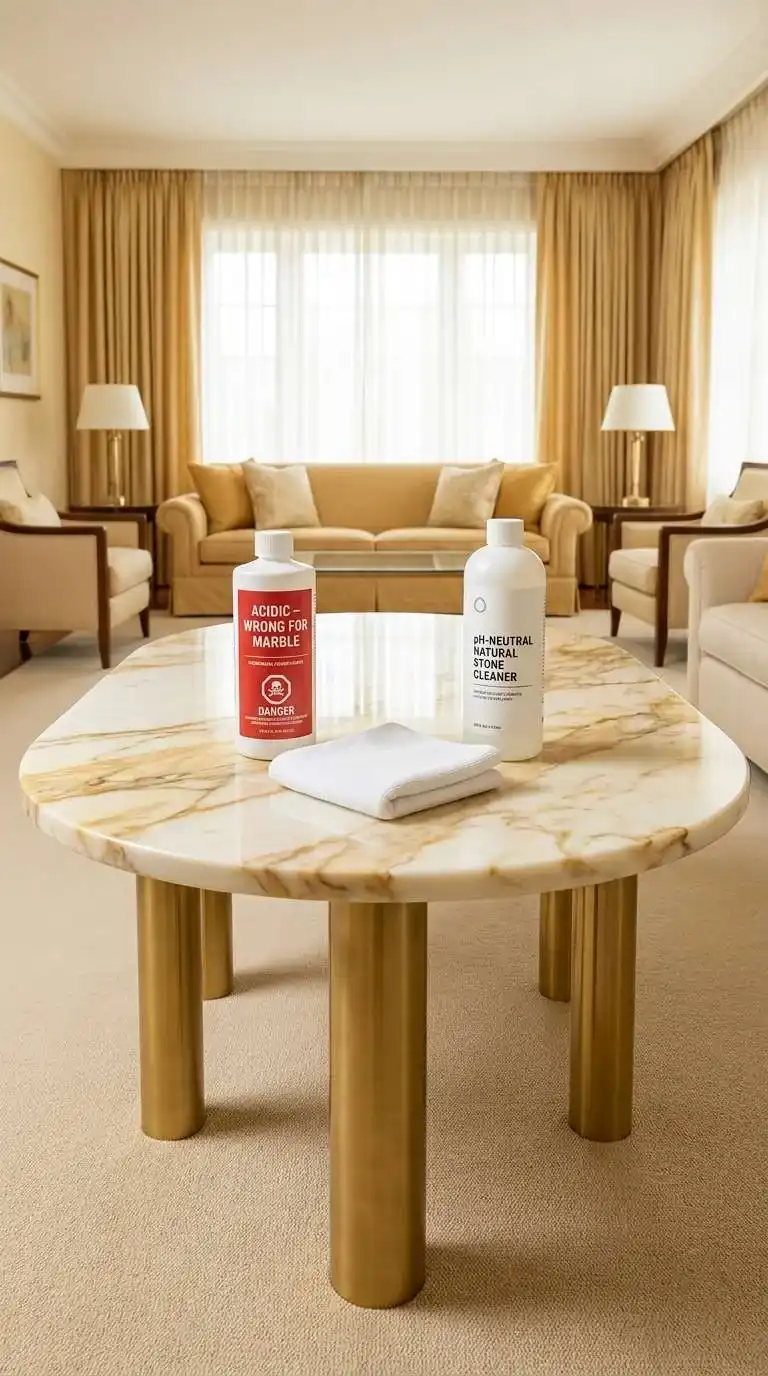
This one rule saves more marble tables than any other. Marble is made of calcium carbonate, which reacts badly to acids. Vinegar, lemon juice, and most multi-surface sprays are acidic. Even a single application can etch the surface and leave a dull cloudy patch that no amount of cleaning will reverse. Always check the pH of any cleaner before it touches your table. Look for products labeled pH-neutral or specifically formulated for natural stone. When in doubt, plain warm water is always safe.
8. Buff Out Minor Etches With Marble Polishing Powder
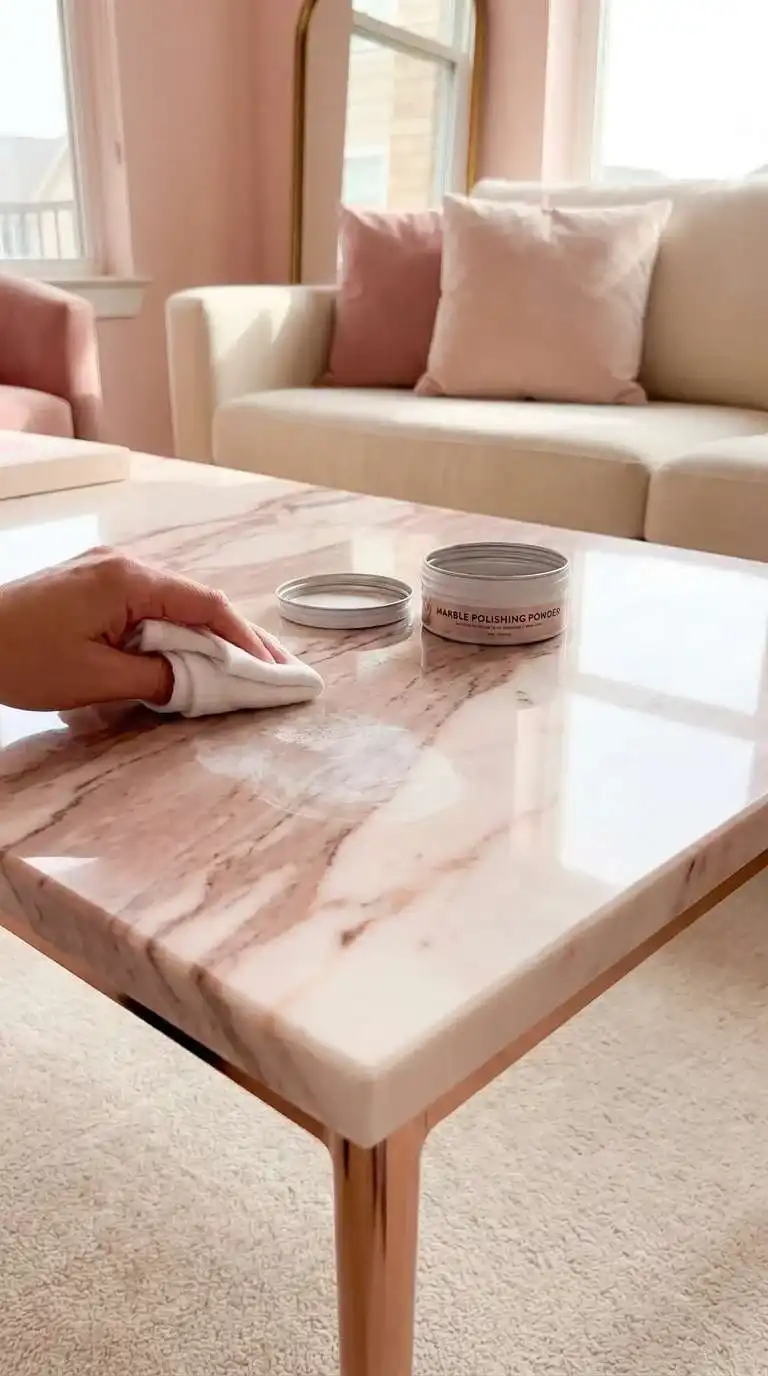
Etching looks like a dull, slightly lighter patch on the surface. It happens when acidic liquids sit on marble even briefly. The good news is that minor etches can often be buffed out at home. Marble polishing powder is available at most hardware or home stores. Dampen the etched area slightly, sprinkle a small amount of powder on it, and buff in a circular motion with a soft cloth. It takes a few minutes of gentle effort. The surface gradually returns to its original shine. Deep etches may need professional help.
9. Keep Coasters and Trays as a Daily Non-Negotiable
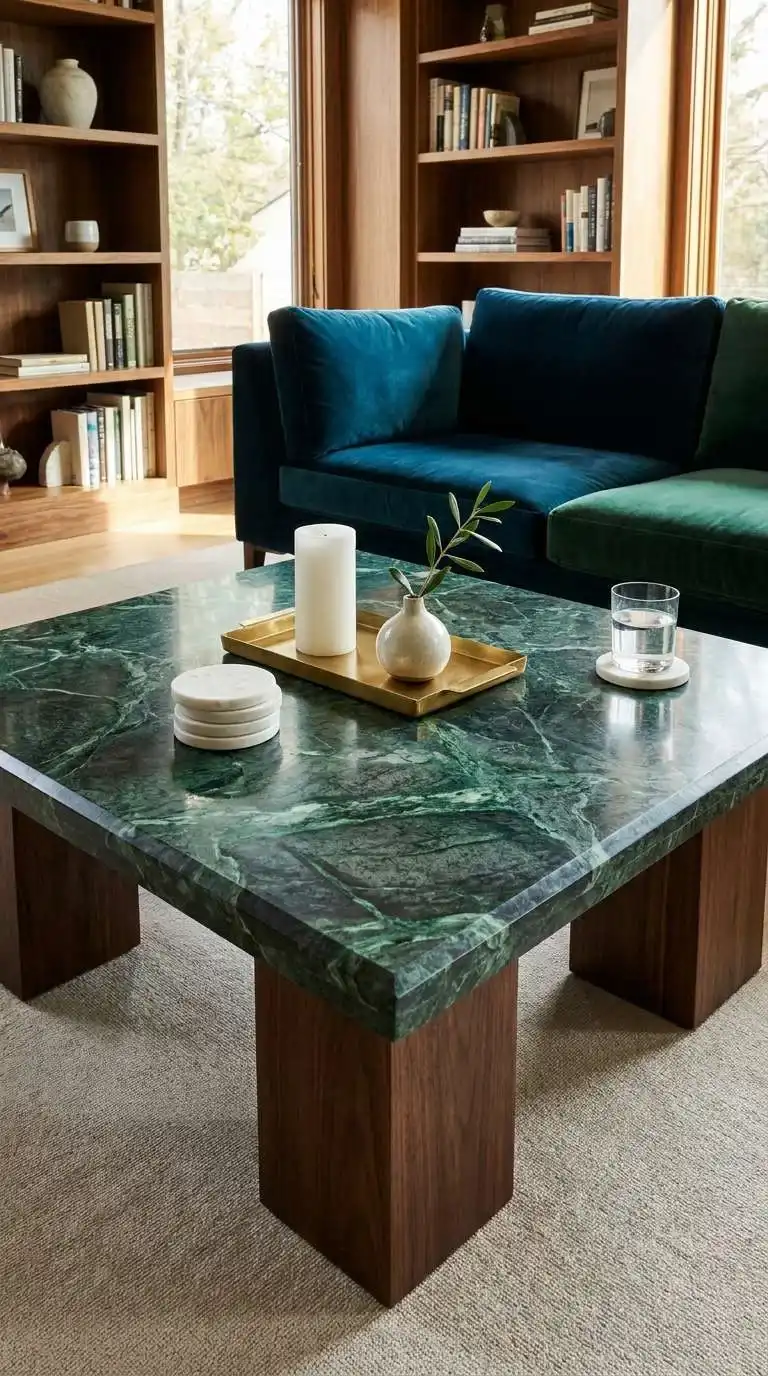
Prevention is the most underrated cleaning hack. A set of coasters placed on your coffee table before anyone sits down saves you from at least half of the common stains and rings. Use coasters for every drink, including water glasses. Water rings are just as damaging as coffee. Styling a small tray on one corner of the table also gives people a natural spot to set things down without touching the bare marble directly. It protects the surface while also looking intentional and beautiful. Check out these living room wall decor ideas to complete the styled look around your table.
10. Dry the Surface Completely After Every Clean
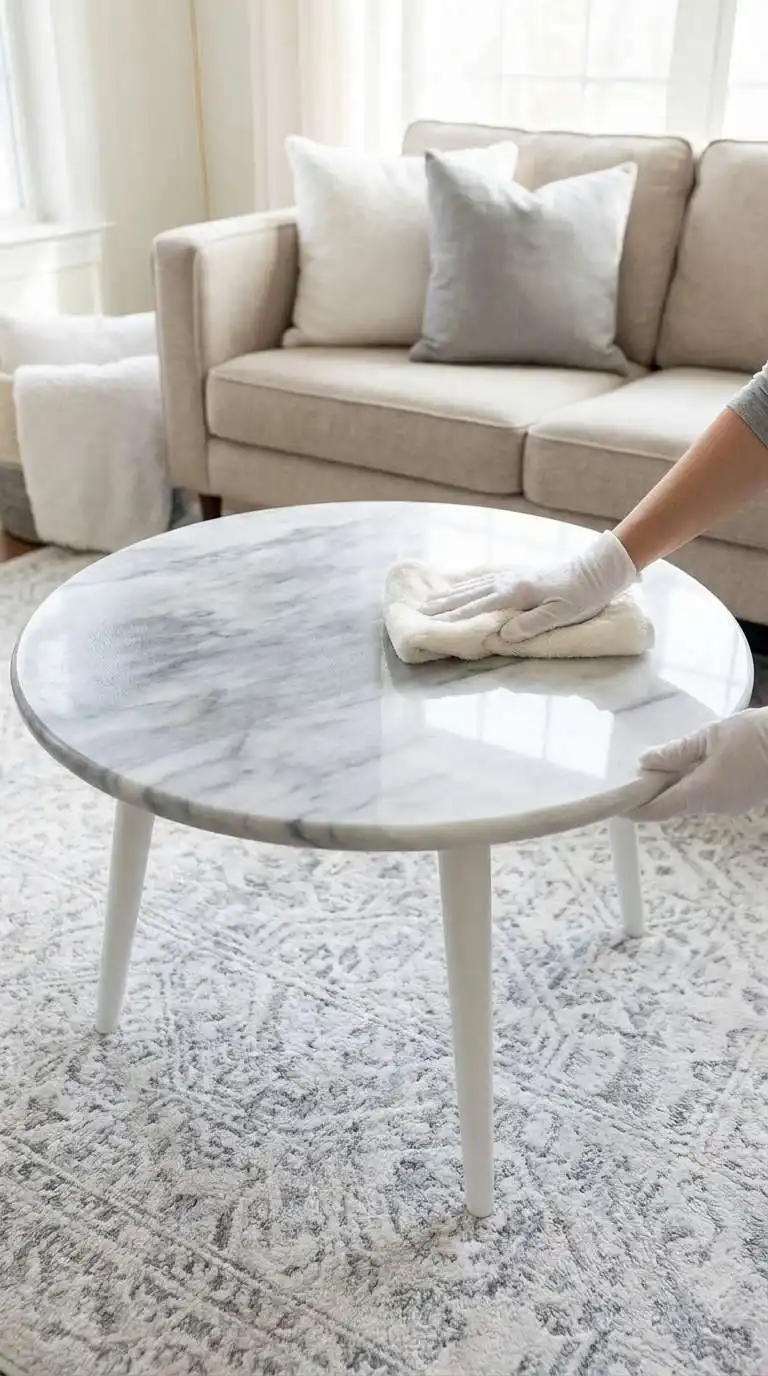
Moisture is marble’s quiet enemy. Leaving any amount of water on the surface after cleaning can cause water marks, mineral deposits, and over time it can weaken the seal. After every cleaning session, go over the entire surface with a dry, lint-free cloth. Buff lightly in small circles to pick up any remaining moisture. This extra 30 seconds makes a genuine difference in how the marble looks long term. A chamois cloth or a dry microfiber towel works best for this final step.
11. Clean the Underside and Edges Too
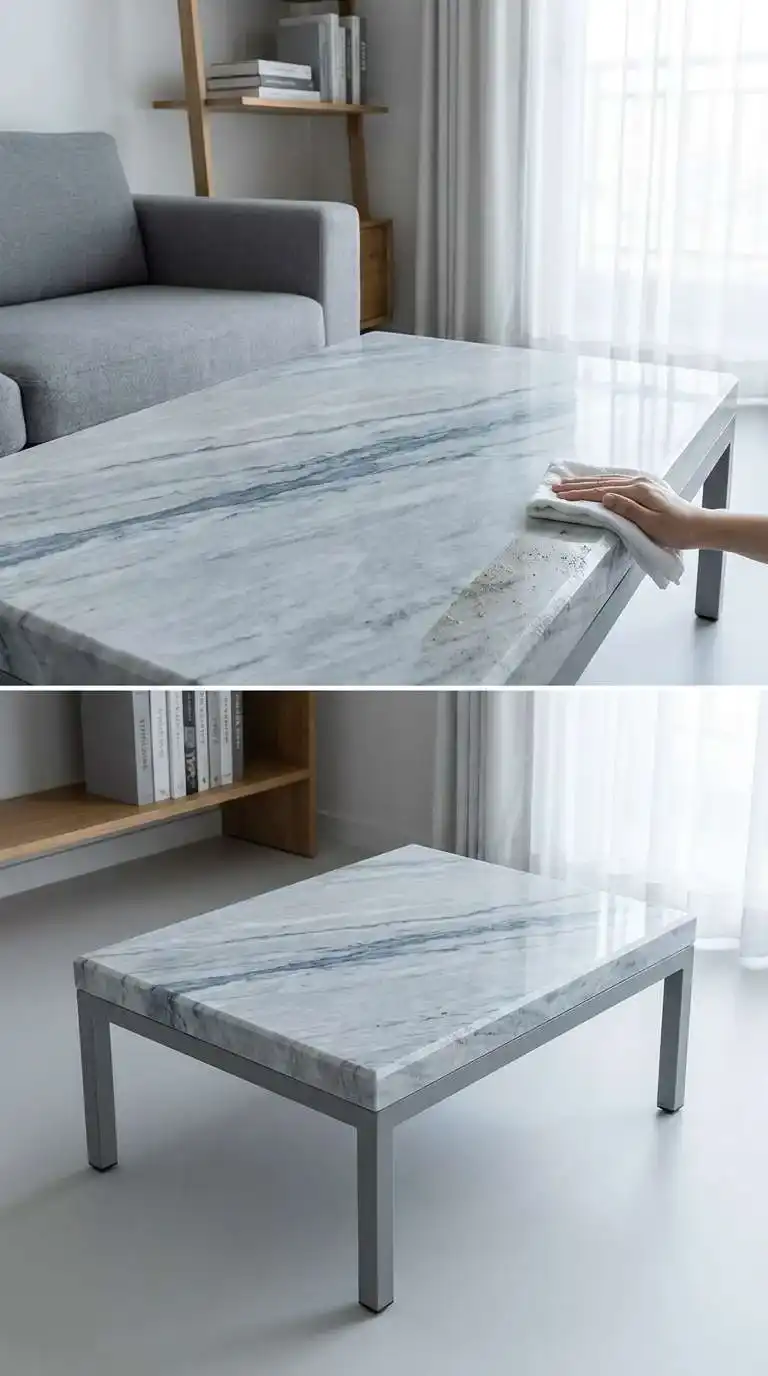
Most people only clean the top surface. The edges and underside of a marble coffee table collect dust, grime, and sometimes adhesive residue from price tags or felt pads. Every month or so, wipe down the edges and the underside rim with a damp cloth. Use the same pH-neutral soap and water solution. Pay extra attention to the spots where the marble meets the base or frame. Buildup in those areas can look dingy and affect the overall appearance of your table even when the top looks clean.
12. Know When to Call a Professional

Some damage is beyond DIY territory. Deep scratches, large etched areas, or staining that has penetrated the stone require professional restoration. A stone restoration specialist can hone, polish, or re-finish marble surfaces to bring them back to near-original condition. This is not an admission of failure. Marble is a natural material and it will show wear over time regardless of how careful you are. Knowing when to call in professional help is just good ownership. If you are updating the full room around a restored table, exploring end tables living room ideas can help you style the complete space beautifully.
Key Takeaways
- Blot, never wipe. Blotting lifts spills out of the stone before they can soak in and stain.
- Soap and water is enough. A mild dish soap solution cleans safely without stripping the stone’s surface.
- Acids are the enemy. Vinegar, lemon, and most household sprays etch marble permanently. Always use pH-neutral products.
- Seal twice a year. A good sealer keeps your marble resistant to stains and far easier to clean day to day.
- Coasters are not optional. Every glass, cup, and candle needs a coaster or tray underneath it without exception.
- Dry after every clean. Leaving moisture on marble leads to water marks and mineral buildup over time.
- Know your limits. Deep scratches and heavy etching need professional restoration, not more scrubbing at home.
Conclusion
Marble does not have to be high maintenance. It just has to be handled the right way. Once you understand how the material behaves, caring for it becomes a simple part of your routine rather than a source of stress. The hacks in this list are not complicated. They are small, consistent habits that protect your investment and keep your living room looking the way you want it to. A clean, well-maintained marble coffee table is one of those things that quietly elevates the entire room. It catches the light, anchors the seating area, and makes everything around it look more intentional. Treat it well and it will stay beautiful for years.
What To Do Next
- Check your current cleaning products and remove anything acidic or abrasive from reach of your marble table.
- Pick up a pH-neutral stone cleaner or make the simple dish soap and warm water solution this week.
- Do a water bead test on your table surface to check whether the current seal is still working.
- Buy a set of coasters or a small tray and place them on your coffee table today.
- Schedule a sealing session on your calendar for every six months so it becomes a consistent habit.